
Field Notes Journal Entry
Leaving the Serengeti
A sighting of a leopard and cub in a tree marks the departure from the Serengeti, followed by a long journey North and arrival at Lake Manyara, where the tone shifts from dust and distance to comfort and space

Leaving the Serengeti
The next day was a transfer day, taking us from Mbalageti in the Western corridor to the Naabi gate of the Serengeti by 11:55 a.m. to avoid having to pay the $75-$90 per person park fee for another day.
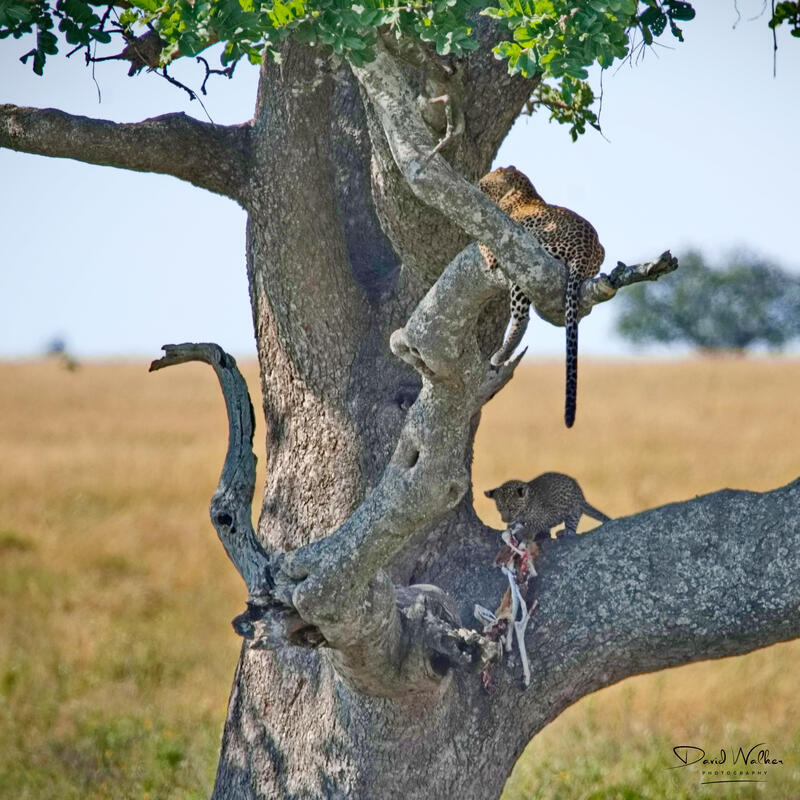
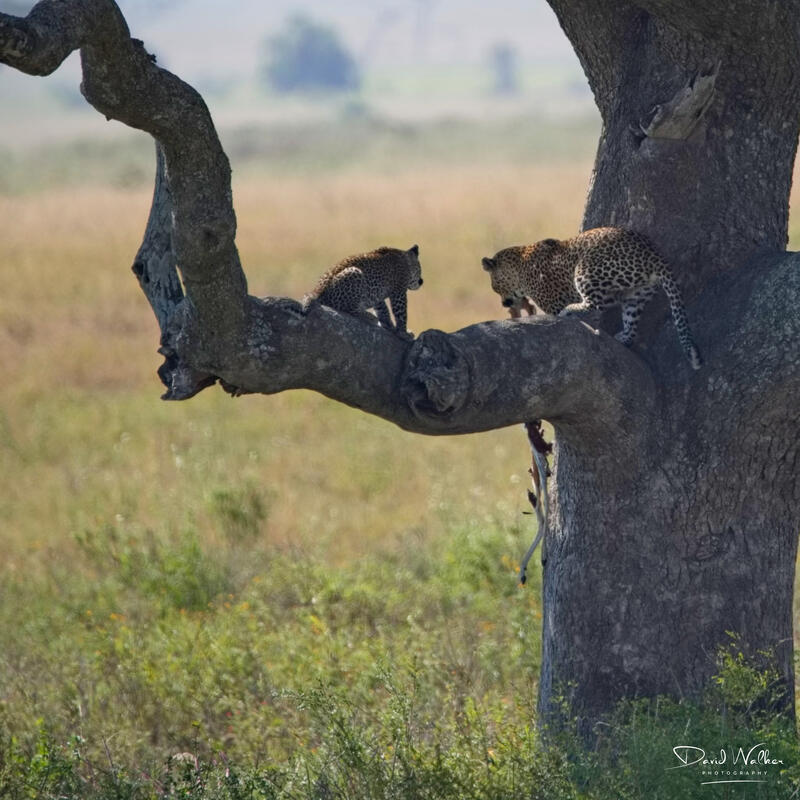
Although the main focus was travel, we did fit in a mini game drive during which we were fortunate enough to see a female leopard with a cub, aged around six months, tucking into the remains of a kill up a tree.
At that age, the cub had yet to learn the grace and elegance of its mother. So, whilst she leapt gracefully to the ground, it hesitated, calling after her, and only reluctantly half backed down the trunk and half fell out of the tree to follow!
From the Serengeti gate, where we enjoyed a picnic lunch, it was driving all the way, round the Ngorongoro crater and on towards Lake Manyara.
Arrival at Lake Manyara Kilimamoja Lodge
Our accommodation for the next two nights was to be the Lake Manyara Kilimamoja Lodge, situated on the rim of the Rift Valley. We drove into the beautiful gated grounds to be greeted by staff who lead us into the hotel, treating us like royalty and insisting on opening doors ahead of us, much to Philip’s amusement as he could see we weren’t used to that kind of treatment!
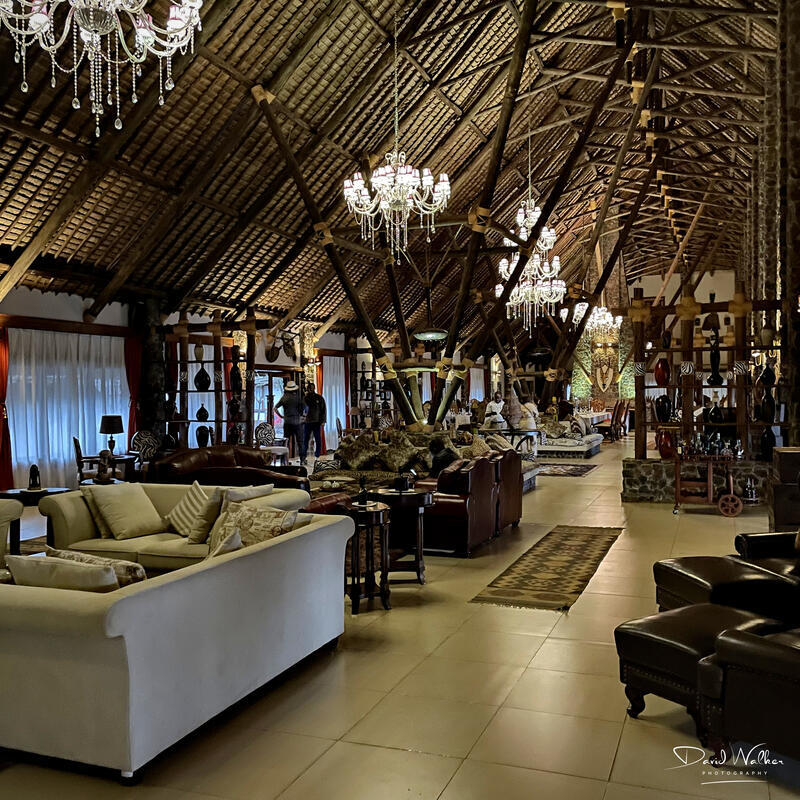
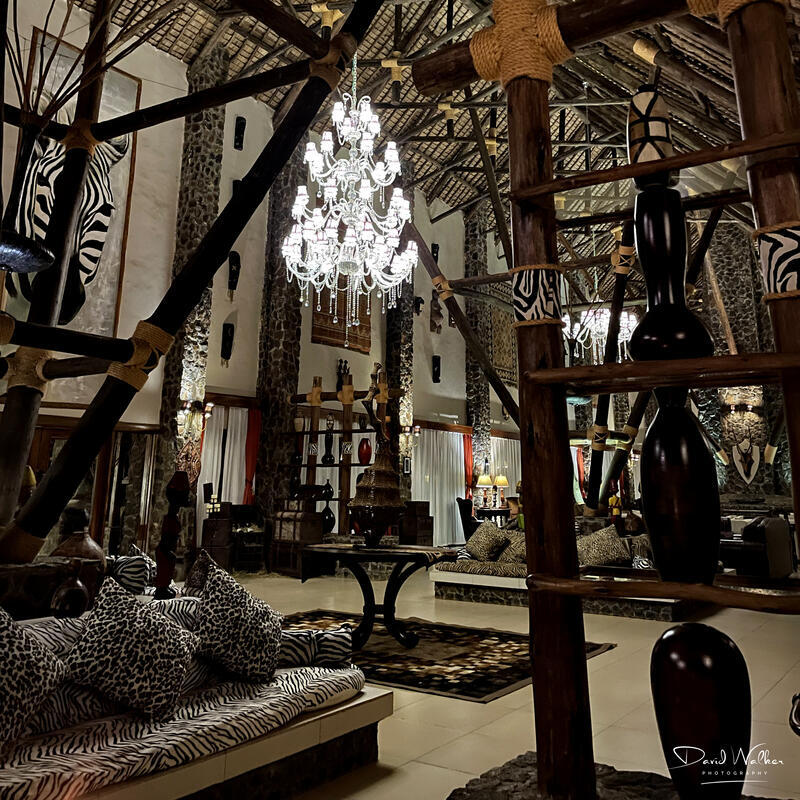
We were escorted through a high-ceilinged and immaculate dining area and bar, decorated with “tribal” ebony carvings, skins and African-themed reliefs, and then out into the grounds, set with chalets named after African wildlife in Kiswahili. Our chalet was called “Chui”, leopard, which was very appropriate given the luck we’d had sighting them during our game drives.
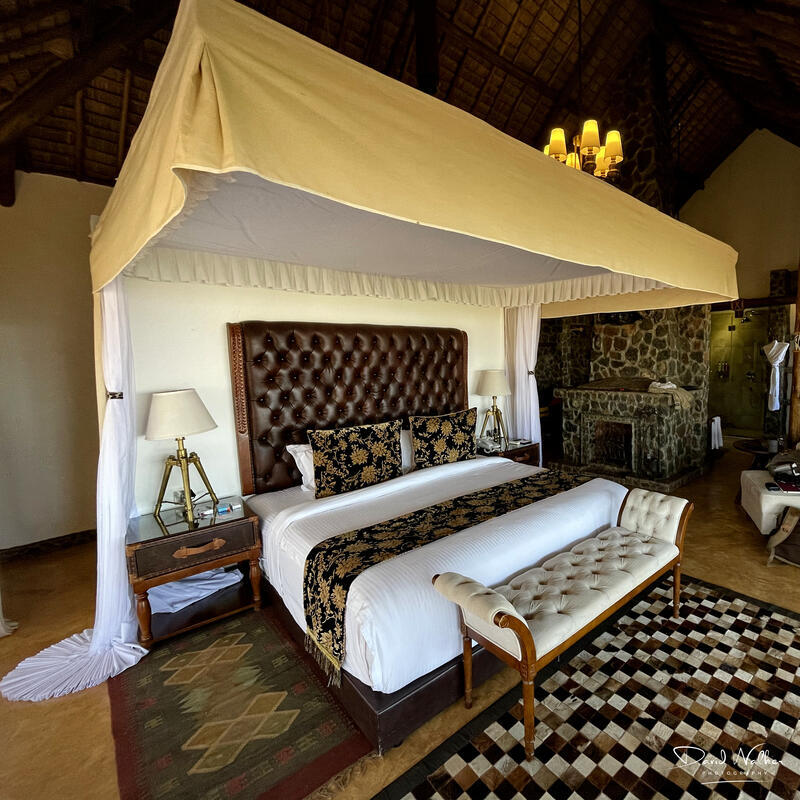
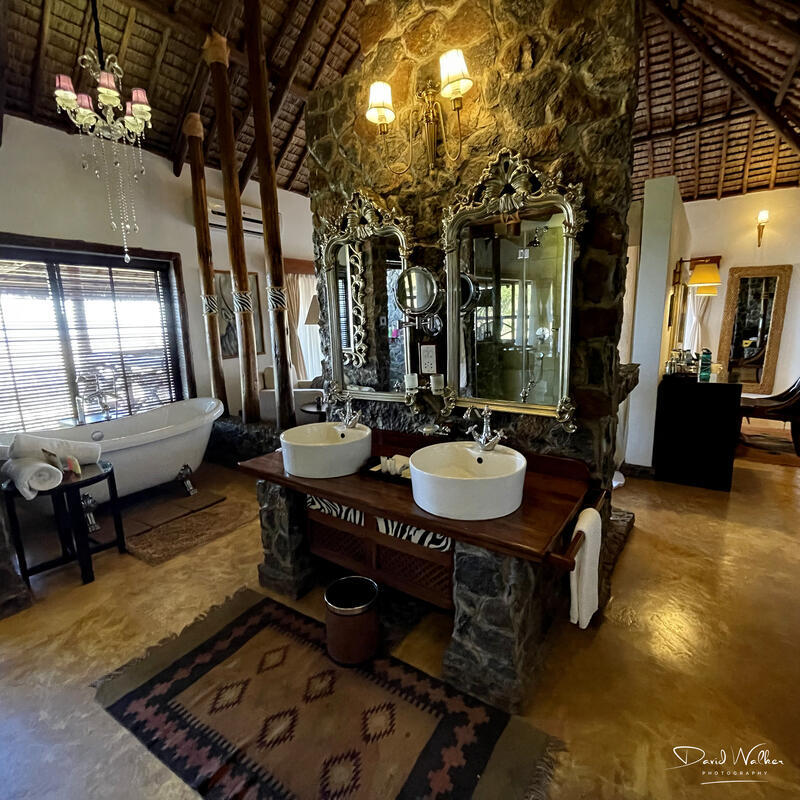
The room was just spectacular! It was a huge suite with a four-poster bed, separate bathroom area, separate loos, two indoor showers and one outdoor and a veranda that gave breath-taking views out over the village and the valley below.
The separation between the bathroom and the sleeping areas brought back memories of a previous wildlife-orientated trip, to Elephant Hills, in Khao Sok, and the Sarojin, in Khao Lak, Thailand.
This was a taste of real luxury to round off our Safari.
Field Notes
- Serengeti Exit Timing - park fees are charged per 24-hour period; departure times are often planned to avoid additional charges
- Leopard (Panthera pardus) - female observed with cub (~6 months old); cub behaviour less coordinated, still developing climbing and hunting skills
- Tree Caching - leopards store kills in trees to protect them from scavengers such as hyena and lion
- Naabi Hill Gate - main southeastern exit of the Serengeti; marks transition from plains to Ngorongoro highlands
- Rift Valley - major geological feature of East Africa; Lake Manyara lies within its western escarpment
- Lake Manyara Region - area characterised by escarpment views, groundwater forest, and proximity to local settlements
- Hospitality Contrast - transition from remote safari camps to established lodges; marked difference in comfort and service