Field Notes Journal Entry
The Olduvai Gorge and on to the Central Serengeti
Leaving the Ngorongoro Crater, the journey crosses the Olduvai Gorge before continuing west into the Serengeti, with encounters along the way and a first sense of the scale of the plains beyond
Leaving Ngorongoro
We had a lie-in this morning as we didn’t need to take our breakfast until 7 am, meeting Philip in the lobby of the hotel at 07:45 ready to depart at 8 am.
I’d promised to share with him a picture of a leopard that I’d taken in Tarangire and did that ahead of our meeting.
On the Crater Rim
Leaving the Ngorongoro Serena Lodge, we pretty much immediately saw an elephant and giraffe by the roadside on the creator rim, which was very interesting as giraffe aren’t found in the crater itself on account of the difficulty in making the descent.
Olduvai Gorge
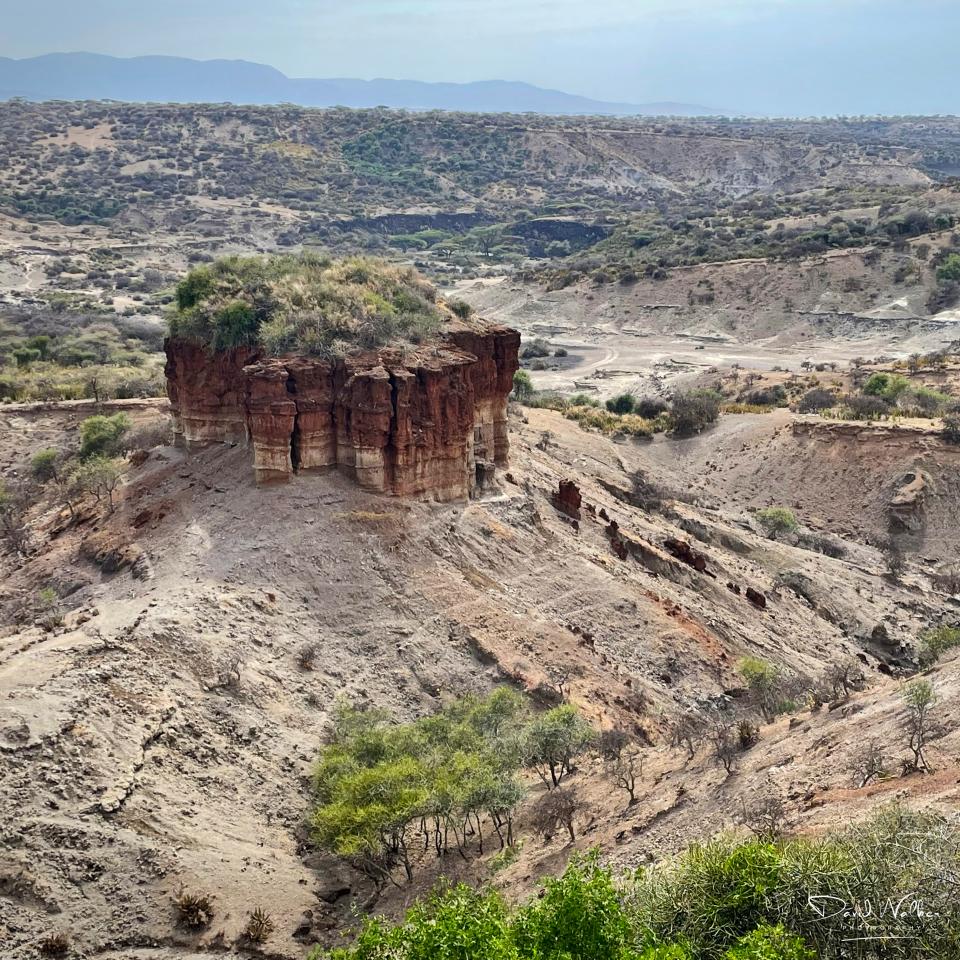
We drove around the crater rim road and down onto the plain beyond to the Olduvai Gorge, the “Cradle of Humankind”, where the Leakeys did their groundbreaking archaeological work that, ultimately, identified the Rift Valley as the place where Homo sapiens first evolved.
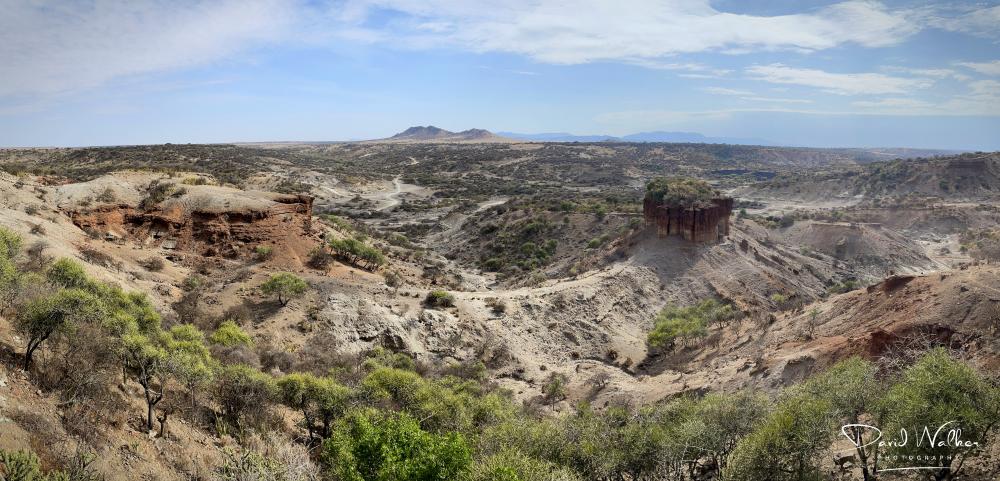
Just being there, looking out over the gorge with its layers of coloured earth corresponding to different archaeological and even geological periods, had quite a profound effect on me. It was quite an emotional experience to be in the place where we all, ultimately, come from.
The Gorge is named after the wild sisal that grows everywhere in it but there’s a typo in the name! The Maasai word for the plant is oldupai but the German palaeontologist who first recovered fossils from the area made a mistake and swapped the p for a v.
At the Boundary
From Olduvai, it was dry, dusty roads all the way to the border between the Ngorongoro NCA (conservation area) and the Serengeti National Park.
We stopped at the boundary and Philip gave us a quick photo opportunity and an explanation of the route of The Migration.
The Maasai were moved out of the Serengeti and into the NCA to stop them from blocking the route of the migration, as they have elsewhere. That didn’t prevent some Maasai women trying to sell us some bead bracelets, at least until they spotted some reserve wardens heading our way in a Land Cruiser.
At the sight of them, the women first tried to hide in a shallow ditch on the Serengeti side of the border but when this didn’t deter the wardens, they high-tailed it off into the NCA, along with the kids who were with them, as they’re not supposed to be at the border between the National Park and the NCA.
Into the Serengeti
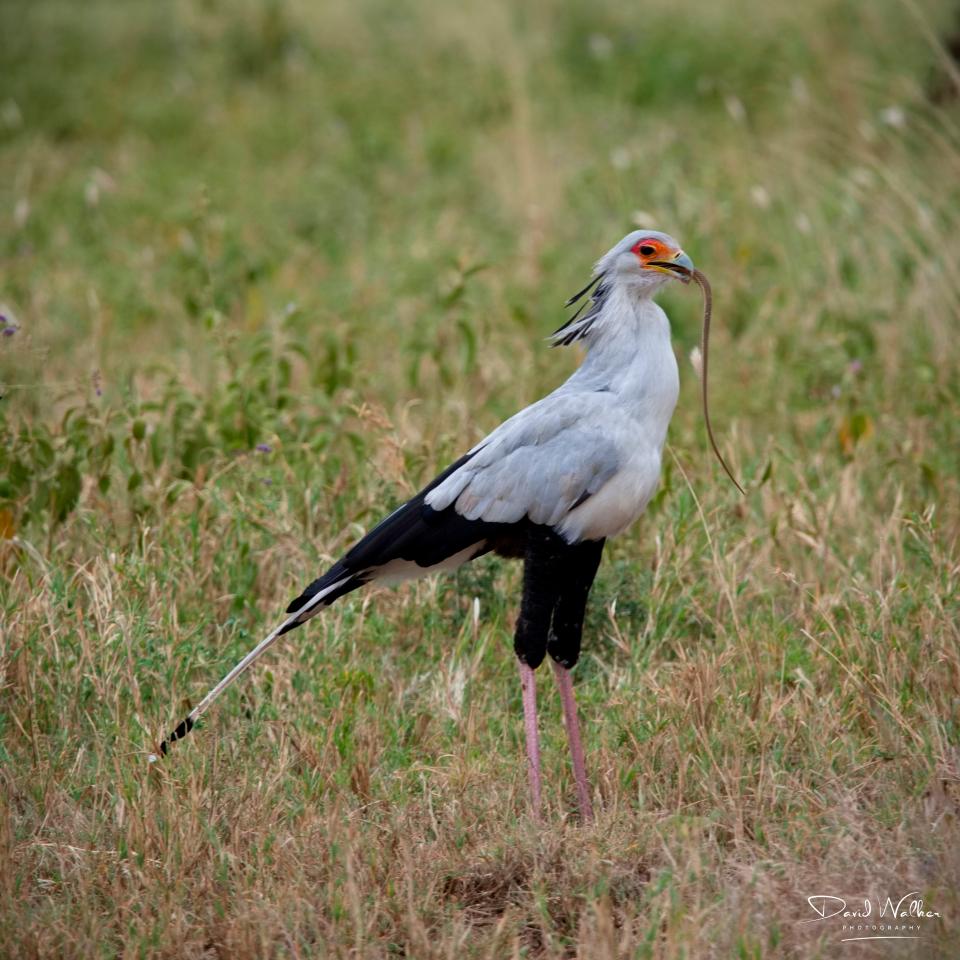
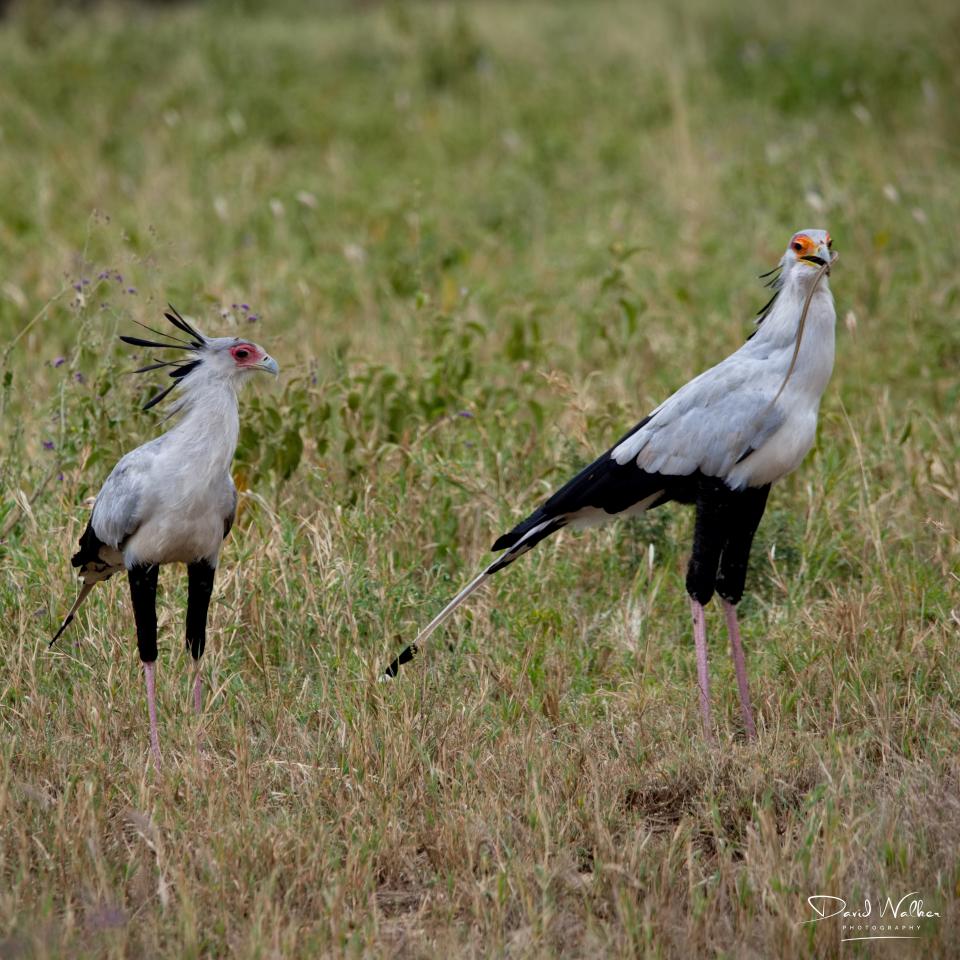
From the border, we travelled along more dusty roads to the checkpoint for entry into the National Park, some kilometres further on, and then on an ad-hoc game drive to our next accommodation, during which we saw a good selection of wildlife including another leopard, that we were very lucky to see, and a pair of secretary birds, one of which had a snake hanging out of its mouth that it seemed to be struggling to get down!
The unfortunate reptile did eventually vanish, and we continued on, the landscape opening out ahead of us.
Field Notes
- Olduvai Gorge - important archaeological site within the Rift Valley; associated with early hominin fossils and the work of Louis and Mary Leakey
- Name Origin - derived from Maasai word oldupai (wild sisal); spelling altered in early European records
- Ngorongoro Conservation Area (NCA) - multiple-use area allowing wildlife conservation alongside traditional Maasai pastoralism
- Serengeti National Park - protected ecosystem supporting large-scale migration of wildebeest and associated predators
- The Migration - seasonal movement of wildebeest and other herbivores across Serengeti–Mara system, following rainfall and grazing
- Leopard (Panthera pardus) - second sighting during transit; typically elusive and often only briefly visible
- Secretary Bird (Sagittarius serpentarius) - ground-hunting raptor observed with snake prey; prey subdued and swallowed whole
- Road Transit - long, dry tracks between regions; wildlife encounters often opportunistic rather than concentrated