
Field Notes Journal Entry
The Datoga Tribe
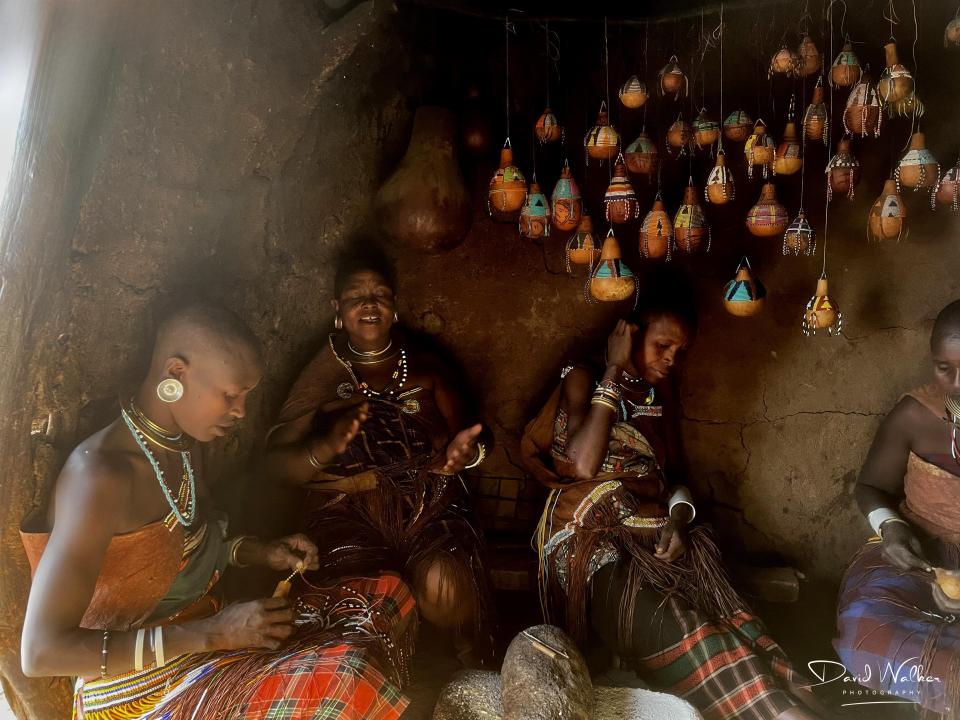
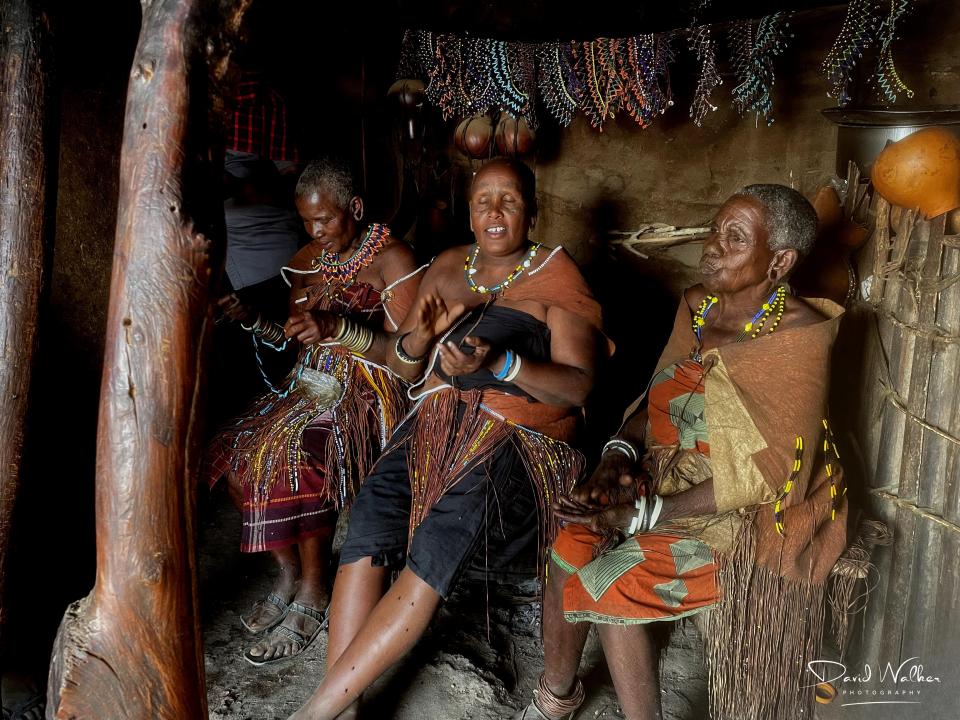
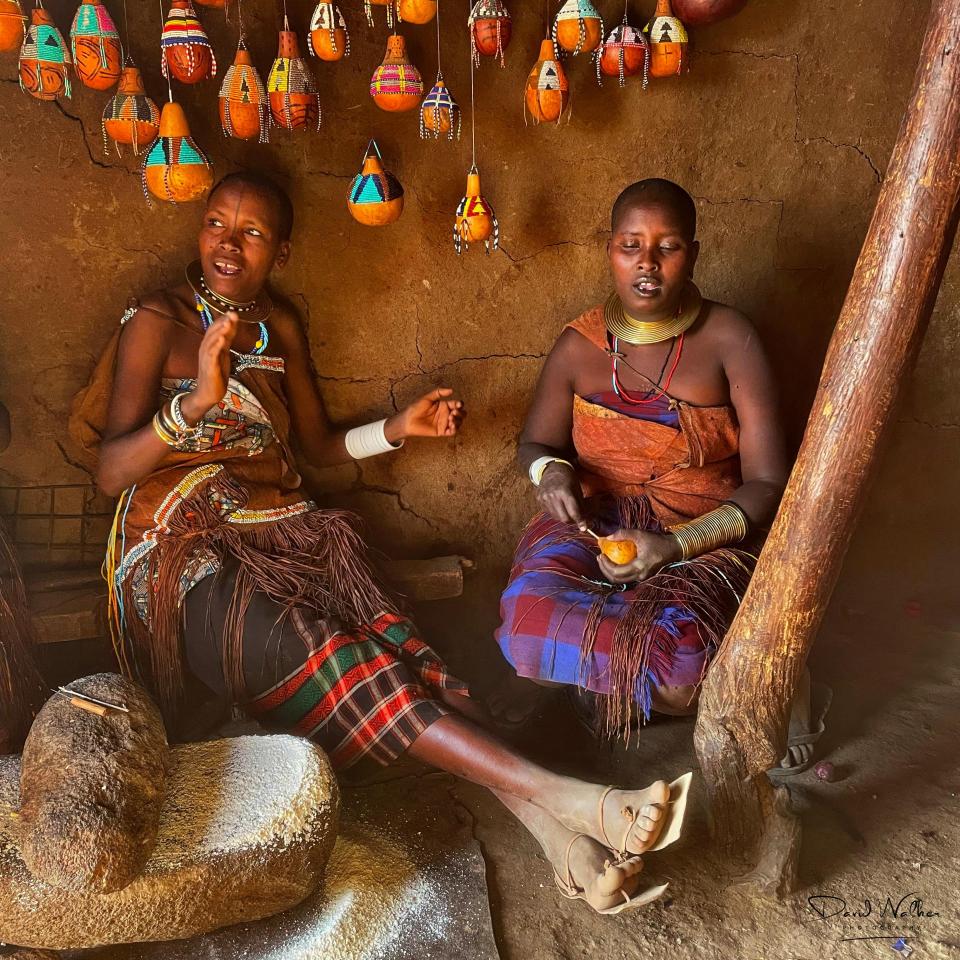
After lunch, we set out from Kisima Ngeda on the first visit of two “cultural” days in our itinerary. I must confess that I was sceptical as my original concept for our adventure was entirely focused on the wildlife. In the end, though, I was to be very pleasantly surprised and have some great memories from visiting the Datoga.
The Women’s House
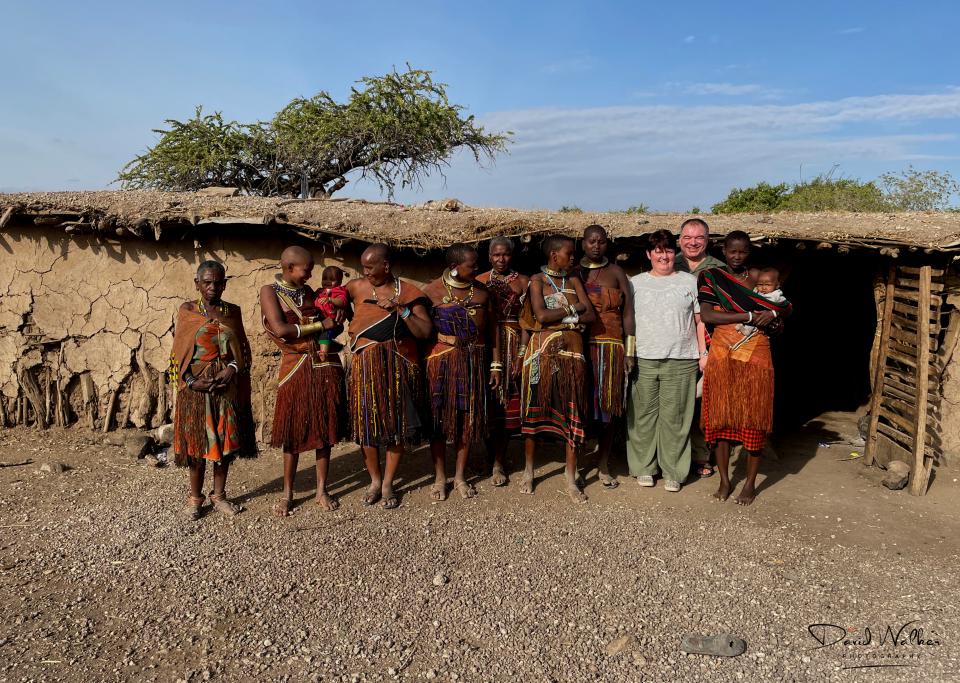
Our first port of call was to visit the women, the nine wives of the chief of the tribe, who welcomed us into their home. We sat in a circle with them and engaged in a two-way discussion, with our guide acting as interpreter.
I really like the fact that it was a two-way thing, not just “the locals on display for the tourists”.
Multi-coloured gourds, made of red earth and dressed in brightly coloured beaded jackets, hung from the ceilings and the women were decorated with colourful beaded bracelets and necklaces. Sunlight streamed in through the single opening provided by the door, to light the dark interior of the house.
We sat on modern benches arranged along the walls around the room while questions went to-and-fro and the women worked on more necklaces and bracelets that they would barter with other tribes and sell at local markets. One also demonstrating grinding maize with a traditional grindstone - hard work!
The Blacksmiths
Our visit with the women ended with them singing a song of welcome before we headed off to see the blacksmiths.
They were located in a different part of the village. The house was typical Datoga construction, vertically aligned branches and tree trunks with the gaps filled in with mud and twigs and a roof made of green grass, turf and weeds to provide better insulation.
The “yard” for the house was banded by high, rough, brushwood “hedge” and the kiln was constructed here:
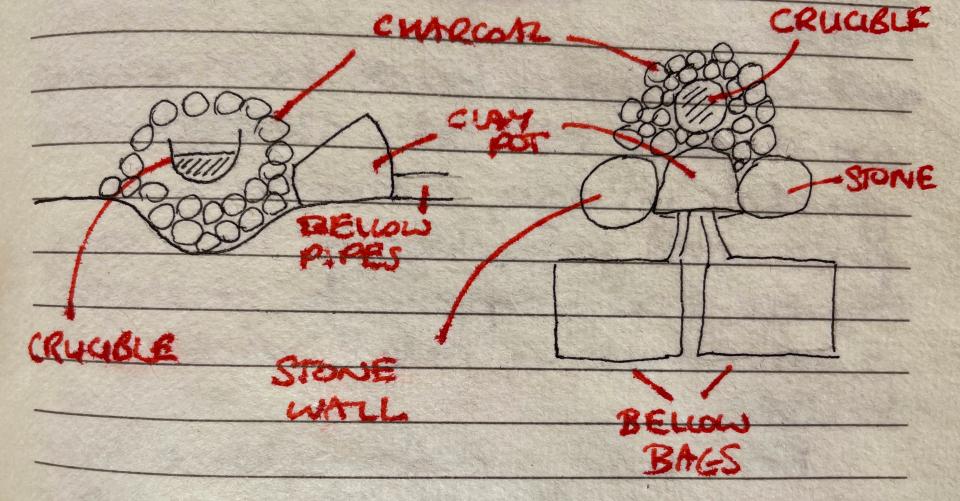
It was constructed in a hollow as shown, and smelted old padlocks and the like in only 10 minutes. The resulting ingots were hammered to shape and decorated to form bracelets.
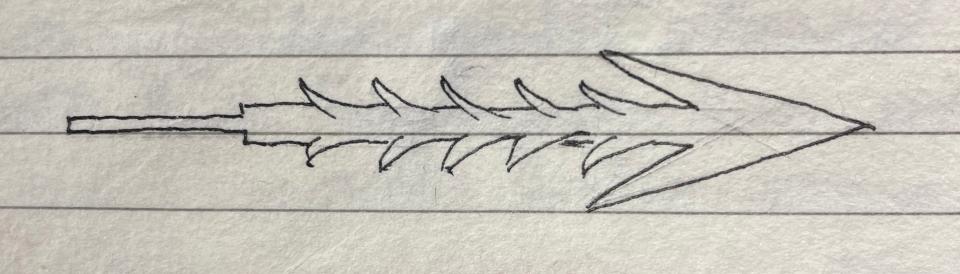
Just as impressive was the smith who hammered out a 6-inch nail to form an arrowhead, a task that took him a mere 25 minutes in total:
Through the Village
On the way back to the camp, we stopped to walk through our guide’s village, witnessing a Pentecostal preacher in the main square and stopping to talk to a man making mud bricks for a building.
From there, we drove back to Kisima Ngeda, taking a detour to climb the escarpment behind the camp to watch a spectacular sunset over Lake Eyasi. We saw Mariana and her husband taking an evening walk by the lakeside with their two dogs, a Great Dane-Ridgeback cross and local mongrel puppy.
Dinner that evening was tilapia and we enjoyed a good, long chat with Mariana before heading back to our tent, where the wind rustling the palm leaves sent us off to sleep. Even the surprisingly noisy bush babies in the surrounding forest couldn’t keep us awake!
Field Notes
- Datoga - pastoralist and agro-pastoralist people of northern Tanzania; known for metalworking and distinctive beadwork traditions
- Beadwork - bracelets and necklaces produced by women; used for adornment, trade, and sale at local markets
- Gourds - decorated vessels made from dried calabash; often coated and adorned with beadwork for functional and decorative use
- Grinding Maize - traditional hand grinding using stone tools; labour-intensive process for preparing staple food
- Blacksmithing - metal reworked from scrap (e.g. nails, padlocks); smelted and forged into tools and ornaments using simple kiln structures
- Kiln Construction - sunken, earth-lined structure enabling rapid heating and smelting; fuelled with locally available materials
- Arrowhead Production - hand-forged from iron nail; shaped and finished using hammer and anvil techniques
- Lake Eyasi Escarpment - elevated ridge overlooking the lake; provides wide views across seasonal waters and surrounding woodland