Field Notes Journal Entry
The Hadzabe Tribe and Onwards to Ngorogngoro
A morning with the Hadzabe reveals hunting practice and foraging in the bush, before the journey continues to the high rim of Ngorongoro
Leaving Lake Eyasi
Our day started with an early breakfast at Kisima Ngeda tented camp and an opportunity to say goodbye to our hostess, Mariana, and sign the visitors book.
Once again, breakfast outshone Treetops in its quality and we had the added benefit of the company of some bats flitting around. There were two distinct species, one that seemed to be a microchiroptera and a larger type that seemed to be a species of megachiroptera. I made a mental note to look up the species but that was a little optimistic as, so far, I’ve not found any information on bat species at Lake Eyasi and the list for Tanzania as a whole is quite extensive!
The Hadzabe
From Kisima Ngeda it was a short drive of 20 minutes or so to the camp of the Hadzabe tribe, who use clicks, ticks and other guttural sounds as part of their language and words.
They were an extremely friendly and welcoming group and they greeted us with fist bumps. I asked our guide, coincidentally also called David, if this was their usual way of greeting but apparently not. The government taught them to fist bump in place of handshakes - the COVID pandemic even reached the African bush!
During the day the Hadzabe men and women remain separate, so we first joined a group of men gathered around a small but very smoky fire that they had lit to warm them through at the start of the day.
Hunting and Demonstration
The leader of the group was very entertaining and gave us a performance acting out the hunt for each type of animal they hunted, playing both the hunter and the prey, accompanied by appropriate sound effects when the prey was finally captured and killed!
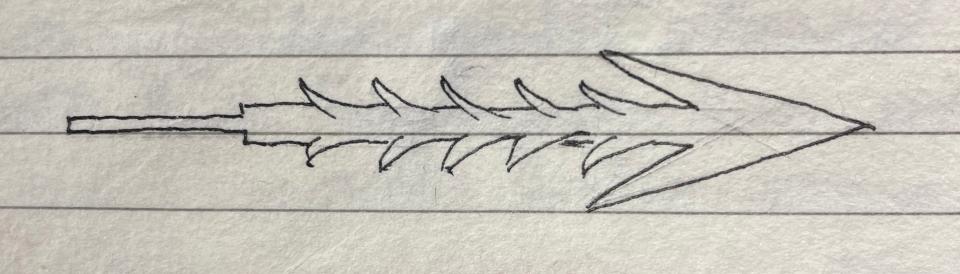
His performance demonstrated the use of different arrowheads for different species including, interestingly, the arrowhead we’ve seen the Datoga make the previous day. It’s used either as-is or a plant-based poison is applied, wrapped around the barbed section, that stops the heart once it enters the bloodstream. These iron arrowheads are used for medium to large size prey.
Into the Bush
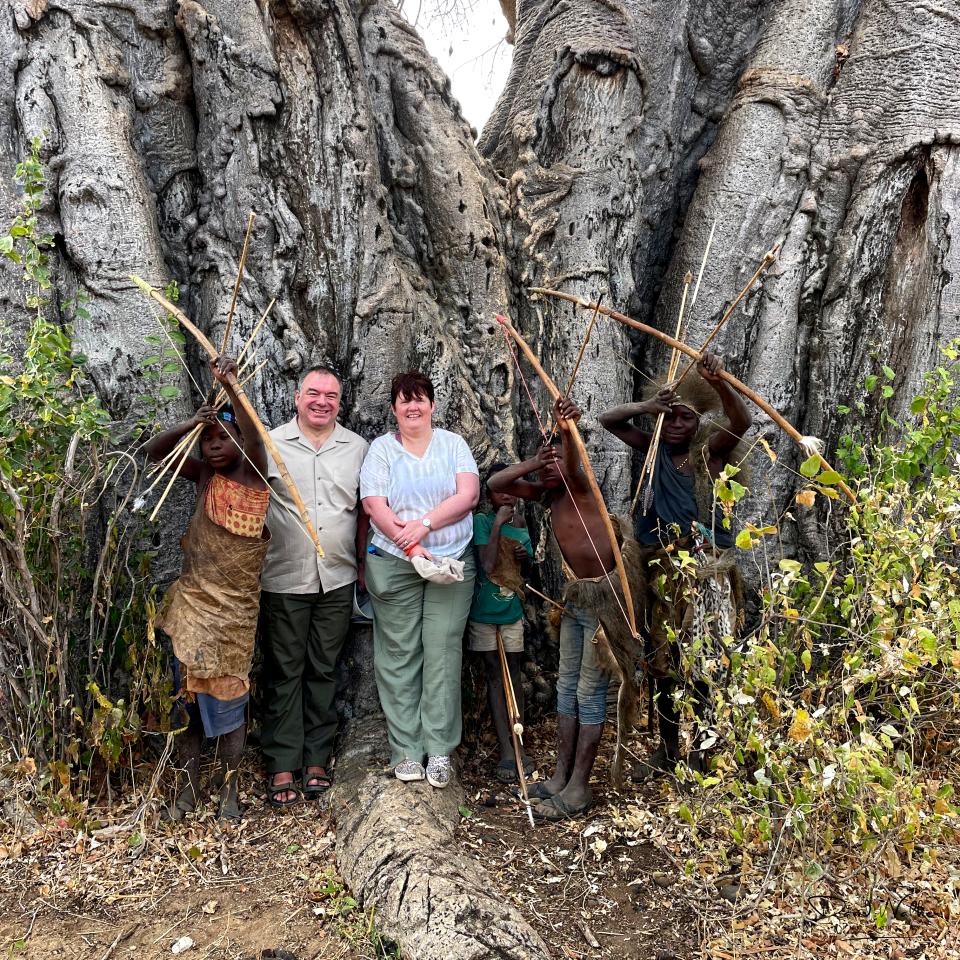
After the introductions, we followed a small group of four of the tribe into the bush on a foraging expedition. They picked berries that they ate on the spot, and hunted the smaller birds, killing two that they cooked over a freshly made fire in front of a huge 1,000 year-old baobab tree. They offered us some, but we politely refused on the advice of our guide.
Reflections
On returning to the Hadzabe camp, we made a brief visit to the women, who were making bead bracelets and similar items of jewellery for their own personal use and to barter.
As with our visit to the Datoga, while I was originally sceptical regarding the cultural visits on the itinerary, by the end of our time with the Hadzabe, and in spite of the fact that I stank of smoke from the campfire, I was really very impressed with the cultural excursions. Although they weren’t something we’ve been interested in when we booked the Safari I’m very glad they were included.
Onwards to Ngorongoro
From the Hadzabe, we drove back along the same dusty, terracotta-coloured roads we travelled along the day before, refueling at Karatu and taking an interesting trip into its back-streets to a panel beaters to have some spot welding done to fix some minor damage to the Land Cruiser!
Then, it was on the Ngorongoro Serena Lodge, a luxurious hotel some 2,300 metres up on the crater rim with panoramic views out over the floor of the caldera. Spectacular but more than a little chilly, so we were particularly grateful to find that during the evening turndown room service left us hot water bottles!
Field Notes
- Hadzabe (Hadzabi) - hunter-gatherer people of northern Tanzania; known for use of click-based language and traditional hunting practices
- Hunting Demonstration - use of role-play to explain hunting techniques and prey behaviour; communication through gesture and sound
- Arrowheads - iron points (often obtained through trade) used for medium to large prey; barbed design allows application of plant-based poison
- Poison Use - plant-derived toxins applied to arrowheads; enter bloodstream on impact and act systemically
- Foraging - berries gathered and consumed in situ; opportunistic hunting of small birds using bow and arrow
- Baobab Tree (Adansonia) - large, long-lived tree characteristic of the region; observed as focal point during foraging activity
- Cultural Exchange - interaction structured as demonstration and shared experience; guided interpretation between groups
- Ngorongoro Crater - collapsed volcanic caldera; high-altitude rim (~2300 m) overlooking enclosed ecosystem below