Field Notes Journal Entry
Tarangire National Park
A full day in Tarangire brings early-morning bush life, close encounters with buffalo and lions with cubs, and a final sighting of a leopard in the late afternoon light
Morning in Camp
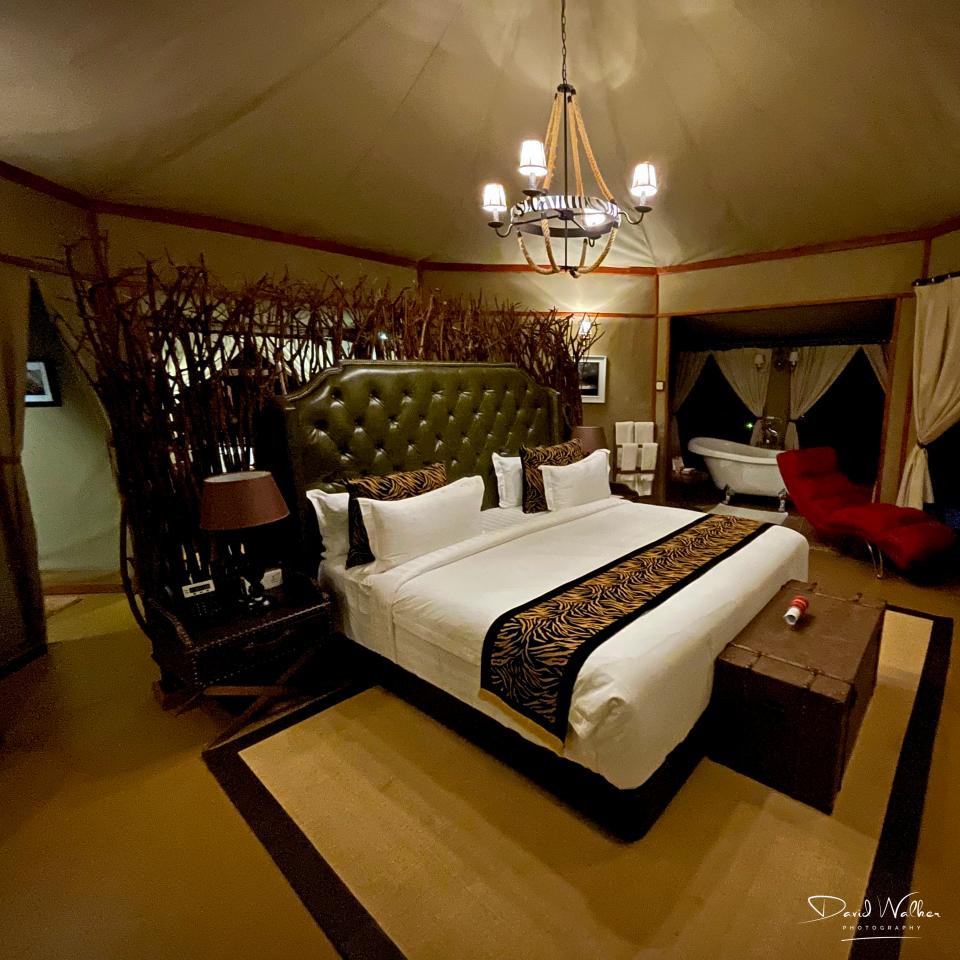
We woke at 6:00 am while it was still dark. It was chilly in the tented room and we were very grateful that housekeeping routine routinely pull down the covers on each side of the tent as part of the evening routine of preparing it, and had done so the previous evening while we were at dinner.
We arranged a wake up with coffee at 6:00 am and the friendly housekeeper duly arrived with a pot of hot water and coffee, for which we were both extremely grateful. The rooms don’t have kettles, so we were reliant on the housekeeping staff for this service.
Our early breakfast was very generous but much too large for me and also, perhaps, demonstrated an attempt to “try too hard”. The cooked elements were fine but the pastries were more than a little “floury” and hadn’t risen. We discussed it and felt they should, perhaps, constrain themselves to what they’re good at and what can be provided from a kitchen in the bush.
I hasten to note that this is a very minor criticism, as we were comfortable and well treated.
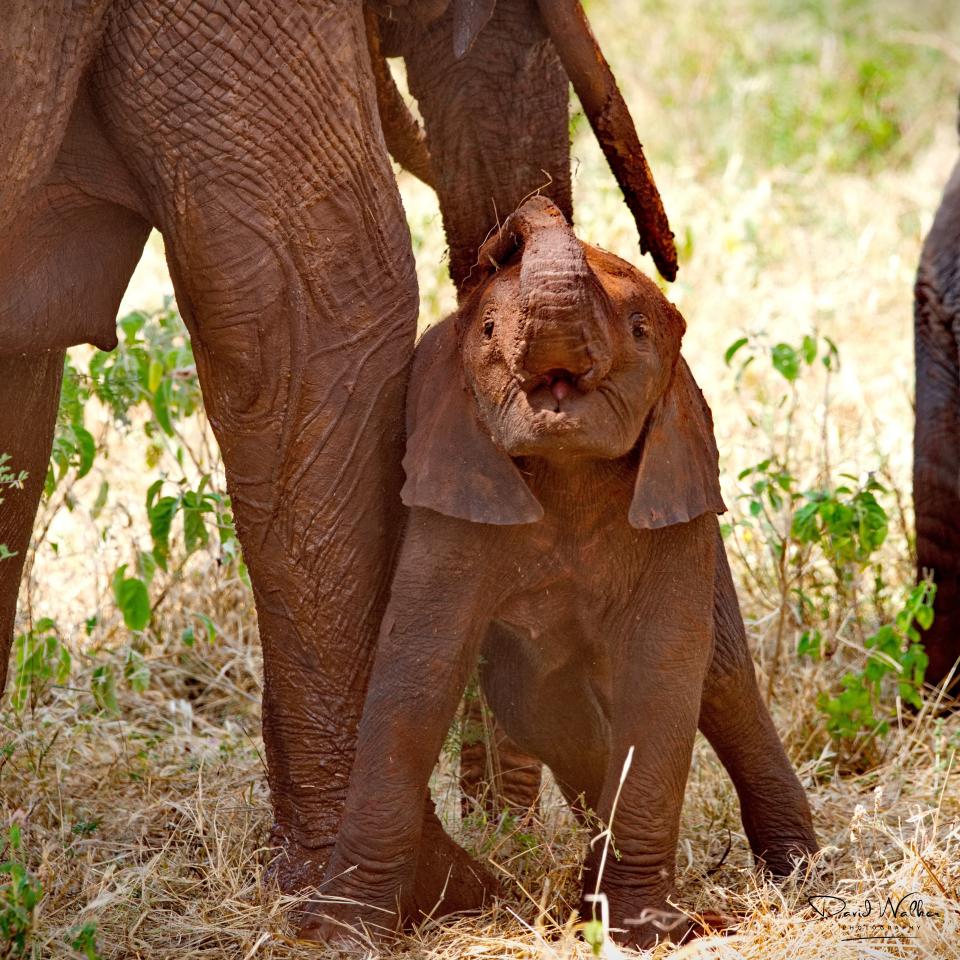
This first morning also underscored why an escort is needed when moving around the camp: Near the steps down from our tent, on its platform, was a pile of fresh dung as it seems a group of elephant had passed through during the night.
Into the Bush
We were on the Safari trail again by 07:45 and as soon as the Sun was up the ring-necked doves began the ubiquitous soundtrack of the African bush, a continuously repeated soft “oo-oo-rrrooo” that seems to say “work harder, work harder” over and over again.
My wildlife records testify to a plentiful and diverse set of encounters on our day in Tarangire but for me the following are the highlights.
Buffalo
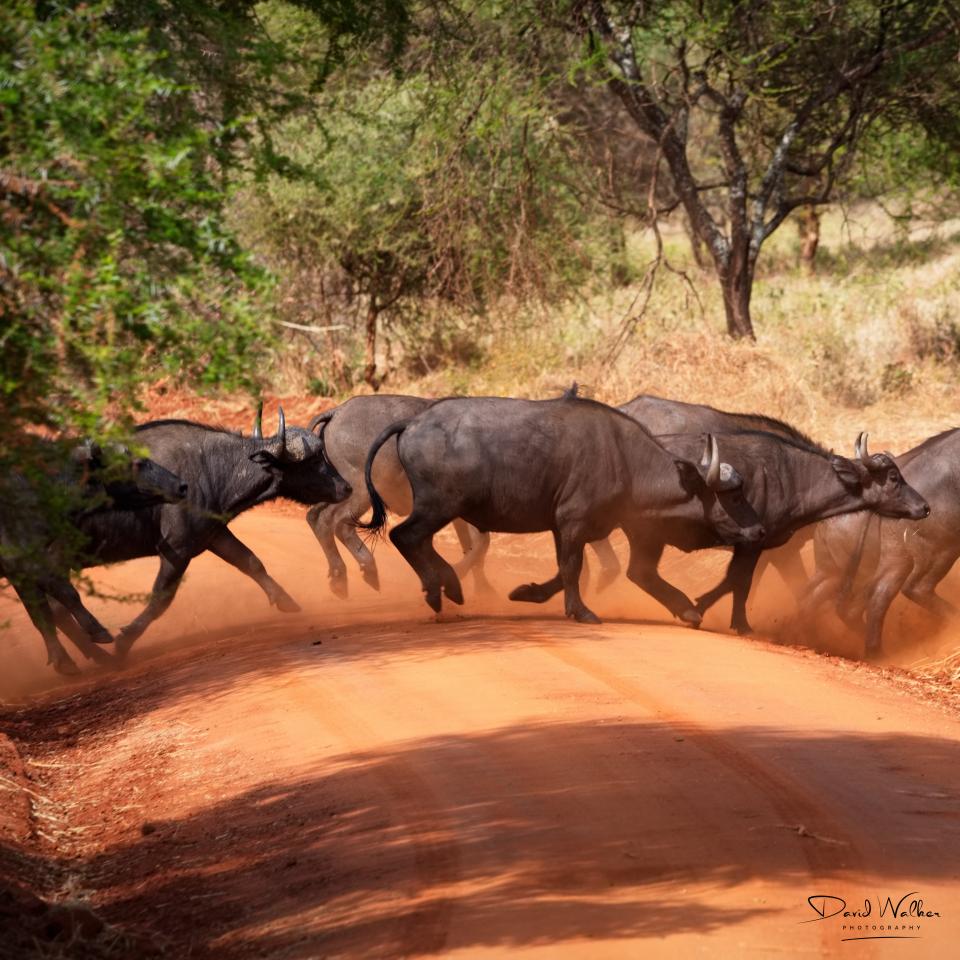
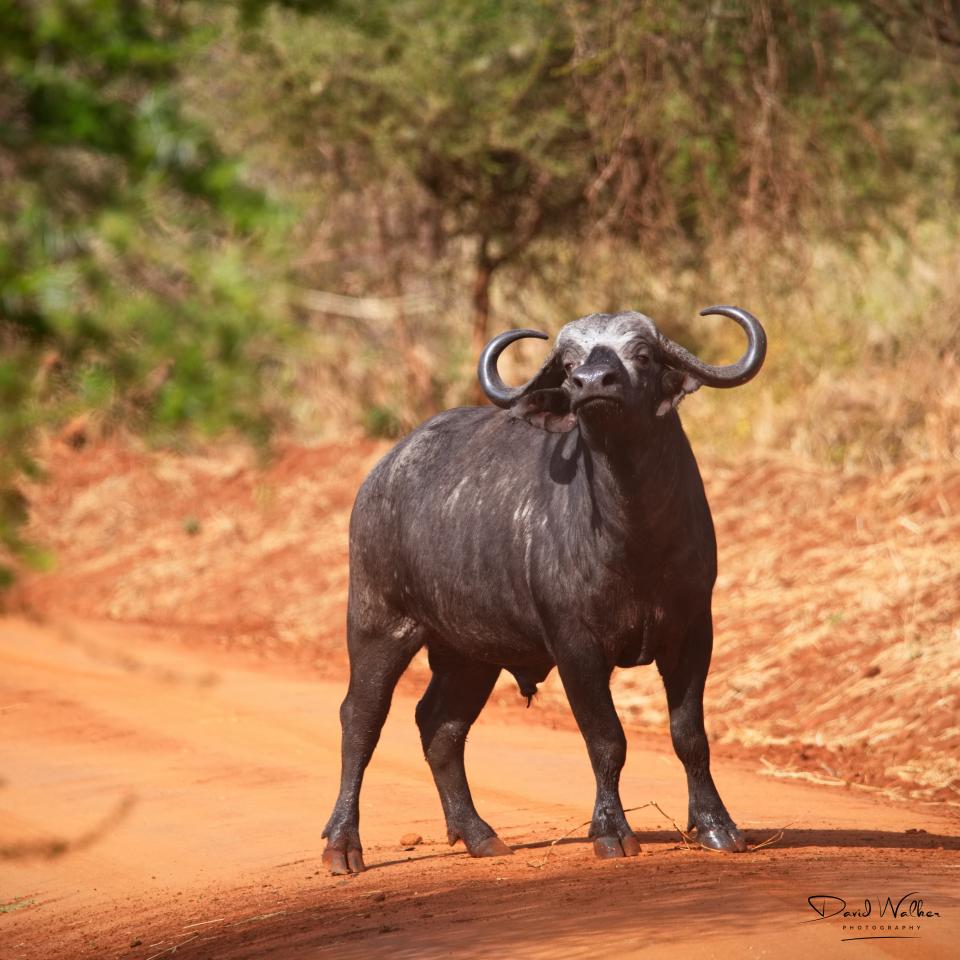
An encounter with a large herd of buffalo, one standing off briefly in the middle of a road, head raised in haughty fashion. They have every right to be haughty! They’re extremely dangerous, known locally as “the black death”, and are quite capable of staging an ambush on those on foot in the parks, including the park rangers.
Lioness and Cubs
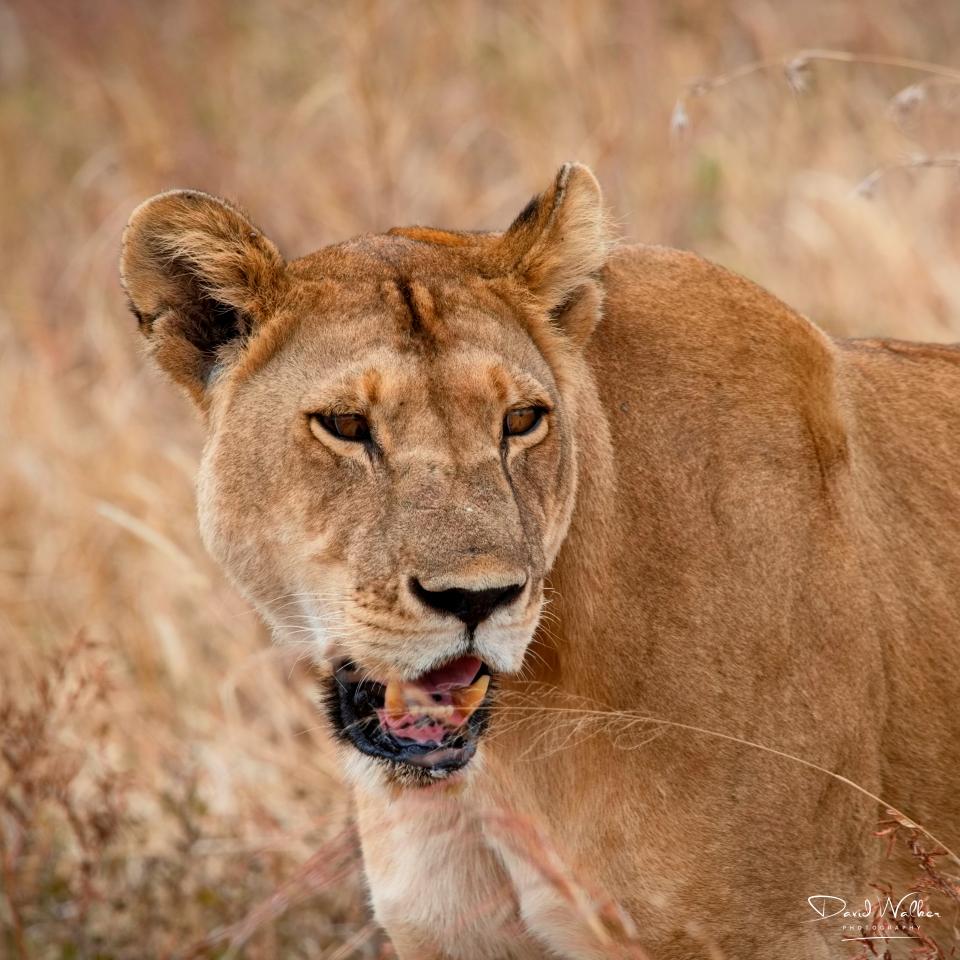
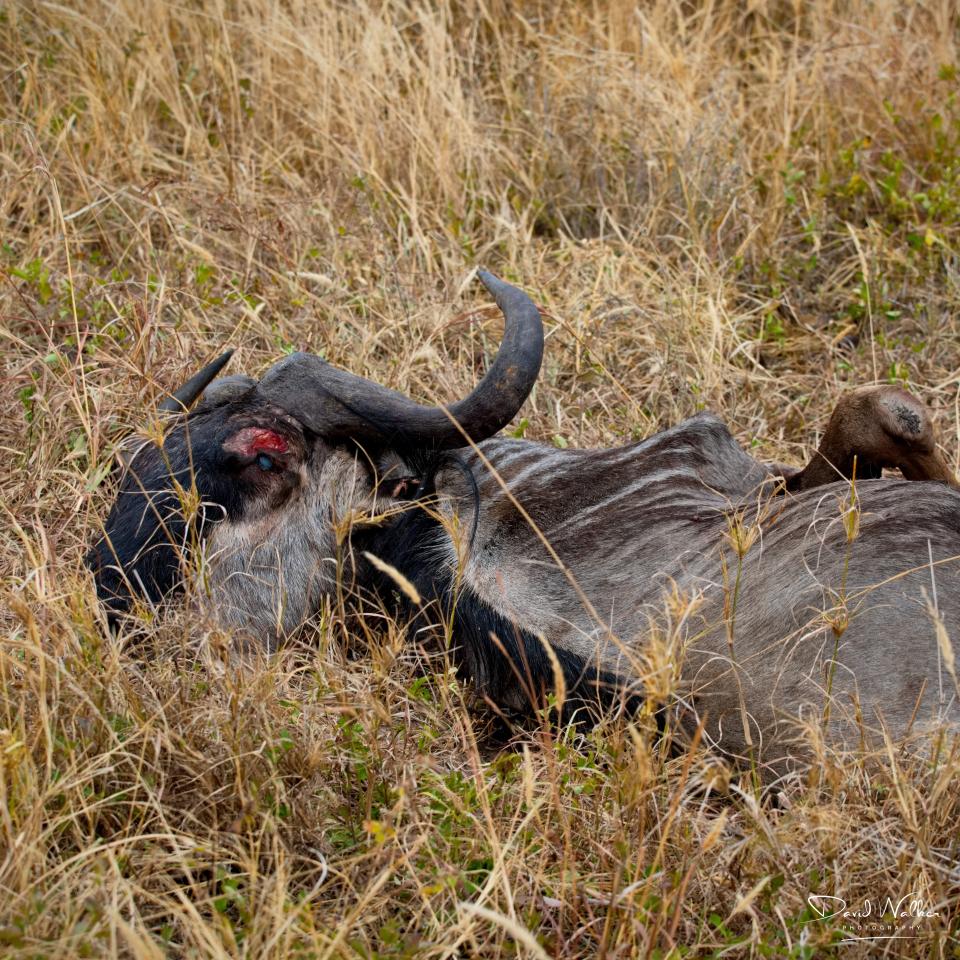
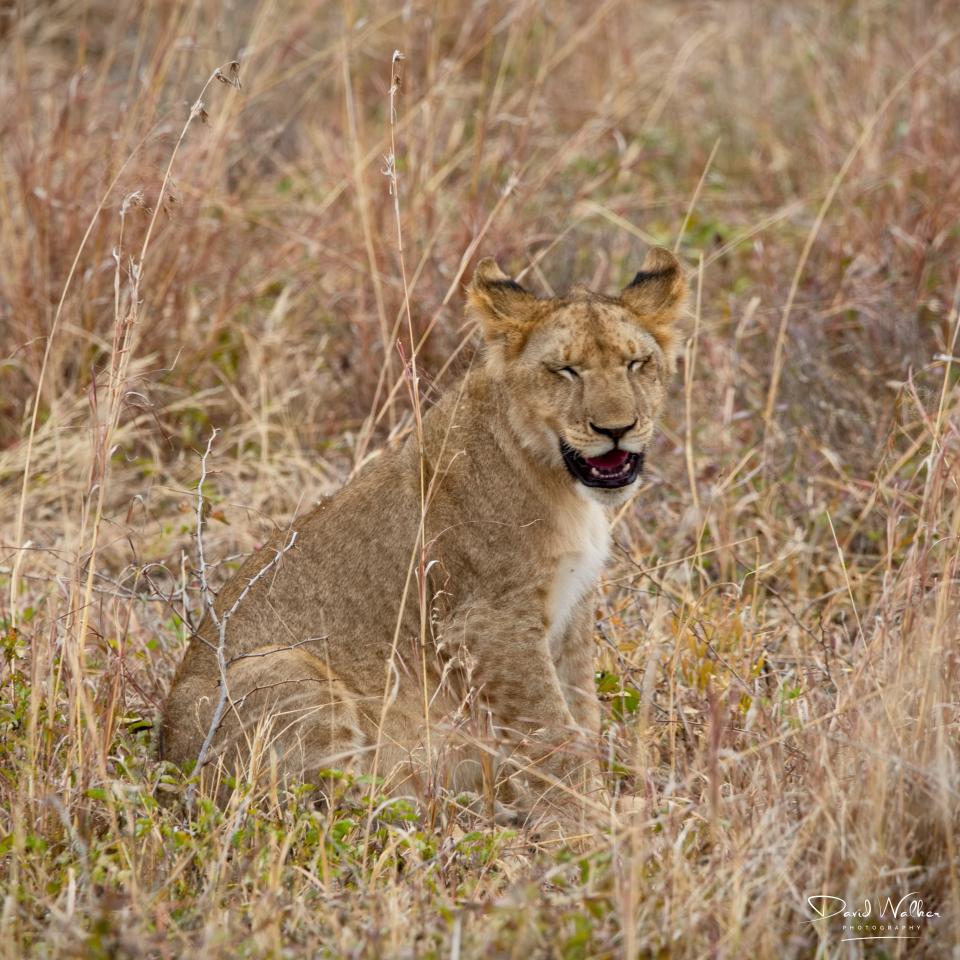
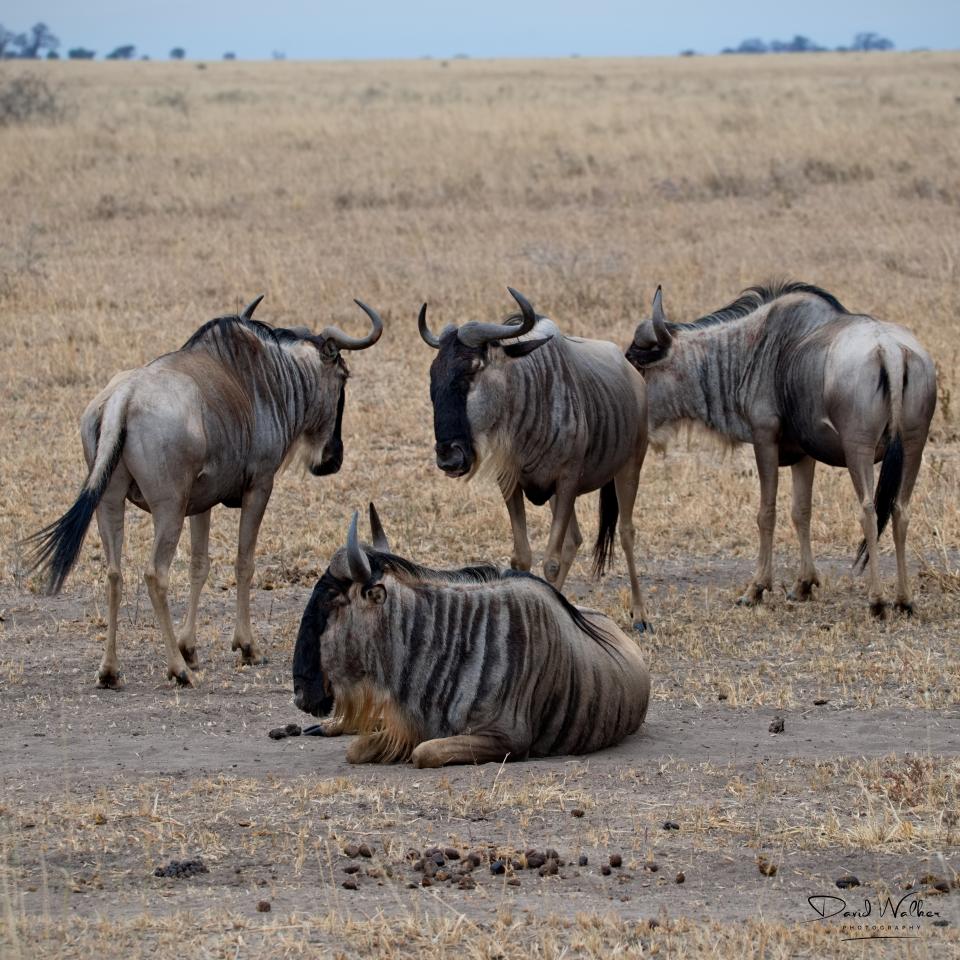
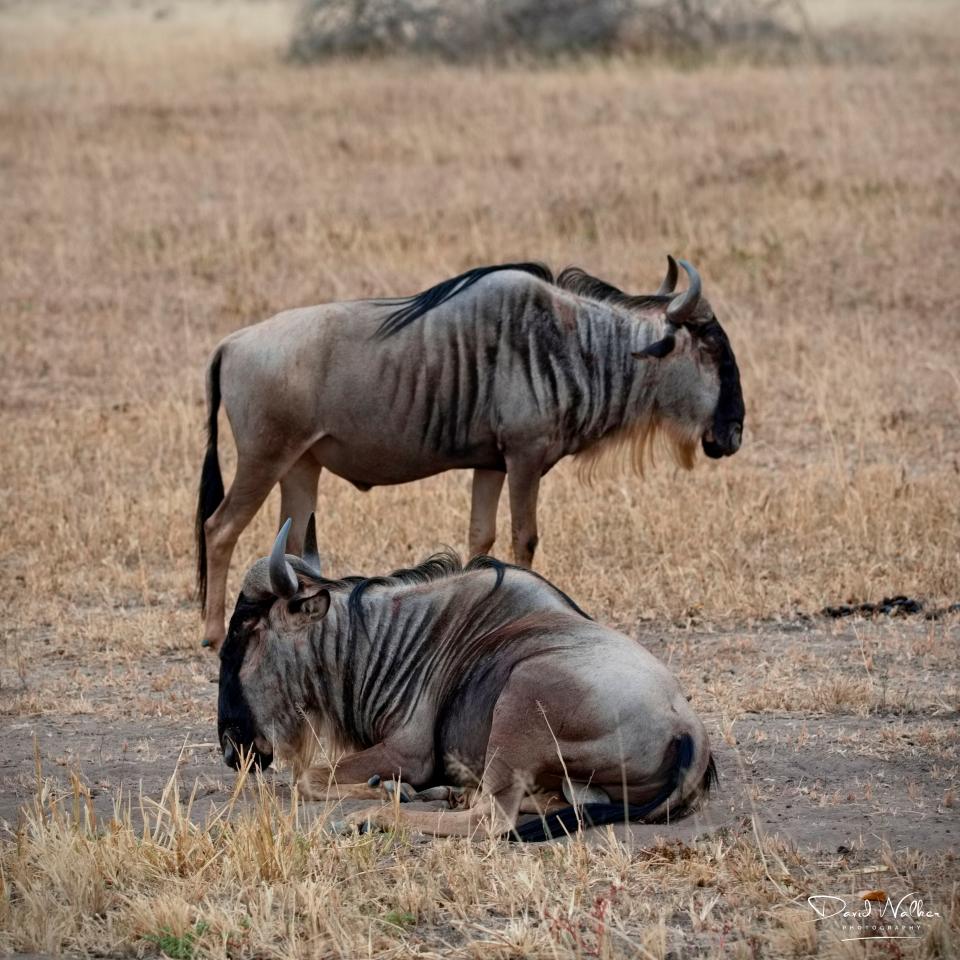
My second highlight was coming across a Lioness with a wildebeest kill nearby. Her behaviour made Philip think she had young, as she kept standing up staring off to the horizon, sniffing the air. Sure enough, in a den consisting of a shallow scrape under some low shrubs she had two 6-month old cubs, our first sighting of cubs so far.
Leopard
My third and final highlight from Tarangire, saving the best for last, was right at the end of the day. Philip had the radio on for much of the time as the guides used it to pass on Tips and the locations of interesting sightings, sharing the information between one another.
Courtesy of this grapevine, he heard of a sighting of a leopard and we headed off to the reported location at pace.
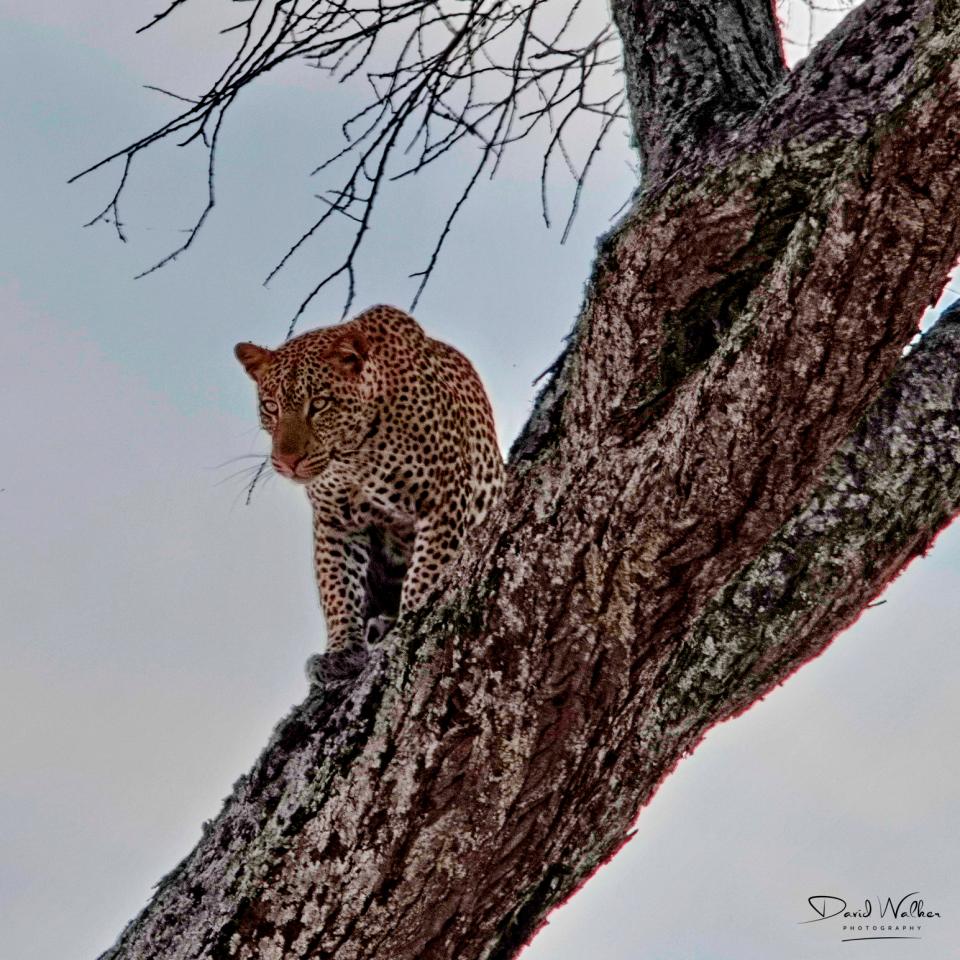
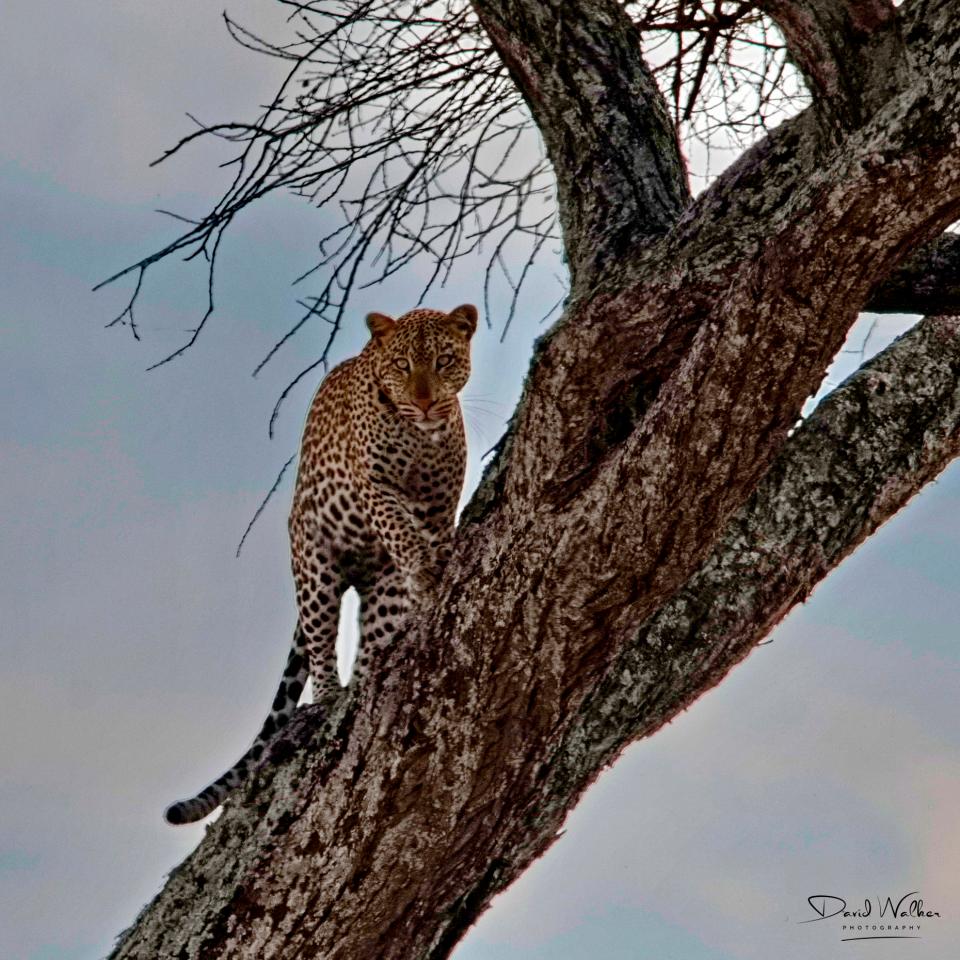
When we arrived, we were treated to an encounter with a leopard lazing up a tree, some 500 metres or so away but clearly visible through our binoculars or the camera, with its 600 mm lens.
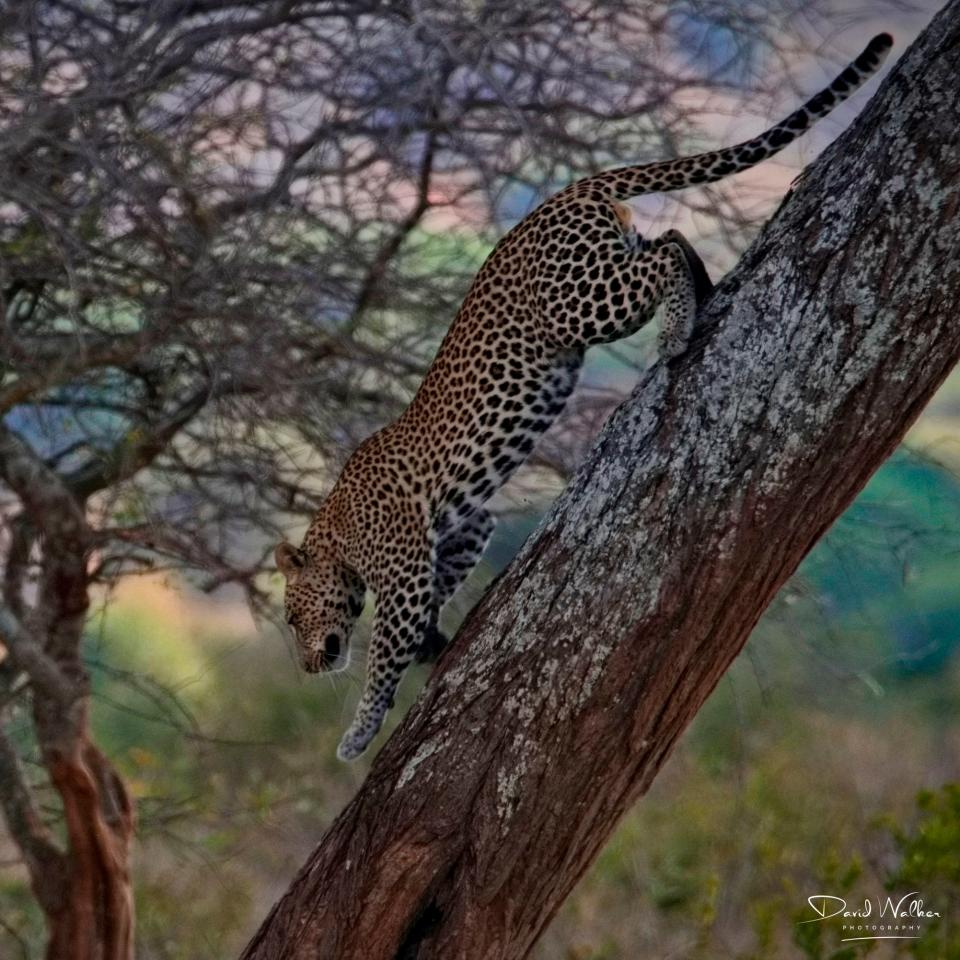
Philip told us that, often, they can be wary of things being pointed at them - is it a camera? Or a poacher’s gun? We were joined by another land cruiser and, perhaps, it was the long lenses or, maybe, just time to move but, either way, it rose from its position observing us from the tree and made its leisurely descent down the trunk, that was angled at about 45°, jumping the last metre or so into the long grass where we lost sight of it.
We were very privileged to have an encounter with this elusive cat and it inspired our choice of souvenir for the expedition as, much later, we were to buy a beautiful ebony carving of a leopard in precisely the same pose as we’d observed the real animal, gracefully making its way down a tree trunk.
Return to Camp
After our encounter, we returned to the lodge about 16:00 to 16:30 with plenty of time to chill out before dinner.
Field Notes
- African Buffalo (Syncerus caffer) - large herd encountered; one individual displaying alert, confrontational posture on road
- Lion (Panthera leo) - lioness observed with wildebeest kill; presence of two cubs (~6 months) in nearby den
- Leopard (Panthera pardus) - adult observed resting in tree; descended trunk and moved into grass; typical arboreal behaviour
- Ring-necked Dove (Streptopelia capicola) - persistent early morning vocalisation forming characteristic soundscape of camp
- African Bush Elephant (Loxodonta africana) - evidence of nocturnal movement through camp (fresh dung near tent platforms)
- Guide Communication - radio network used by guides to share wildlife sightings; enables targeted tracking of key species
- Predator Behaviour - lioness vigilance and scenting behaviour indicative of nearby cubs; leopard arboreal resting likely for safety and observation