
IN-2026-010 - Common Daisy (Bellis perennis) — Stem (T.S.)
Specimen & Context
| Date | 2026-03-28 |
| Species | Bellis perennis |
| Common Name | Common Daisy |
| Habit | Low-growing herbaceous perennial forming basal rosettes |
| Material | Fresh stem |
| Location | Abingdon, Oxfordshire, UK |
| Preparation | Stem, Transverse Section (T.S.) |
| Stain | None |
| Series | Scheme of Structural Investigations - Series II — Support & Conduction |
IN-2026-010 - Common Daisy (Bellis perennis) — Stem (T.S.)
| Date | 2026-03-28 |
| Species | Bellis perennis |
| Common Name | Common Daisy |
| Habit | Low-growing herbaceous perennial forming basal rosettes |
| Material | Fresh stem |
| Location | Abingdon, Oxfordshire, UK |
| Preparation | Stem, Transverse Section (T.S.) |
| Stain | None |
| Series | Scheme of Structural Investigations - Series II — Support & Conduction |
Overview
This investigation examines the internal structure of the stem of Bellis perennis (Common Daisy) using transverse sections. The aim was to observe the arrangement of supporting and conducting tissues in a simple herbaceous dicot stem.
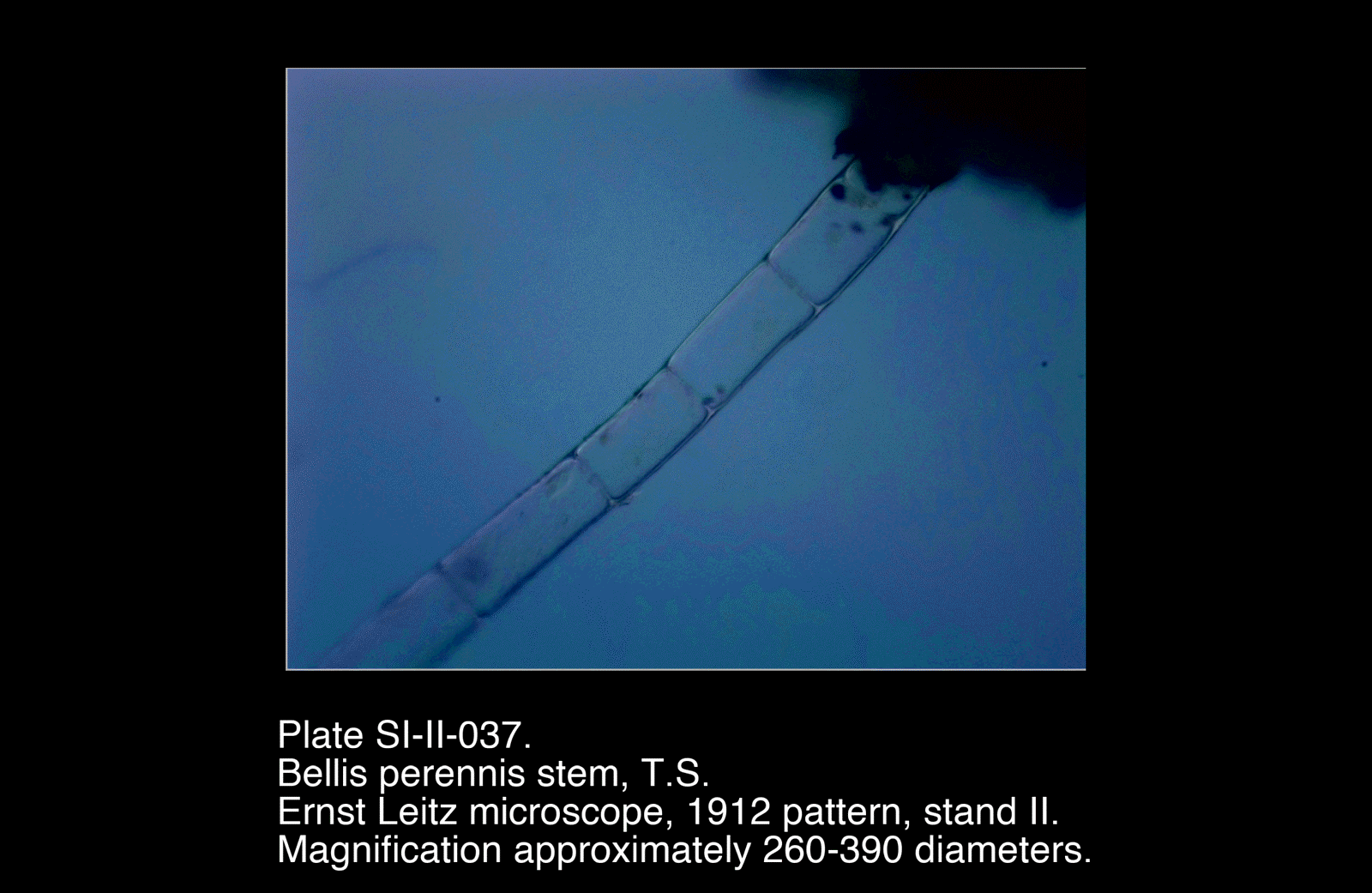
During examination, an incidental but instructive observation was made of an epidermal hair (trichome).
Method (Summary)
- Freehand transverse sections taken from fresh stem material
- Sections mounted in water (W.M.)
- Observed under low and high power objectives
- Multiple sections prepared to improve clarity and consistency
Observations
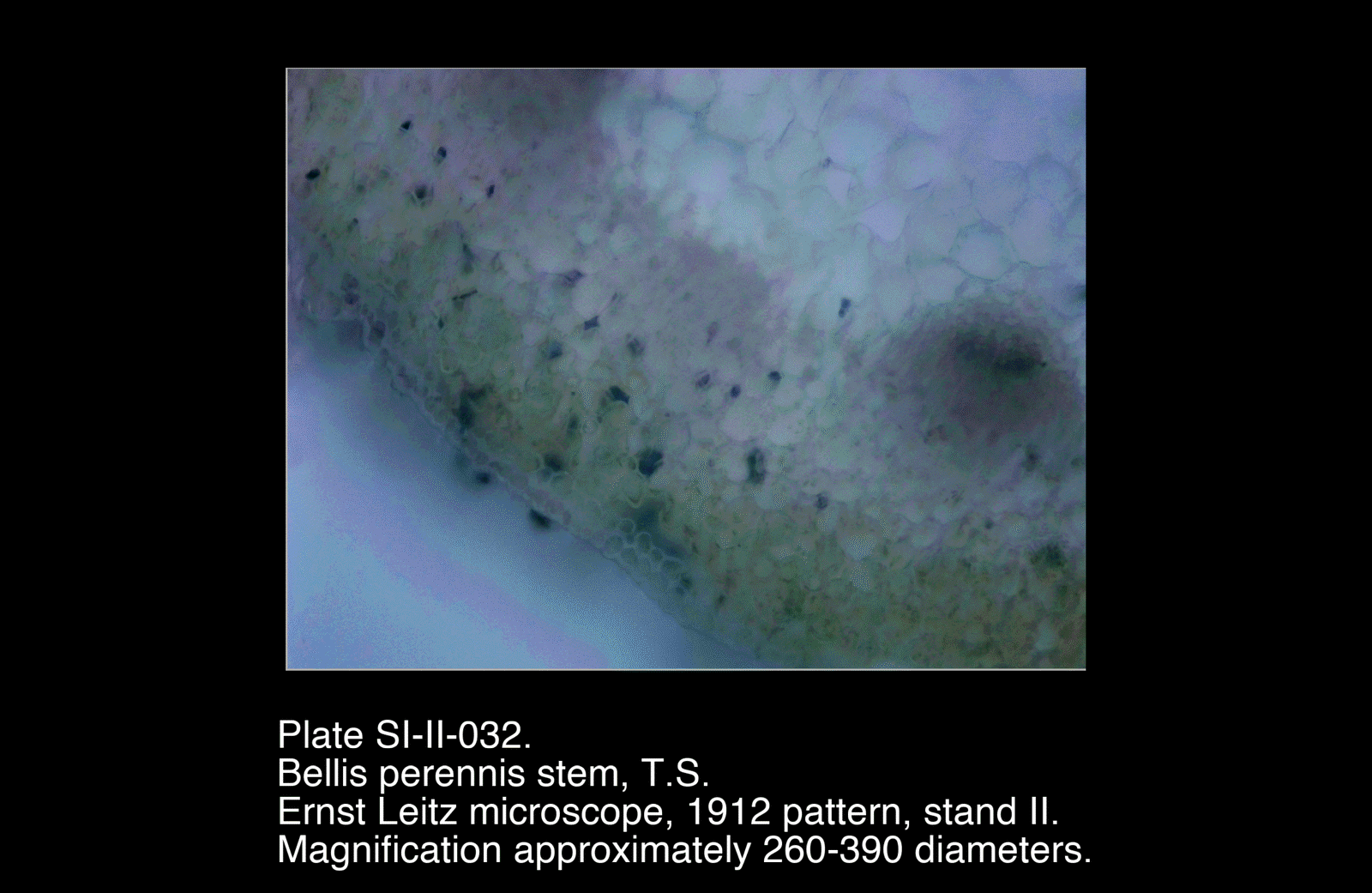
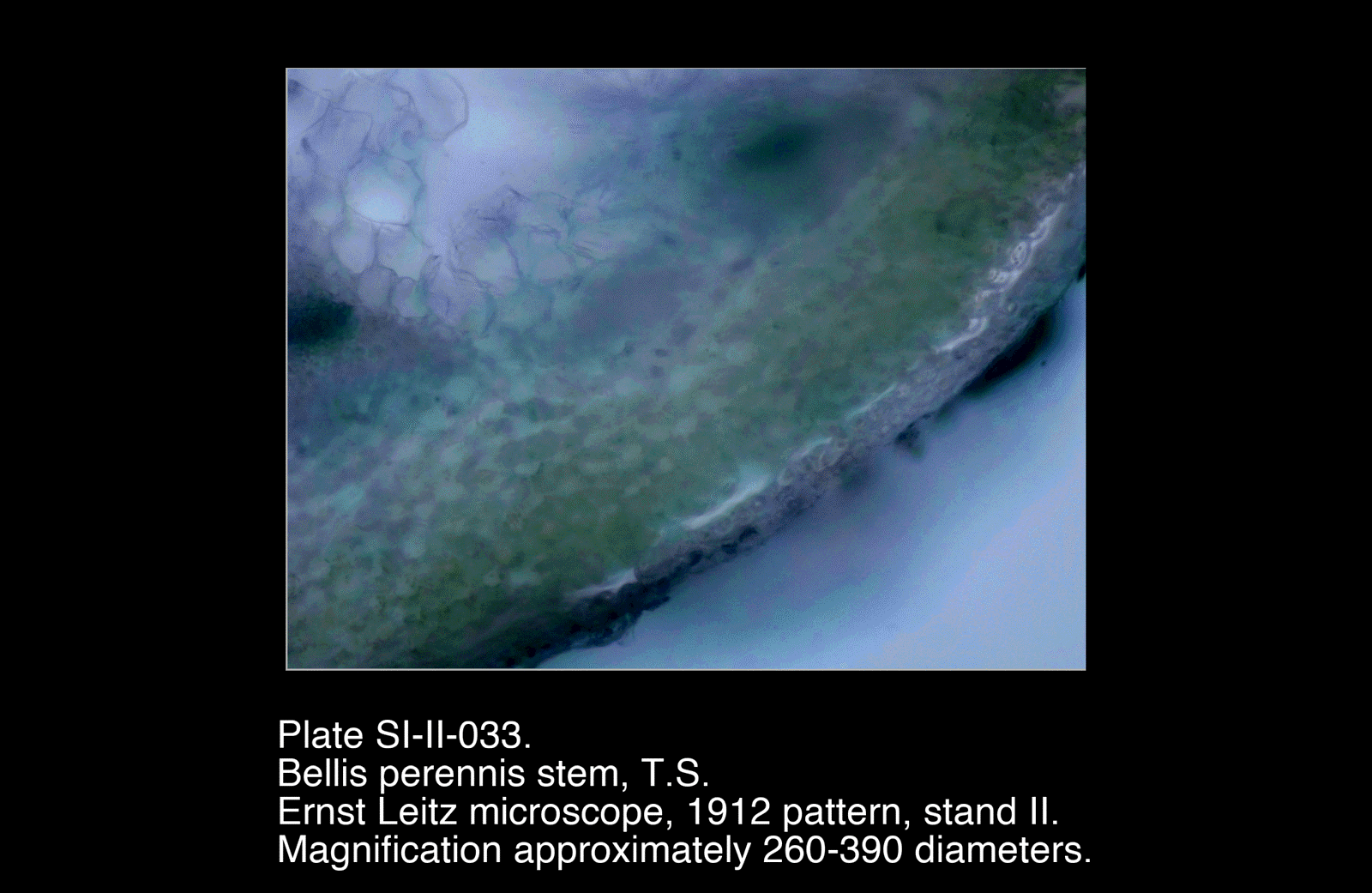
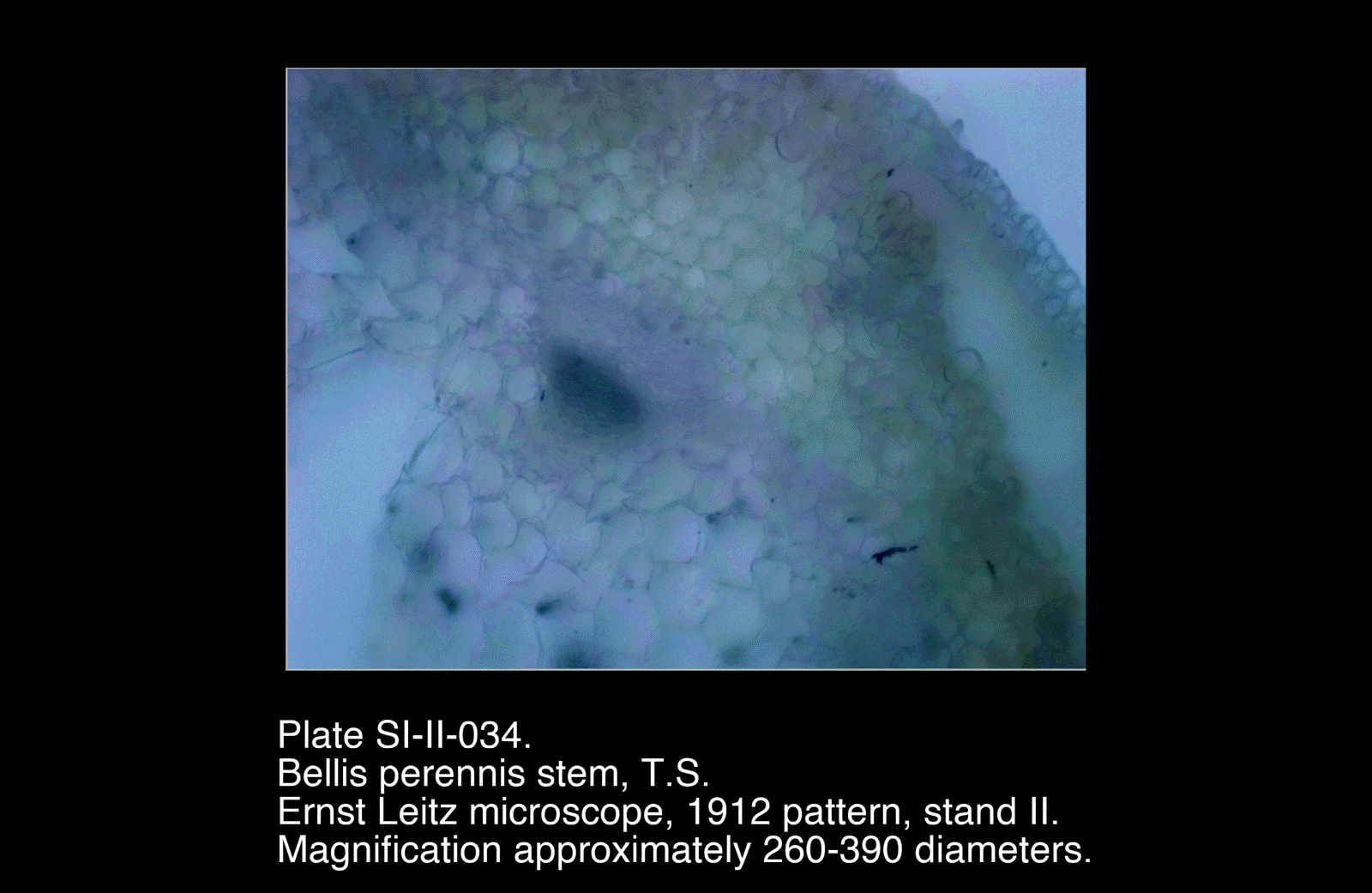
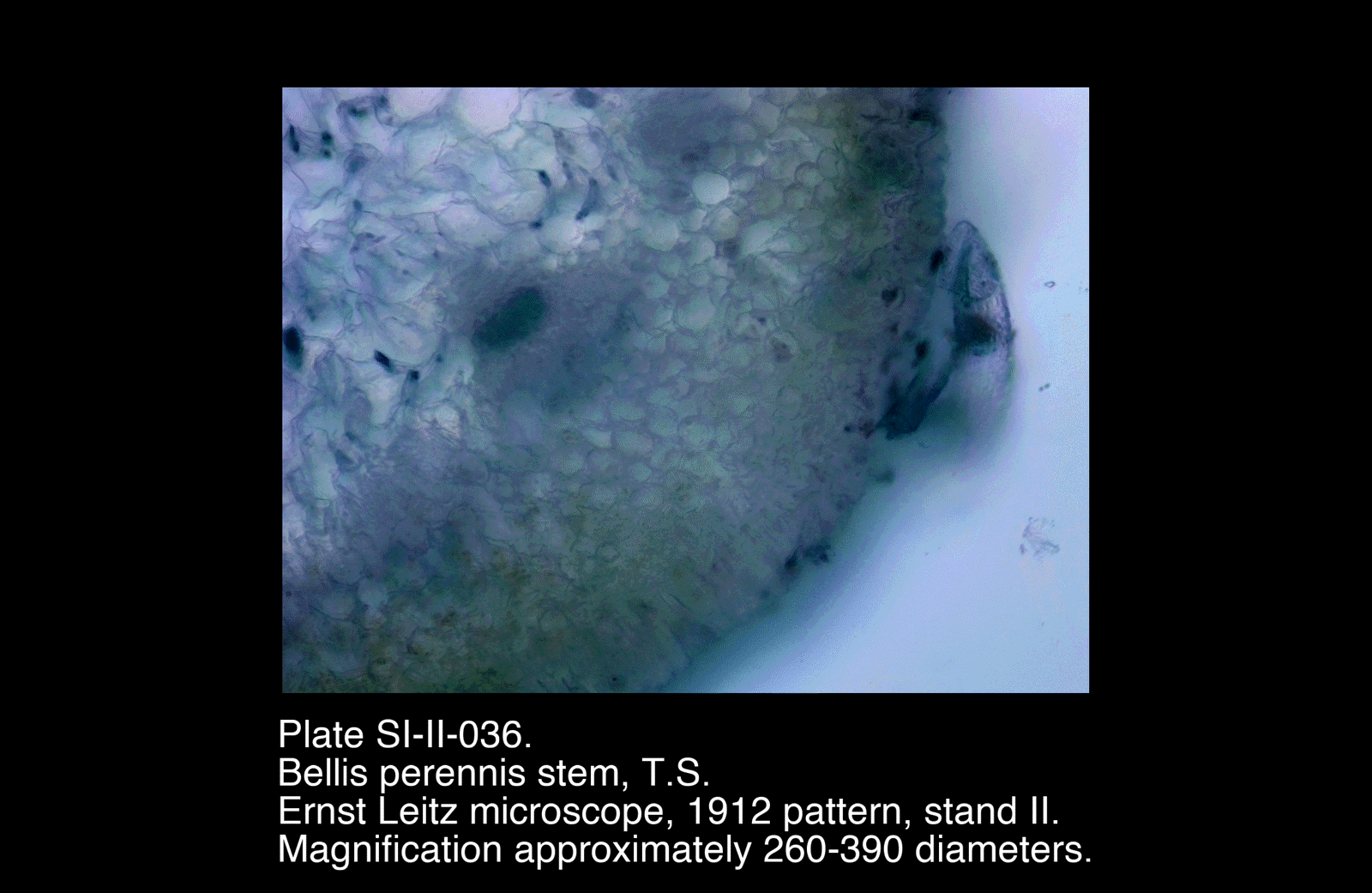
- Stem outline broadly circular to slightly irregular
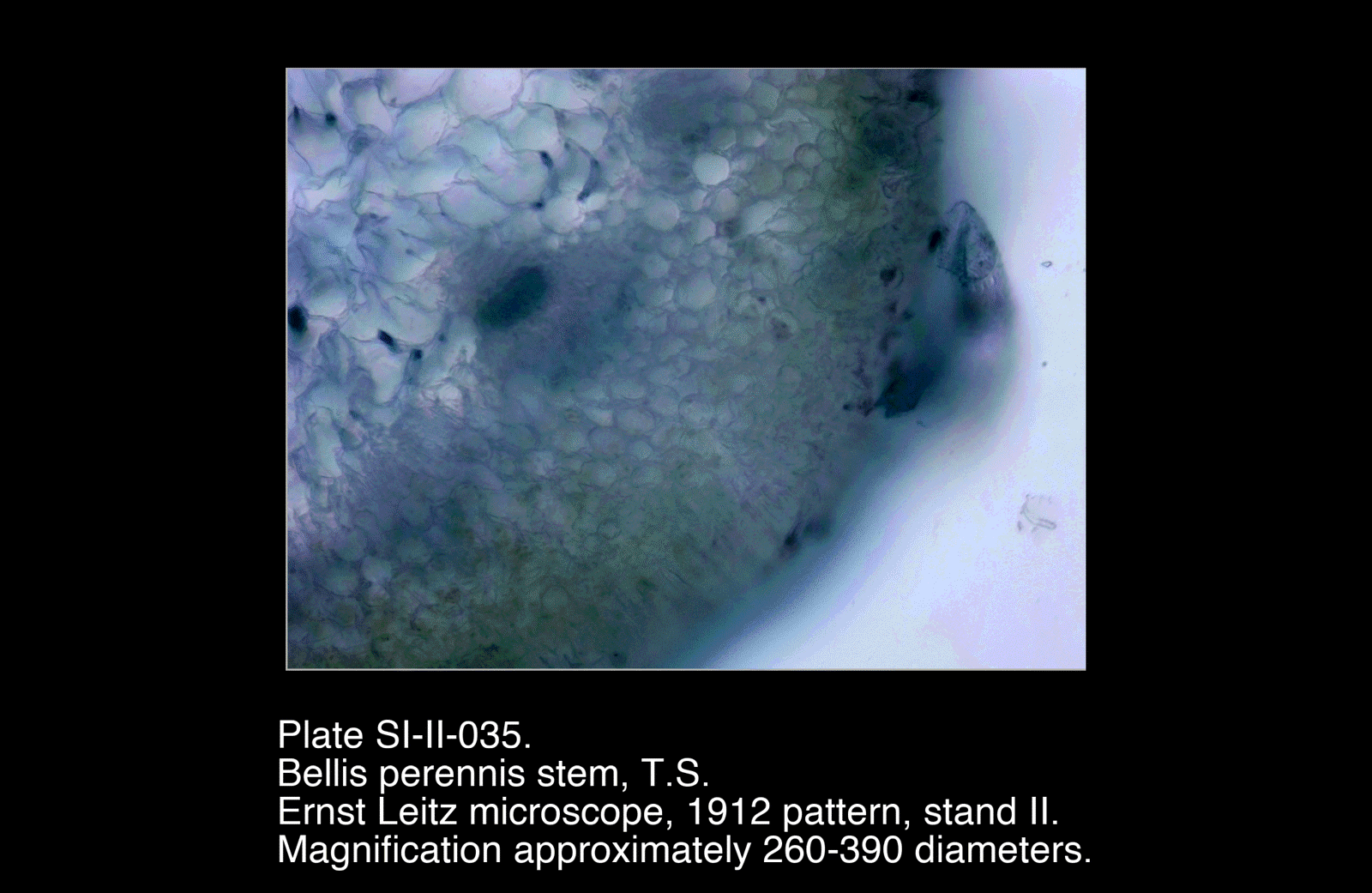
- Outer region composed of smaller, more compact cells forming the epidermis and cortex
- Interior dominated by larger, thin-walled parenchyma cells
- Subtle regions of increased density consistent with vascular bundles, though not strongly differentiated without staining
- Slight green colouration in outer tissues, suggesting chlorophyll-containing cells
- At the margin of one section, a slender, segmented, tapering structure composed of serially arranged cells was observed
Plates
/Bellis%20perennis%20stem,%20T.S.)
/Bellis%20perennis%20stem,%20T.S.)
/Bellis%20perennis%20stem,%20T.S.)
/Bellis%20perennis%20stem,%20T.S.)
/Bellis%20perennis%20stem,%20T.S.)
/Bellis%20perennis%20stem,%20T.S.)
Plates
These sections show the general organisation of cortical and internal tissues, as well as an isolated epidermal structure.
Interpretation
The stem structure of Bellis perennis represents a typical herbaceous dicot arrangement, optimised for flexibility and economy rather than rigidity.
Mechanical Strategy
Support is provided primarily by the outer tissues, where smaller and more closely packed cells resist deformation. This peripheral reinforcement allows the stem to maintain structure while remaining lightweight.
The interior, composed largely of parenchyma, contributes little to mechanical strength but allows for efficient growth and storage.
Internal Structure
The predominance of large, thin-walled parenchyma cells indicates a structure geared toward rapid growth and metabolic activity, rather than long-term mechanical support.
The absence of strong lignification or a central woody core confirms the plant’s reliance on herbaceous, flexible architecture.
Transport System
The vascular bundles, though only faintly resolved, appear to be arranged within the outer-to-mid regions of the stem. This configuration allows for effective transport while maintaining flexibility.
Epidermal Structures
The elongated, segmented structure observed at the section margin is interpreted as a non-glandular epidermal trichome (plant hair).
Such structures are typically associated with protection and surface interaction, including reduction of herbivory and modification of the boundary layer at the plant surface.
Remarks
- Section quality improved with successive attempts, though vascular differentiation remains subtle without staining
- The incidental observation of a trichome provides a useful link between internal structure and surface features
- This investigation complements earlier work on Galium aparine by offering a comparison with a self-supporting, non-climbing herbaceous stem
- Future work may include surface preparations (W.M.) to examine epidermal structures in situ