
IN-2026-007 - Pussy Willow (Salix caprea) — Pollen (W.M.)
Specimen & Context
| Date | 2026-03-23 |
| Species | Salix caprea |
| Common Name | Pussy Willow |
| Biological Role | Male gametophyte responsible for fertilisation |
| Material | Fresh pollen collected from catkins |
| Location | Abingdon, Oxfordshire, UK |
| Preparation | Pollen, Whole Mount (W.M.) |
| Stain | None |
| Series | Scheme of Structural Investigations - Series III — Reproductive Elements |
Overview
This investigation examines the pollen of Salix caprea (Goat Willow) as a whole mount, with particular attention to structural changes during hydration. The aim was to observe pollen morphology and to document the transition from dehydrated to hydrated states.
Method (Summary)
- Dry pollen transferred directly to slide and observed
- Water added to initiate hydration
- Sequential observations made over short time intervals
- Both static imaging and moving-image capture used
Observations
Dry State
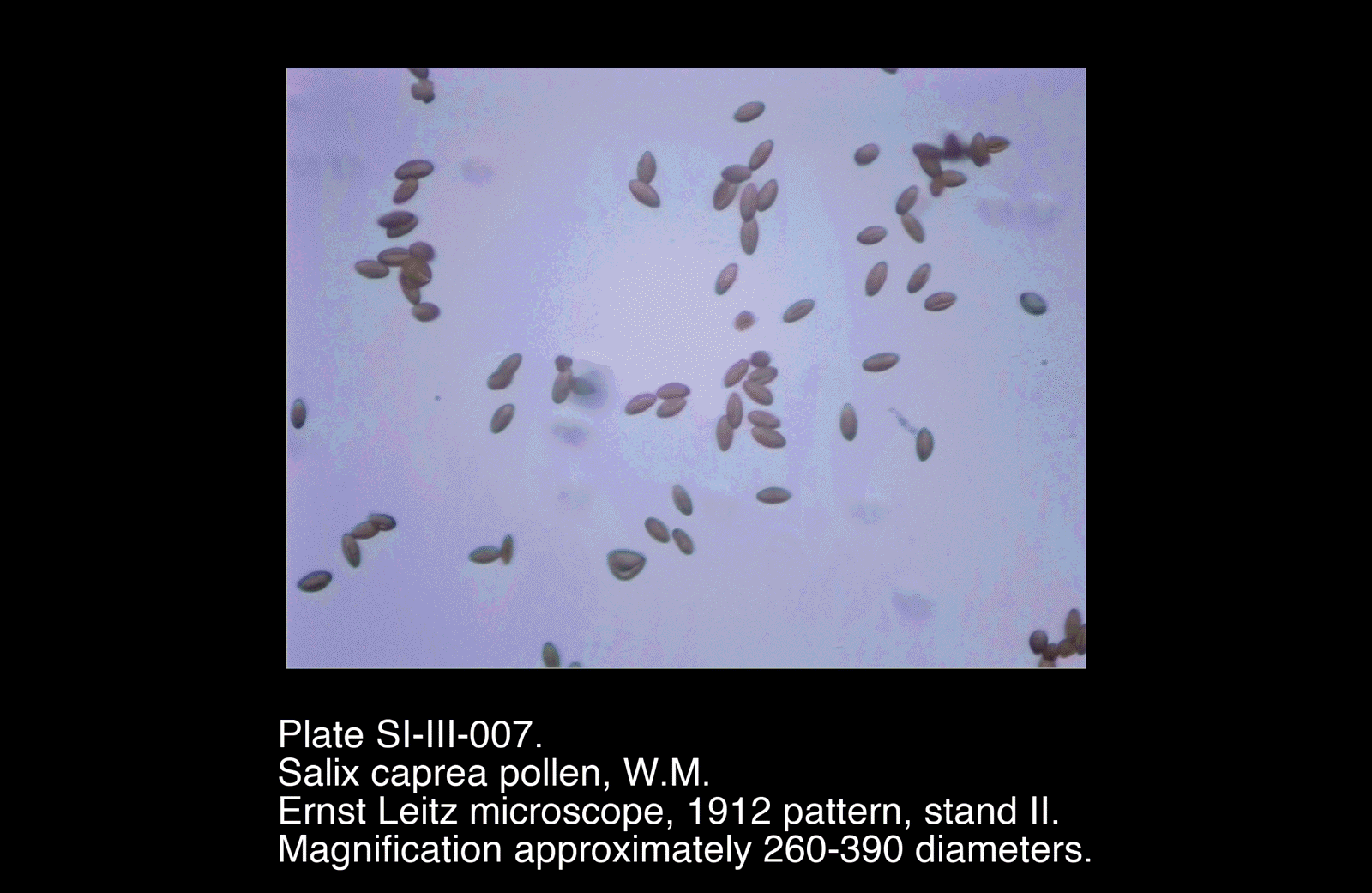
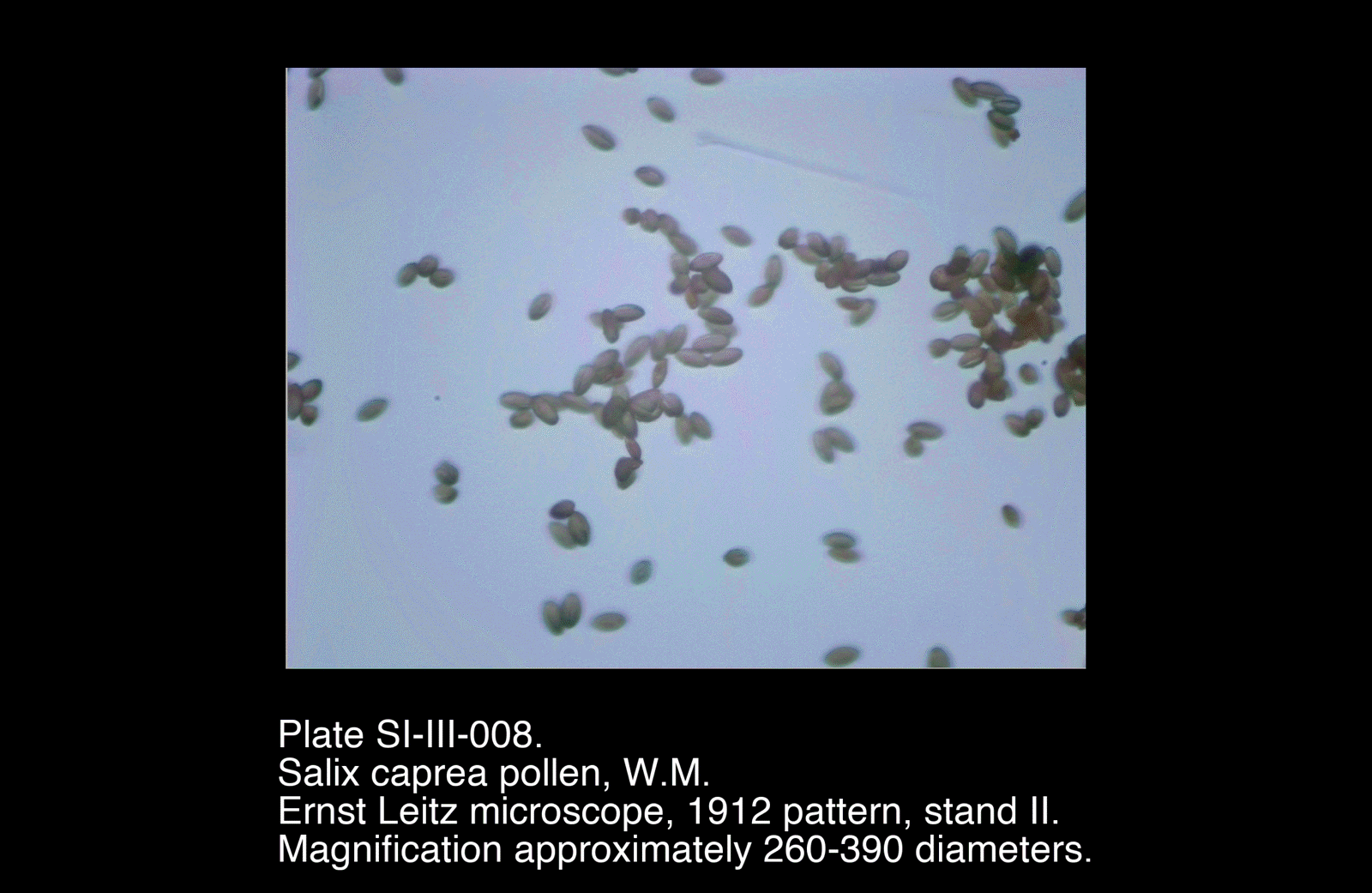
- Pollen grains elongate to oval in form
- Surface appears smooth at this scale, with no pronounced ornamentation visible
- Grains often occur loosely scattered or in small clusters
- Some grains show slight asymmetry or collapse, suggesting dehydration
Transitional / Hydration Phase
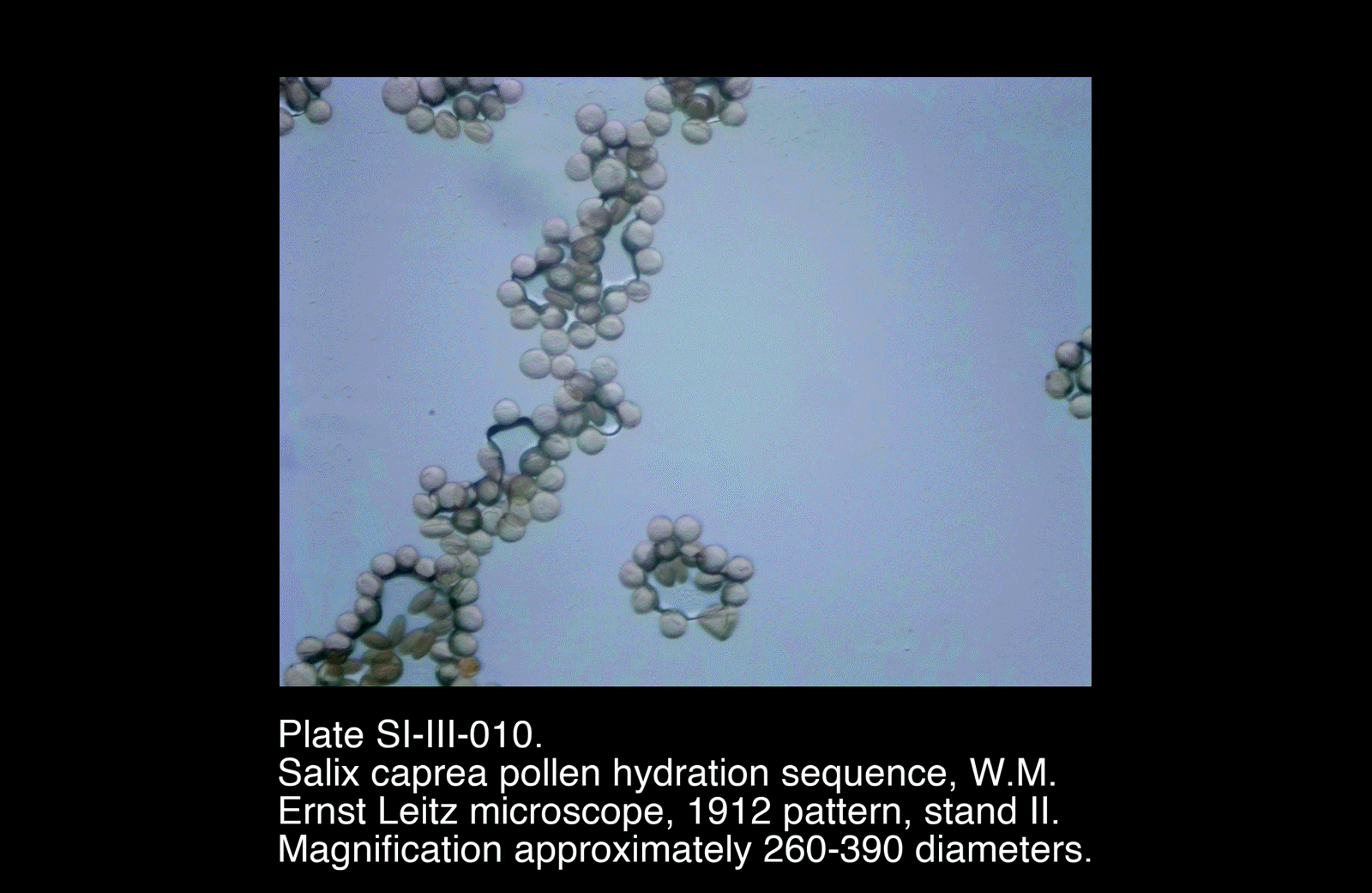
- Grains begin to expand and round upon contact with water
- Movement observed as grains shift and reorient during hydration
- Clusters form as grains come into contact in the fluid medium
Hydrated State
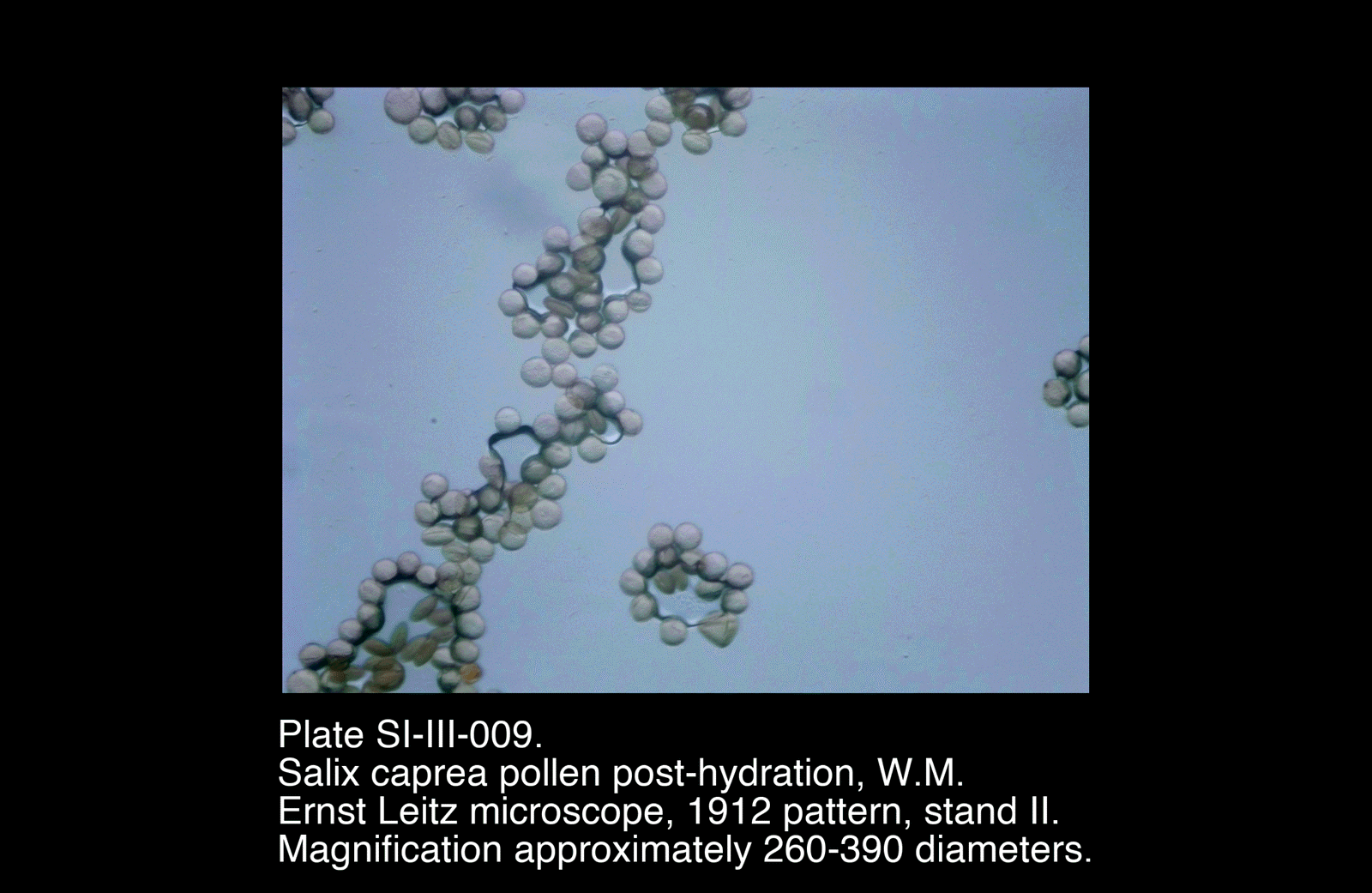
- Grains become more spherical and turgid
- Surface appears more uniform and smooth
- Increased tendency to aggregate into groups, possibly due to surface interactions
- Individual grains appear optically clearer and more defined
Plates
Selected Plates
/Salix%20caprea%20pollen,%20W.M.)
Plates
Selected Plates
This plate shows pollen in the hydrated state, with rounded, expanded grains.
Preliminary Plates
/Salix%20caprea%20pollen,%20W.M.)
/Salix%20caprea%20pollen,%20W.M.)
Preliminary Plates
These plates show the initial dry morphology and early stages of hydration.
Interpretation
The observed changes reflect the functional transition of pollen from a dormant, transportable state to an active, hydrated form capable of germination.
Structural Change on Hydration
The shift from elongate to spherical form indicates:
- Uptake of water into the pollen grain
- Expansion of internal contents
- Restoration of physiological activity
The initial irregularity of dry grains suggests collapse or folding of the outer wall (exine/intine system) during dehydration.
Functional Significance
Hydration is a critical step in fertilisation:
- Enables metabolic activation
- Prepares the grain for pollen tube formation
- Likely alters mechanical properties of the pollen wall
The rapidity of this transition highlights the sensitivity of pollen to environmental moisture conditions.
Surface and Interaction
The tendency of hydrated grains to cluster may reflect:
- Changes in surface properties upon hydration
- Possible adhesive interactions between grains
- Behaviour relevant to deposition on stigmatic surfaces
Position within the Programme
This investigation introduces reproductive structures at the microscopic level, contrasting with earlier structural studies:
- Unlike stems or leaves, pollen represents a discrete, functional unit
- Demonstrates dynamic structural change, rather than static anatomy
- Connects structure directly to biological function (fertilisation)
Remarks
- The hydration sequence provided particularly valuable insight into pollen behaviour
- Observations suggest that timing is important: structural changes occur rapidly after water addition
- A moving-image record (SI-III-010) captures this transition more effectively than static plates