
IN-2026-006 - Common Ivy (Hedera helix) — Stem (T.S.)
Specimen & Context
| Date | 2026-03-21 |
| Species | Hedera helix |
| Common Name | Common Ivy |
| Habit | Climbing plant, capable of both flexible extension and longer-term structural support |
| Material | Fresh stem |
| Location | Abingdon, Oxfordshire, UK |
| Preparation | Stem, Transverse Section (T.S.) |
| Stain | Toluidine Blue |
| Series | Scheme of Structural Investigations - Series II — Support & Conduction |
Overview
This investigation examines the internal structure of the stem of Hedera helix (Common Ivy) using transverse sections stained with toluidine blue. The aim was to observe tissue differentiation and to compare structural organisation with that of a more weakly supported herbaceous stem.
Method (Summary)
- Freehand transverse sections taken from fresh stem material
- Sections stained lightly with toluidine blue and mounted in water
- Observed under low and high power objectives
- Multiple sections prepared to improve consistency
Observations
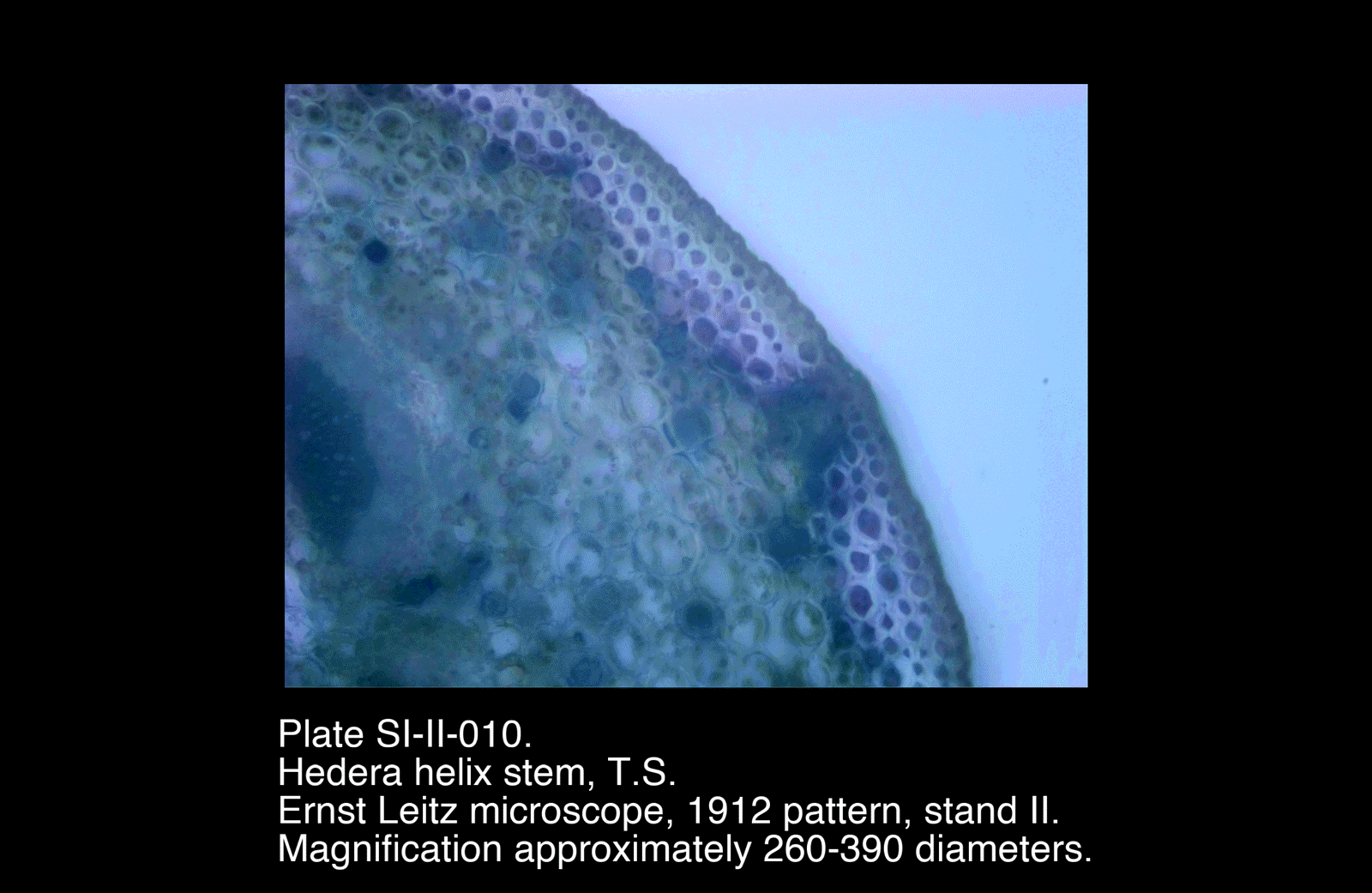
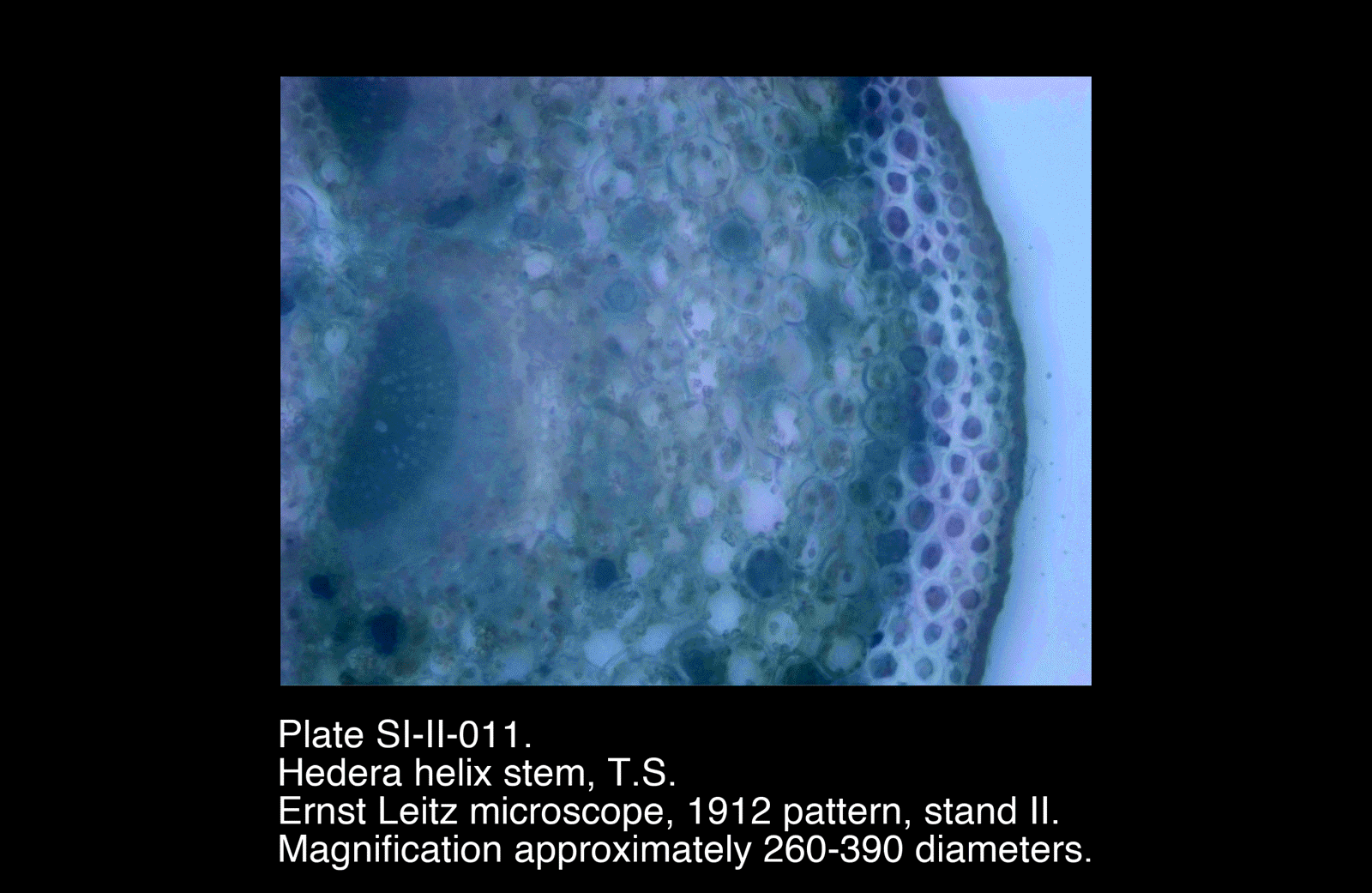
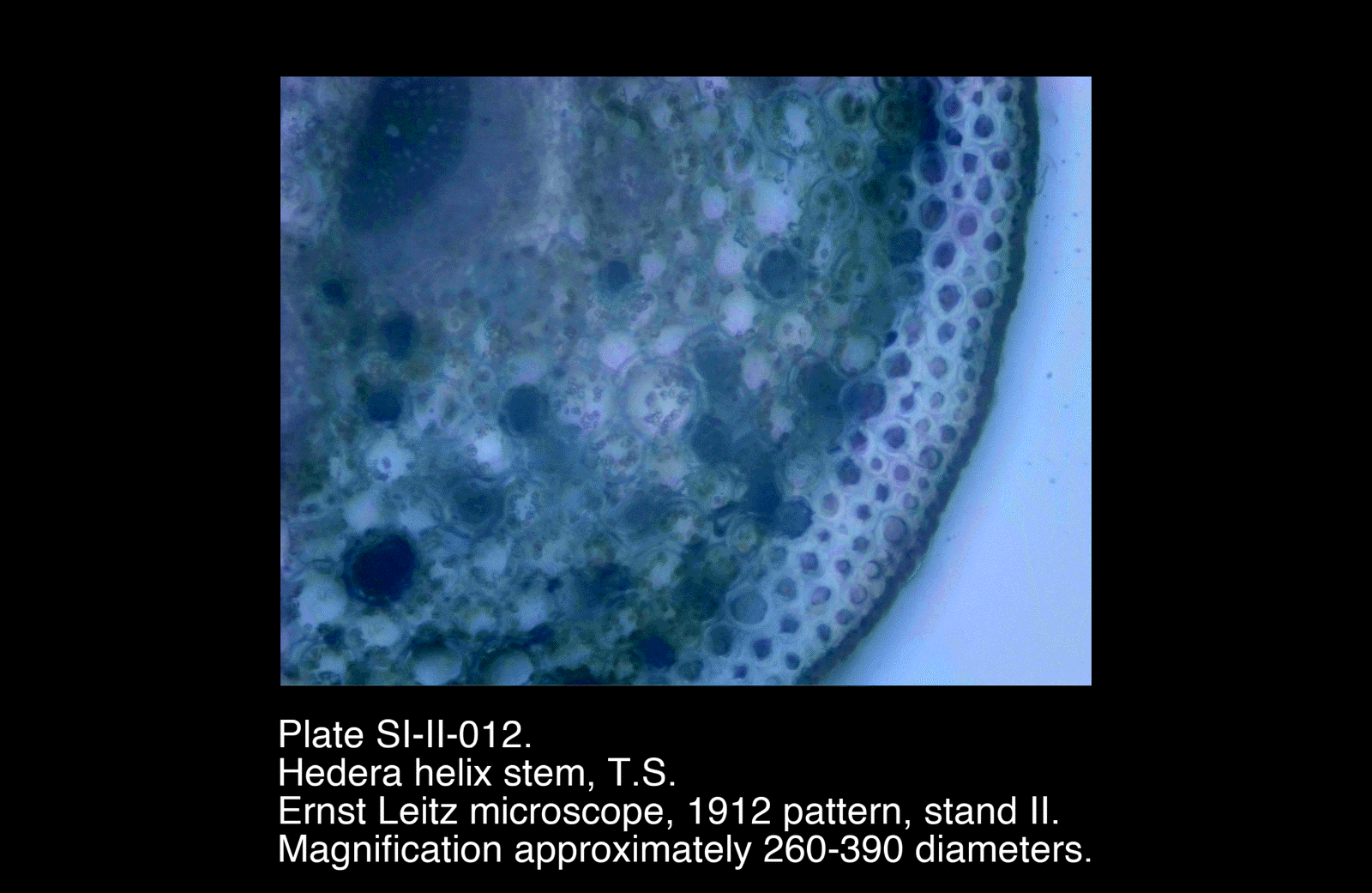
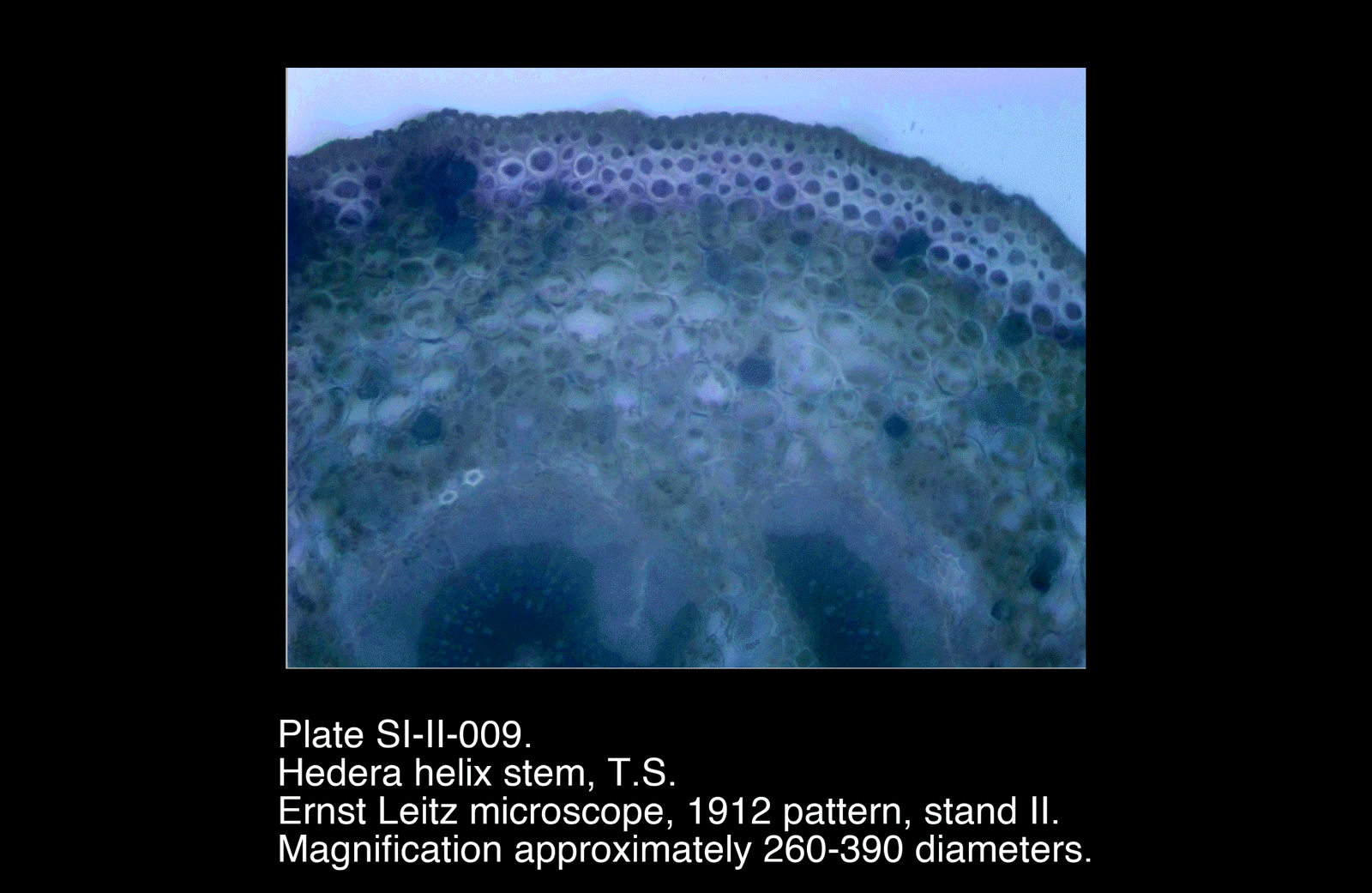
- Stem broadly circular in outline, lacking pronounced ridging
- Outer layer composed of small, densely packed cells, forming a distinct boundary
- Beneath this, a region of larger parenchymatous cells
- Vascular tissue arranged in a continuous ring, more integrated than discrete bundles
- Within vascular regions:
- Darker-stained areas (likely lignified elements)
- Lighter regions suggestive of conducting tissues (xylem/phloem)
- Interior composed of large, thin-walled cells (pith-like region)
- Toluidine blue provides clear contrast between tissue types, particularly in vascular zones
Plates
Selected Plates (Final Sections)
/Hedera%20helix%20stem,%20T.S.)
/Hedera%20helix%20stem,%20T.S.)
/Hedera%20helix%20stem,%20T.S.)
Plates
Selected Plates (Final Sections)
These plates show the clearest differentiation between outer tissues, vascular ring, and central parenchyma.
Earlier Sections (Preliminary)
/Hedera%20helix%20stem,%20T.S.)
/Hedera%20helix%20stem,%20T.S.)
Earlier Sections (Preliminary)
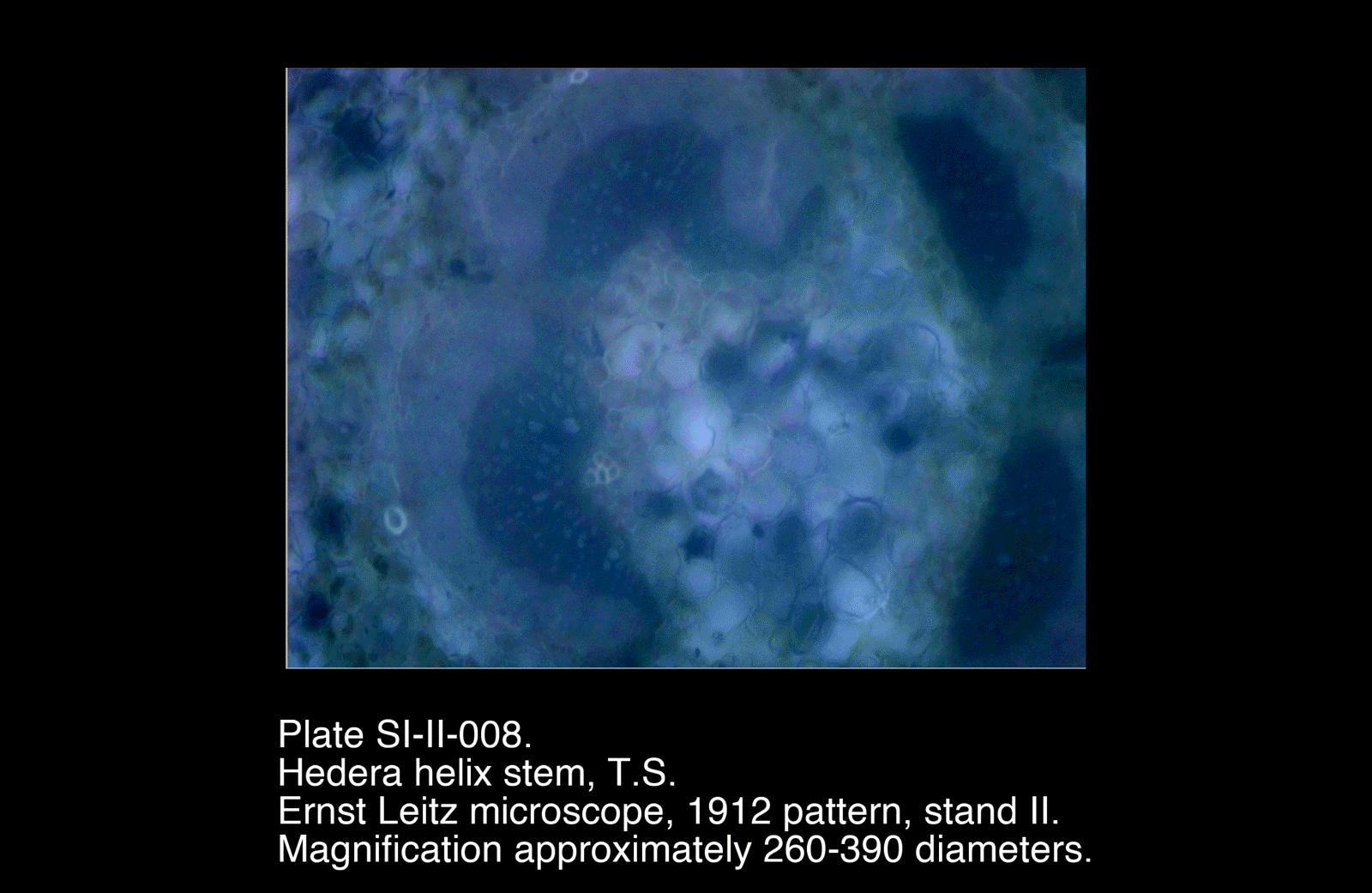
Earlier sections establish general organisation, though with less consistent staining and clarity.
Interpretation
The stem of Hedera helix represents a more structurally developed system than that of a purely herbaceous plant such as Galium aparine.
Tissue Differentiation
The application of toluidine blue reveals clear differentiation of tissues:
- Outer region: likely protective and supportive tissues
- Vascular ring: organised transport system
- Central region: parenchyma for storage and internal support
The increased clarity compared to unstained sections highlights the value of staining in structural interpretation.
Vascular Organisation
Unlike the discrete bundles seen in Galium, the vascular tissue here forms a more continuous ring:
- Suggests a more integrated transport system
- Provides greater structural coherence
- Likely supports both flexibility and increasing rigidity with age
The darker staining of certain elements is consistent with lignification, indicating strengthening of conducting tissues.
Mechanical Strategy
The stem appears to balance:
- Flexibility (necessary for climbing and adaptation to supports)
- Increasing structural strength (as stems mature)
This places Hedera between:
- Weak, scrambling herbaceous forms
- Fully self-supporting woody stems
Functional Interpretation
The stem can be understood as a transitional structural system:
- More organised than a purely herbaceous stem
- Beginning to show features associated with woody growth
- Capable of both extension and reinforcement over time
Comparison with Galium aparine
- Galium: discrete bundles, highly flexible, minimal investment in strength
- Hedera: continuous vascular ring, greater differentiation, increasing strength
- Both employ climbing strategies, but Hedera shows greater structural independence
Remarks
- Toluidine blue staining significantly improved visibility of vascular structure
- Section quality influences clarity of vascular continuity
- This specimen provides a valuable intermediate comparison between:
- Herbaceous stems
- More fully woody systems (future investigation)