
IN-2026-005 - House Fly (Musca domestica) — Wing (W.M.)
Specimen & Context
| Date | 2026-03-18 |
| Species | Musca domestica |
| Common Name | House Fly |
| Structure | Thin, membranous flight surface supported by veins |
| Material | Detached wing |
| Location | Abingdon, Oxfordshire, UK |
| Preparation | Wing, Whole Mount (W.M.) |
| Stain | None |
| Series | Scheme of Structural Investigations - Series VI — Minor Animal Structure |
Overview
This investigation examines the wing of Musca domestica (House Fly) as a whole mount. The aim was to observe the structural organisation of the wing membrane, venation, and surface features, and to consider how these contribute to flight and mechanical performance.
Method (Summary)
- Wing removed and mounted in water (W.M.)
- Observed under low and high power objectives
- Particular attention given to:
- Wing margin
- Venation junctions
- Membrane surface detail
- Focus-merge imaging used to improve depth of field across uneven surfaces
Observations
- Wing membrane thin, transparent, and finely textured
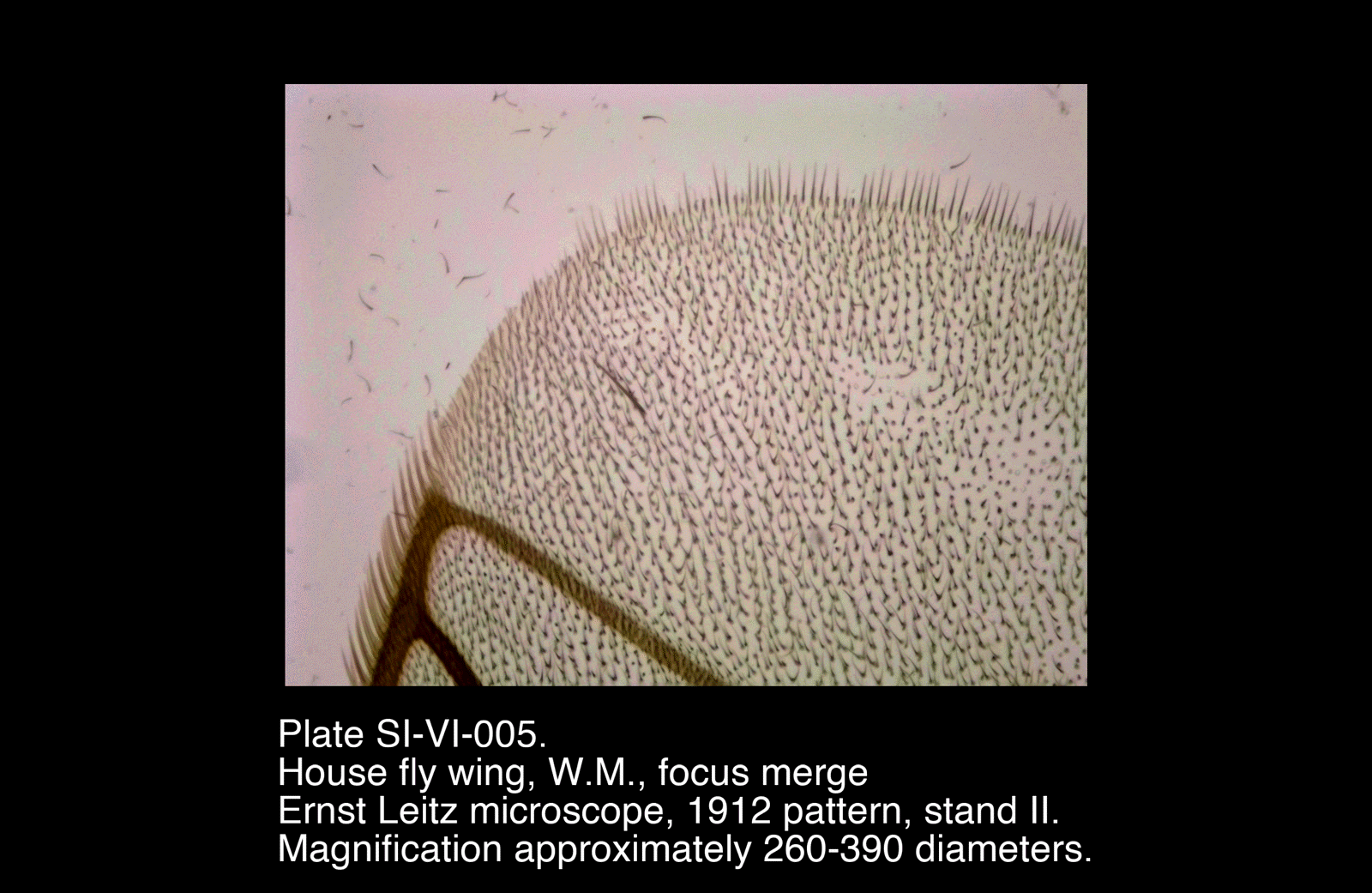
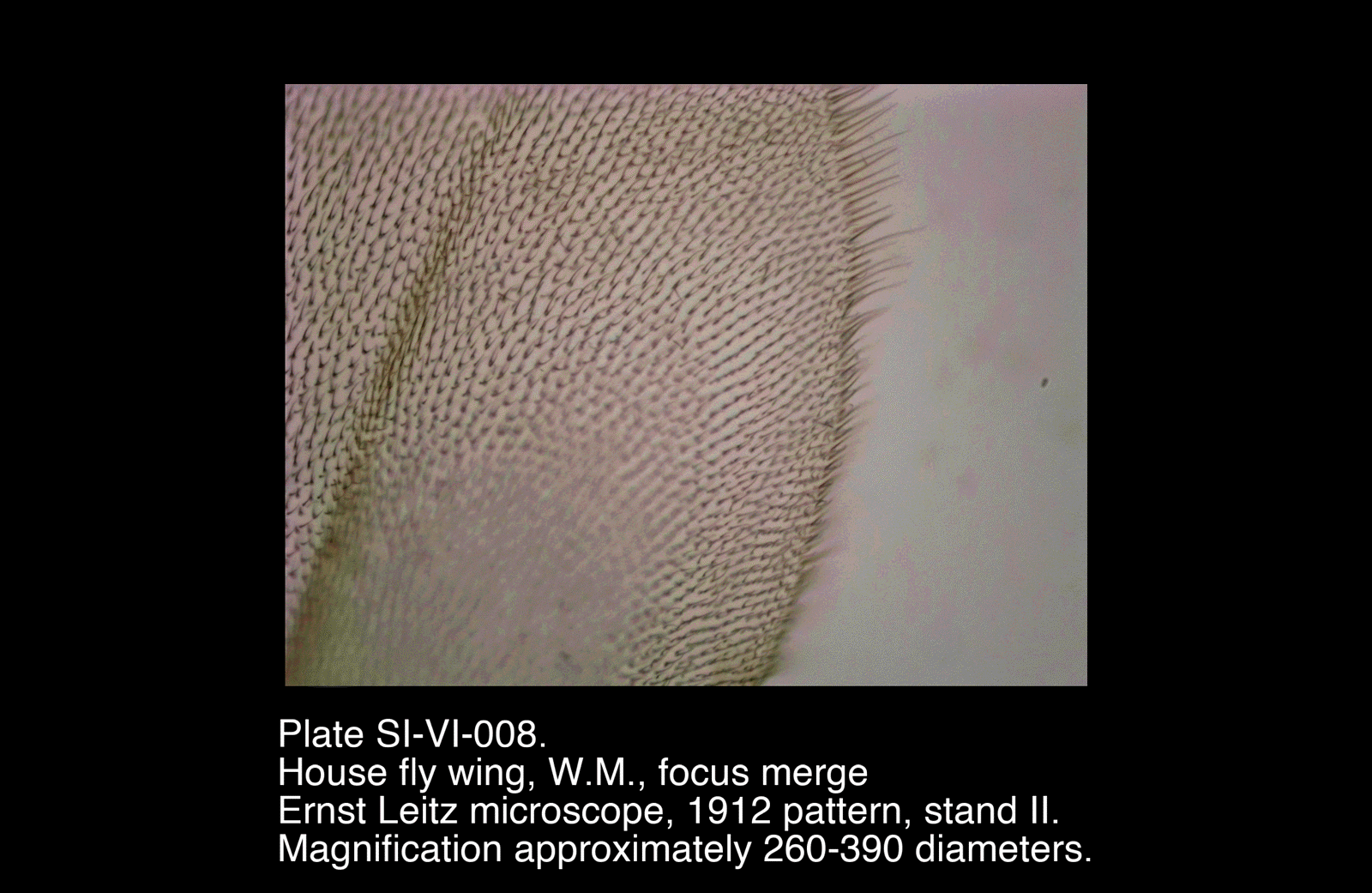
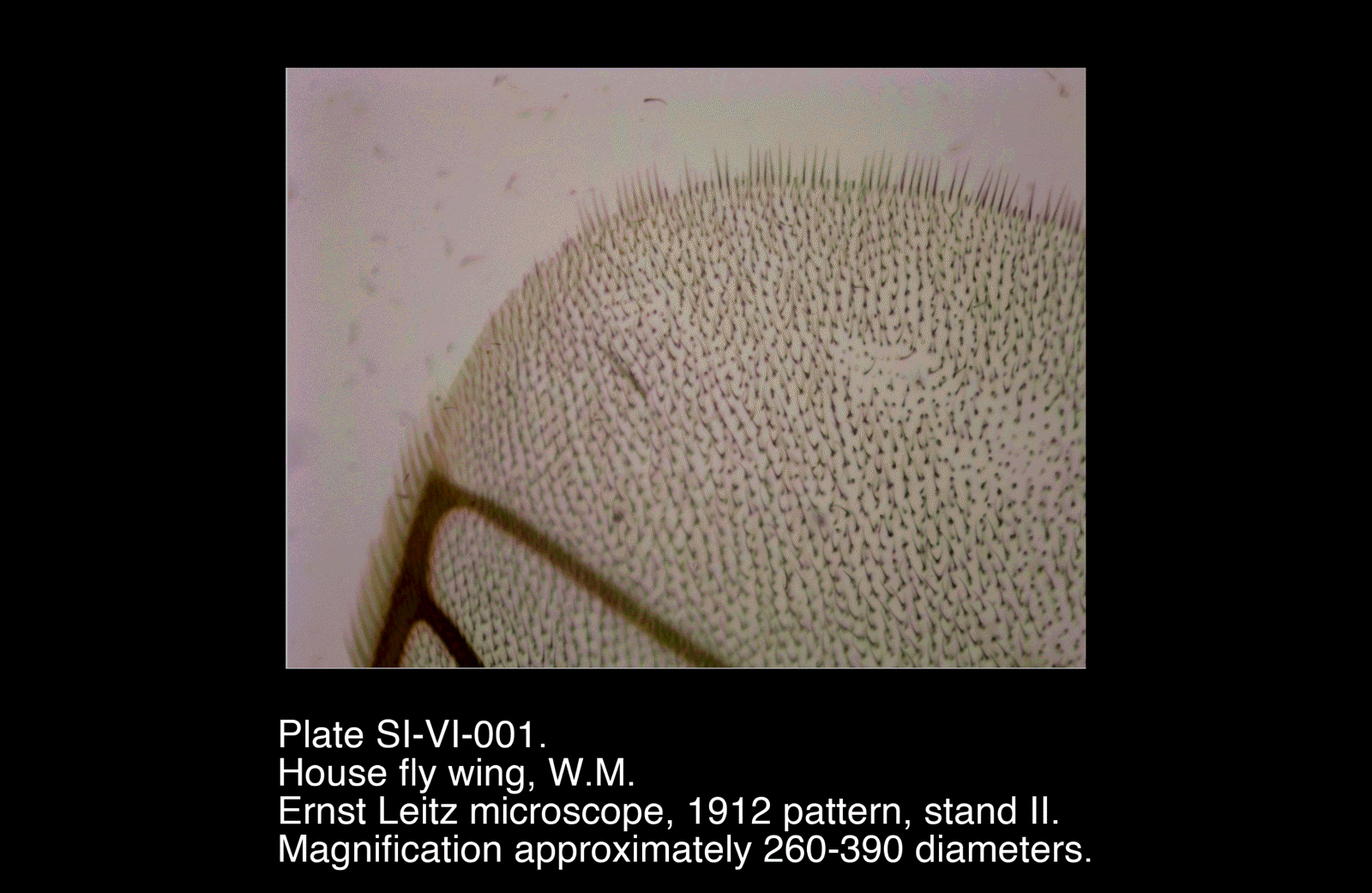
- Surface covered in dense arrays of minute hair-like projections (microtrichia)
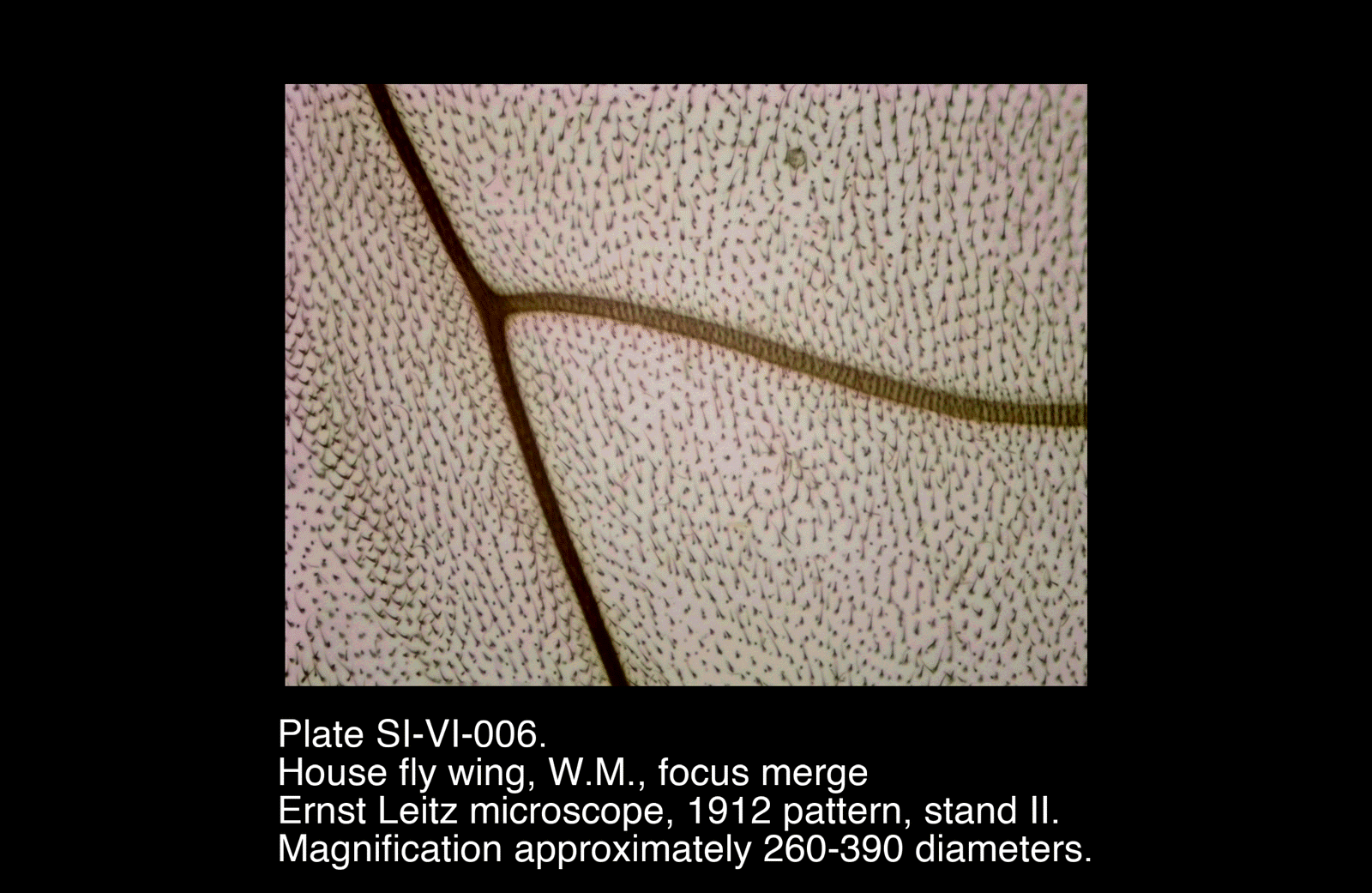
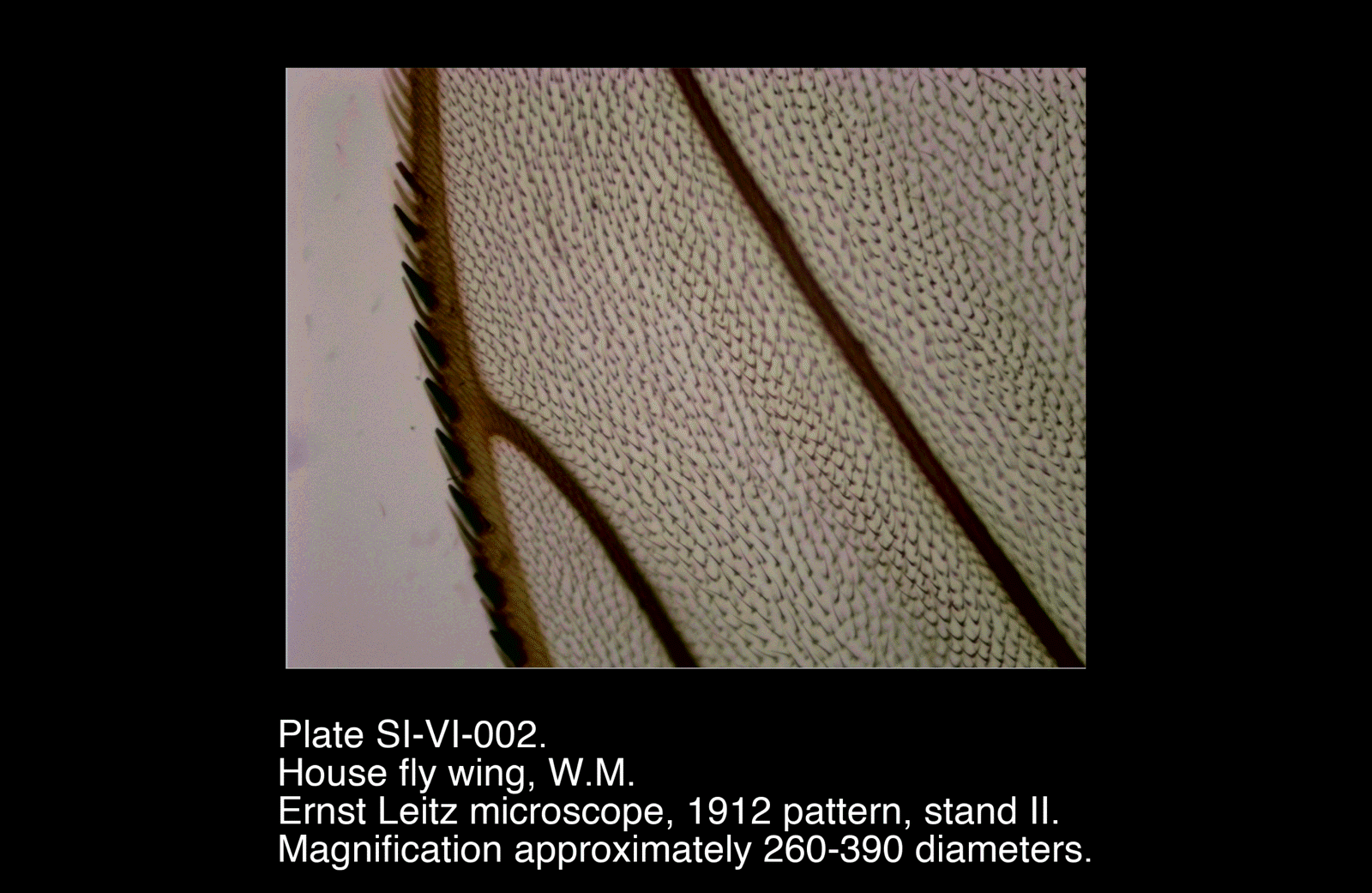
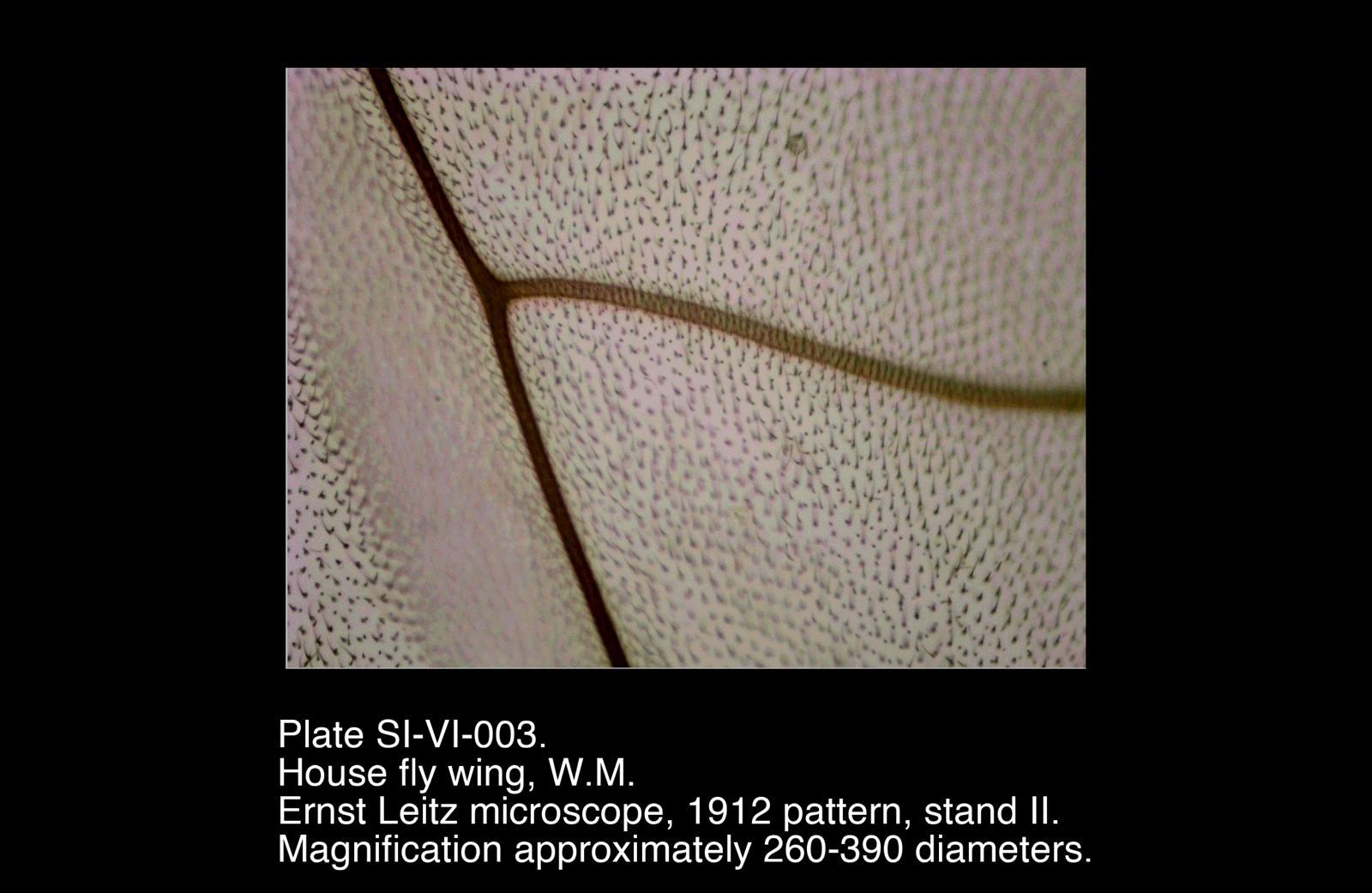
- Microtrichia arranged in regular directional patterns, often aligned with local vein orientation
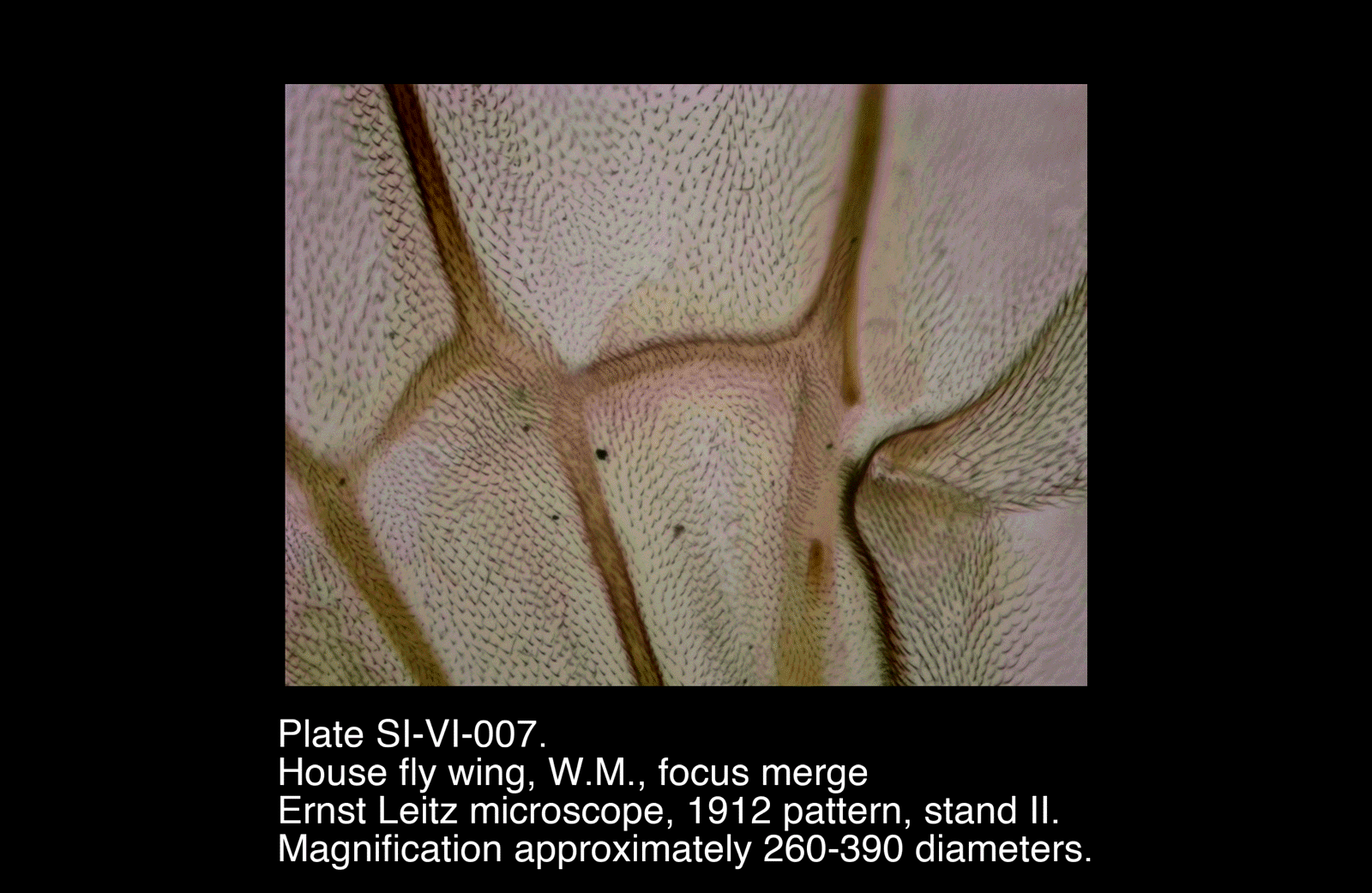
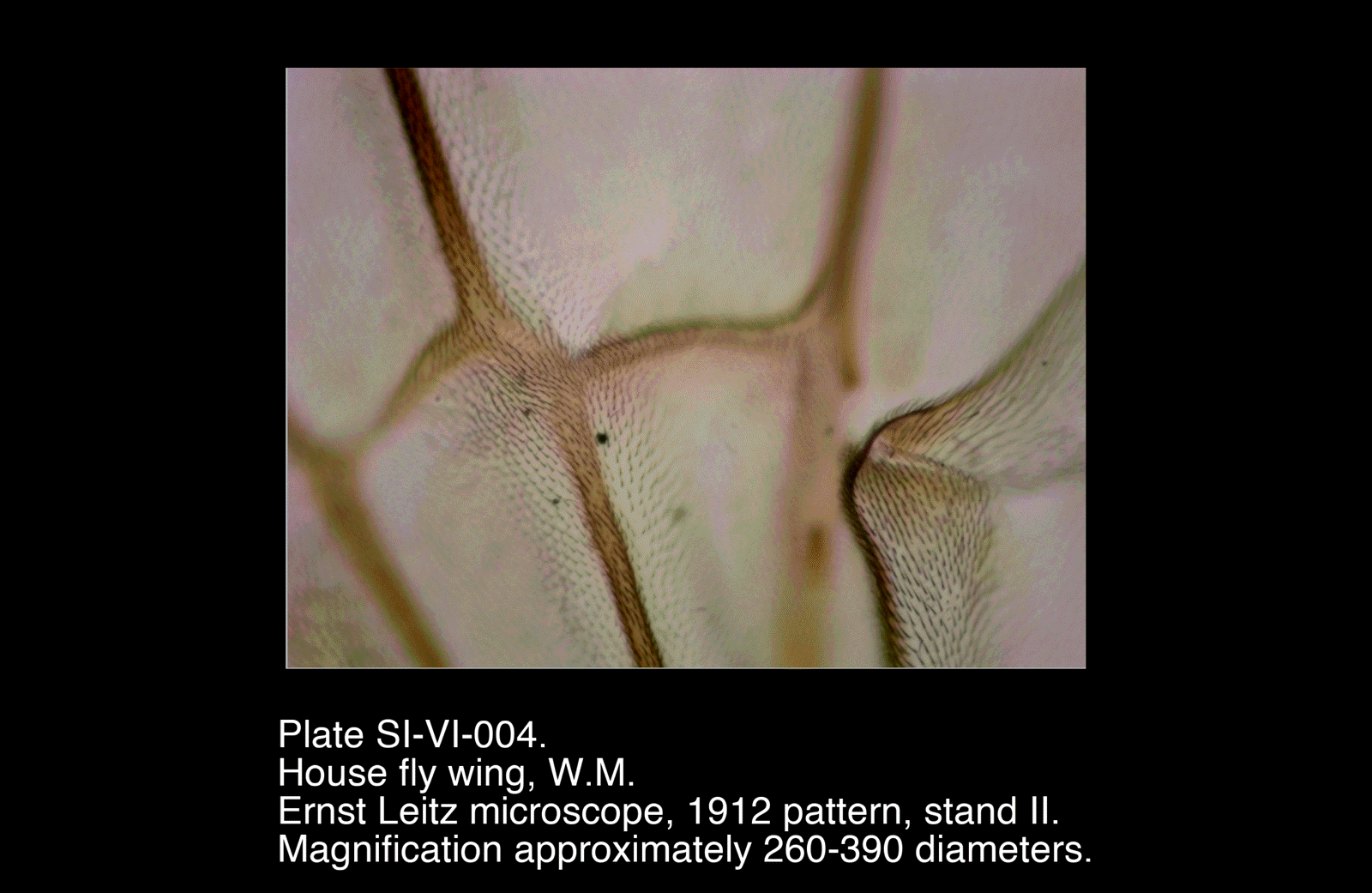
- Prominent veins form a branching network, with clear junctions and varying thickness
- Veins appear darkened and thickened, providing structural reinforcement
- Wing margin shows longer, more pronounced setae, particularly at the edge
- Membrane between veins remains uniform and continuous, without cellular subdivision visible at this scale
- Focus-merged plates reveal remarkable uniformity and directionality of surface structures
Plates
Selected Plates
/House%20fly%20wing,%20W.M.,%20focus%20merge)
/House%20fly%20wing,%20W.M.,%20focus%20merge)
/House%20fly%20wing,%20W.M.,%20focus%20merge)
/House%20fly%20wing,%20W.M.,%20focus%20merge)
Plates
Selected Plates
These plates show the clearest resolution of microtrichia, venation, and surface organisation.
Preliminary Plates
/House%20fly%20wing,%20W.M.)
/House%20fly%20wing,%20W.M.)
/House%20fly%20wing,%20W.M.)
/House%20fly%20wing,%20W.M.)
Preliminary Plates
Earlier plates establish general structure and venation patterns, though with less clarity of fine surface detail.
Interpretation
The wing of Musca domestica is a highly optimised mechanical surface, combining minimal material with significant structural and aerodynamic sophistication.
Membrane and Surface Structure
The wing membrane is an extremely thin sheet of chitin, forming the primary aerodynamic surface.
The dense covering of microtrichia likely serves several functions:
- Influencing airflow at the boundary layer
- Reducing turbulence and drag
- Providing protection and structural reinforcement at the microscale
Their consistent orientation suggests a functional alignment with airflow patterns during flight.
Venation (Structural Framework)
The vein network acts as a lightweight supporting framework:
- Provides rigidity without excessive mass
- Distributes mechanical stresses during wing حركة
- Defines regions of the membrane with different mechanical properties
Thicker veins at key junctions indicate areas of increased structural demand.
Wing Margin
The presence of longer marginal setae may:
- Influence airflow at the edge of the wing
- Play a sensory or aerodynamic role
- Help stabilise flow separation at the boundary
Functional Interpretation
The wing can be understood as a composite structure:
- A flexible, continuous membrane
- Reinforced by a branching skeletal system (veins)
- Modified at the surface by microstructures
This arrangement achieves:
- Low mass
- High strength-to-weight ratio
- Aerodynamic efficiency
Position within the Programme
This specimen contrasts strongly with earlier plant-based investigations:
- Unlike plant tissues, the wing shows no cellular architecture at this scale, but instead a continuous material surface
- Structural organisation is mechanical rather than physiological
- Surface features (microtrichia) parallel earlier observations of surface optimisation (e.g. moss leaf), but in a different functional context (aerodynamics rather than exchange)
Remarks
- Focus merging (SI-VI-005 to SI-VI-008) was particularly effective in resolving surface detail
- The uniformity of microtrichia patterning is notable and consistent across multiple regions
- Venation junctions provide useful reference points for orientation
- This specimen would pair well with future investigation of:
- Insect scales (e.g. Lepidoptera)
- Arthropod cuticle in section