
IN-2026-002 - Dandelion (Taraxacum officinale) — Stem (T.S.)
Specimen & Context
| Date | 2026-03-18 |
| Species | Taraxacum officinale |
| Common Name | Dandelion |
| Habit | Herbaceous perennial with hollow, elongate flowering stems |
| Material | Fresh flowering stem |
| Location | Abingdon, Oxfordshire, UK |
| Preparation | Stem, Transverse Section (T.S.) |
| Stain | None |
| Series | Scheme of Structural Investigations - Series II — Support & Conduction |
Overview
This investigation examines the internal structure of the stem of Taraxacum officinale (Dandelion) using transverse sections. The aim was to understand how a soft, herbaceous plant achieves sufficient support while maintaining flexibility, with particular attention to internal organisation and specialised tissues.
Method (Summary)
- Freehand transverse sections taken from fresh stem material
- Sections mounted in water (W.M.)
- Observed under low and high power objectives
- Multiple sections prepared, with later efforts improving uniformity and thickness
Observations
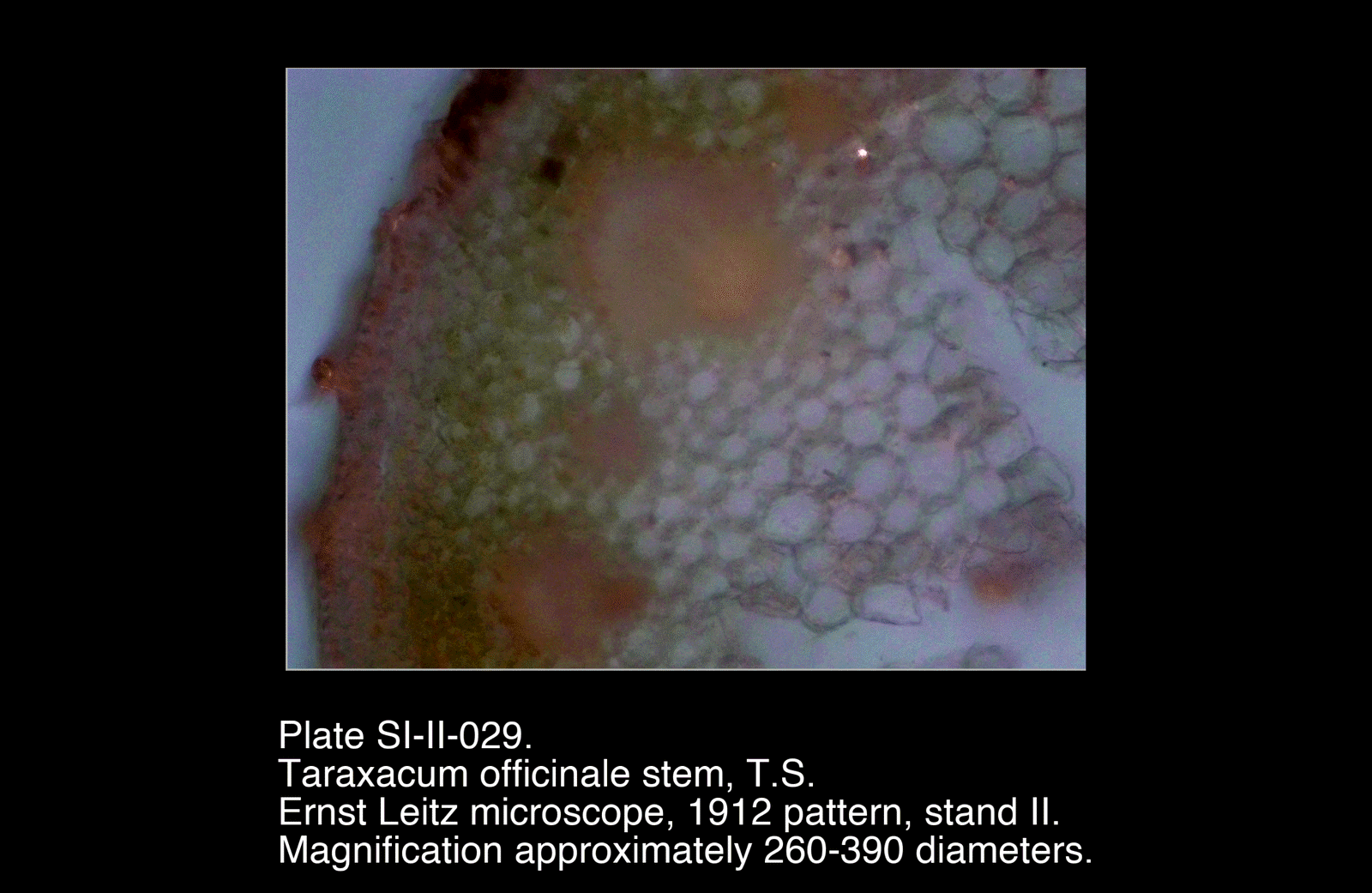
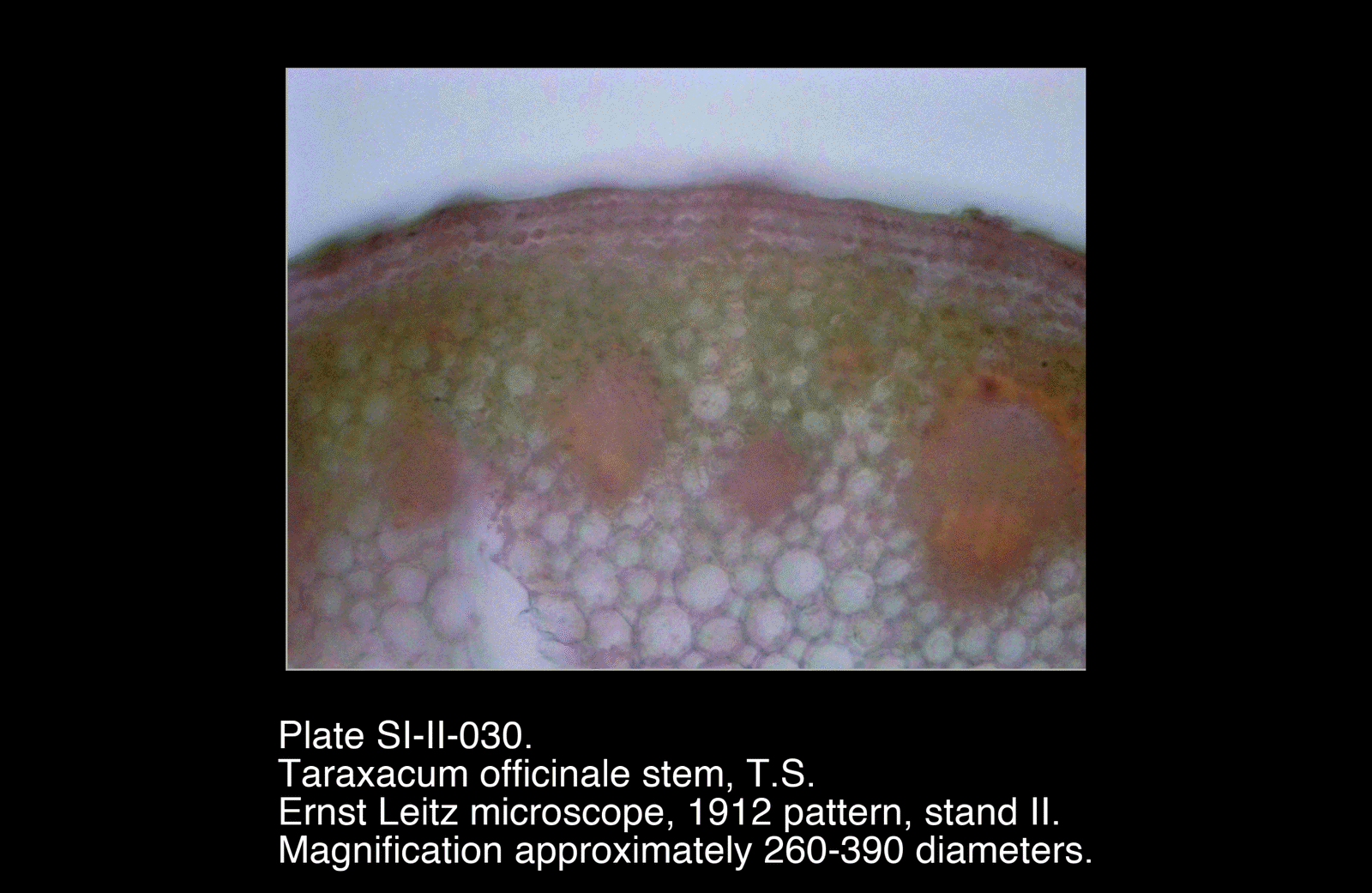
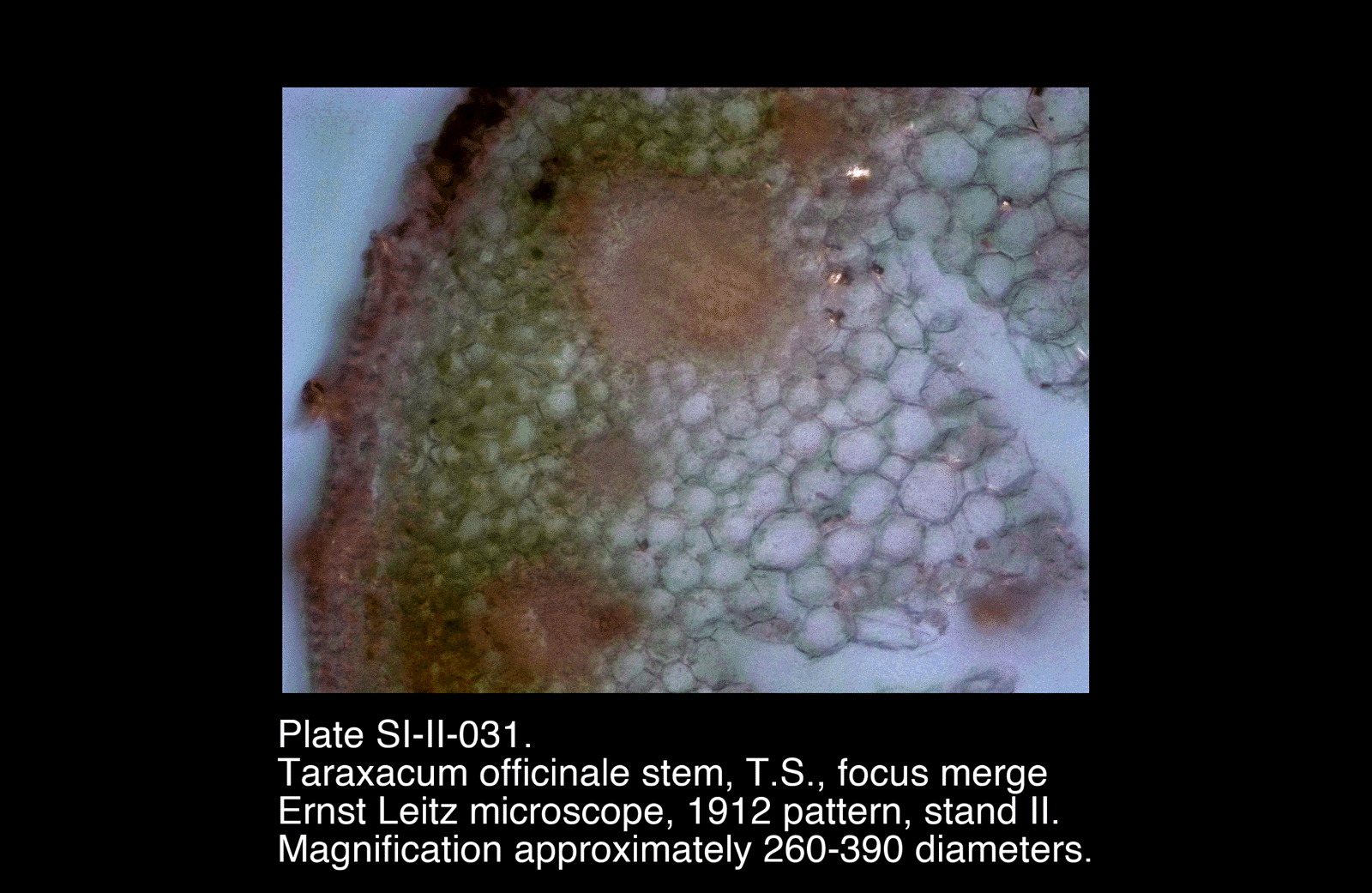
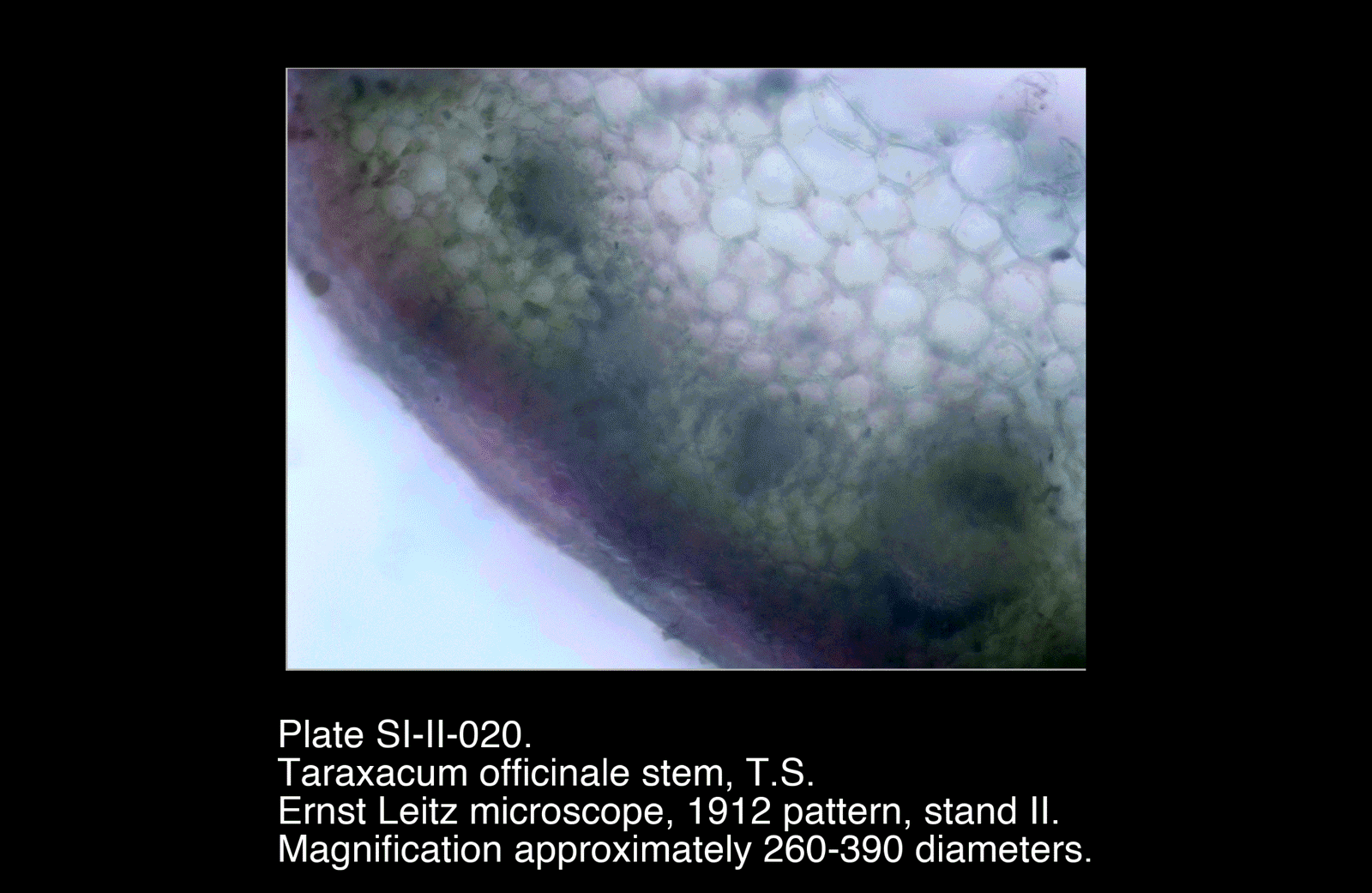
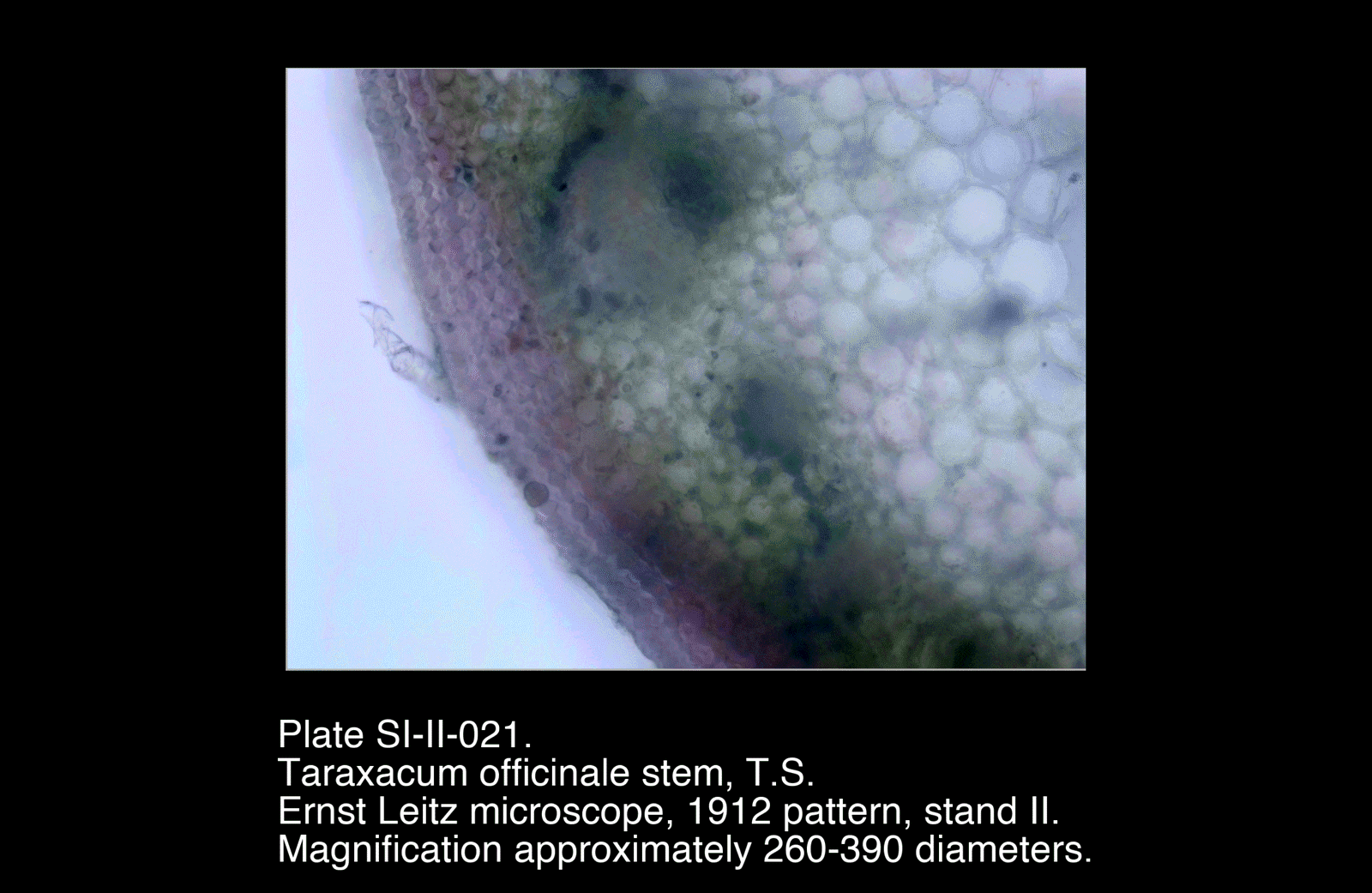
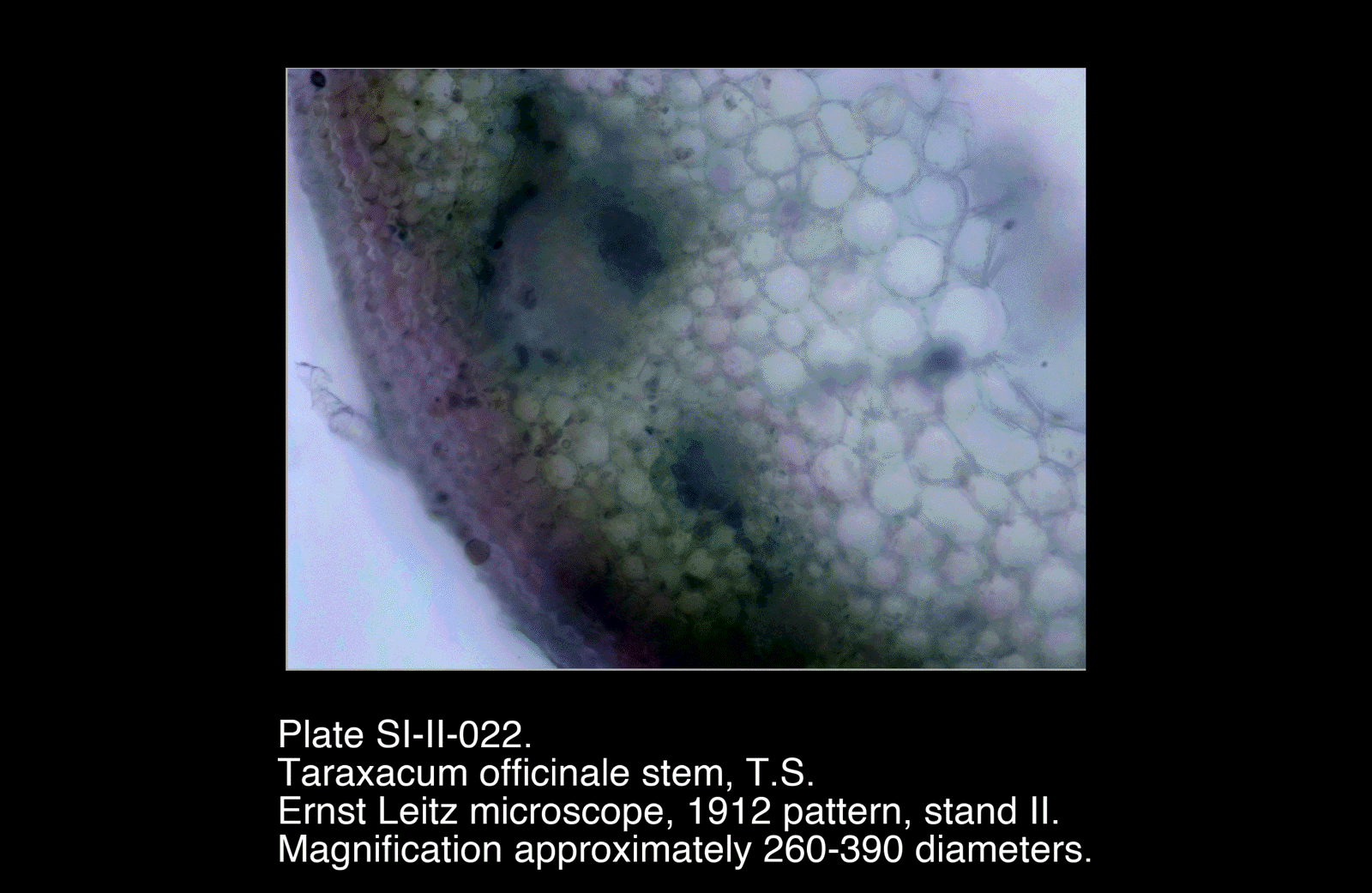
- Stem outline rounded to slightly irregular, lacking angular ridges
- Outer region composed of a thin epidermal layer with underlying compact tissue
- Interior dominated by large, thin-walled parenchyma cells, loosely arranged
- Presence of large internal cavities / lacunae, giving a partially hollow structure
- Discrete vascular bundles arranged toward the periphery
- Several darker, diffuse regions within the tissue, possibly associated with latex-bearing structures
- Marked improvement in clarity and structural definition in later sections (029–031)
Plates
Selected Plates (Final Sections)
/Taraxacum%20officinale%20stem,%20T.S.)
/Taraxacum%20officinale%20stem,%20T.S.)
/Taraxacum%20officinale%20stem,%20T.S.,%20focus%20merge)
Plates
Selected Plates (Final Sections)
These sections clearly show the relationship between the outer tissue layer, vascular bundles, and the large internal parenchyma with associated cavities.
Earlier Sections (Preliminary)
/Taraxacum%20officinale%20stem,%20T.S.)
/Taraxacum%20officinale%20stem,%20T.S.)
/Taraxacum%20officinale%20stem,%20T.S.)
/Taraxacum%20officinale%20stem,%20T.S.)
Earlier Sections (Preliminary)
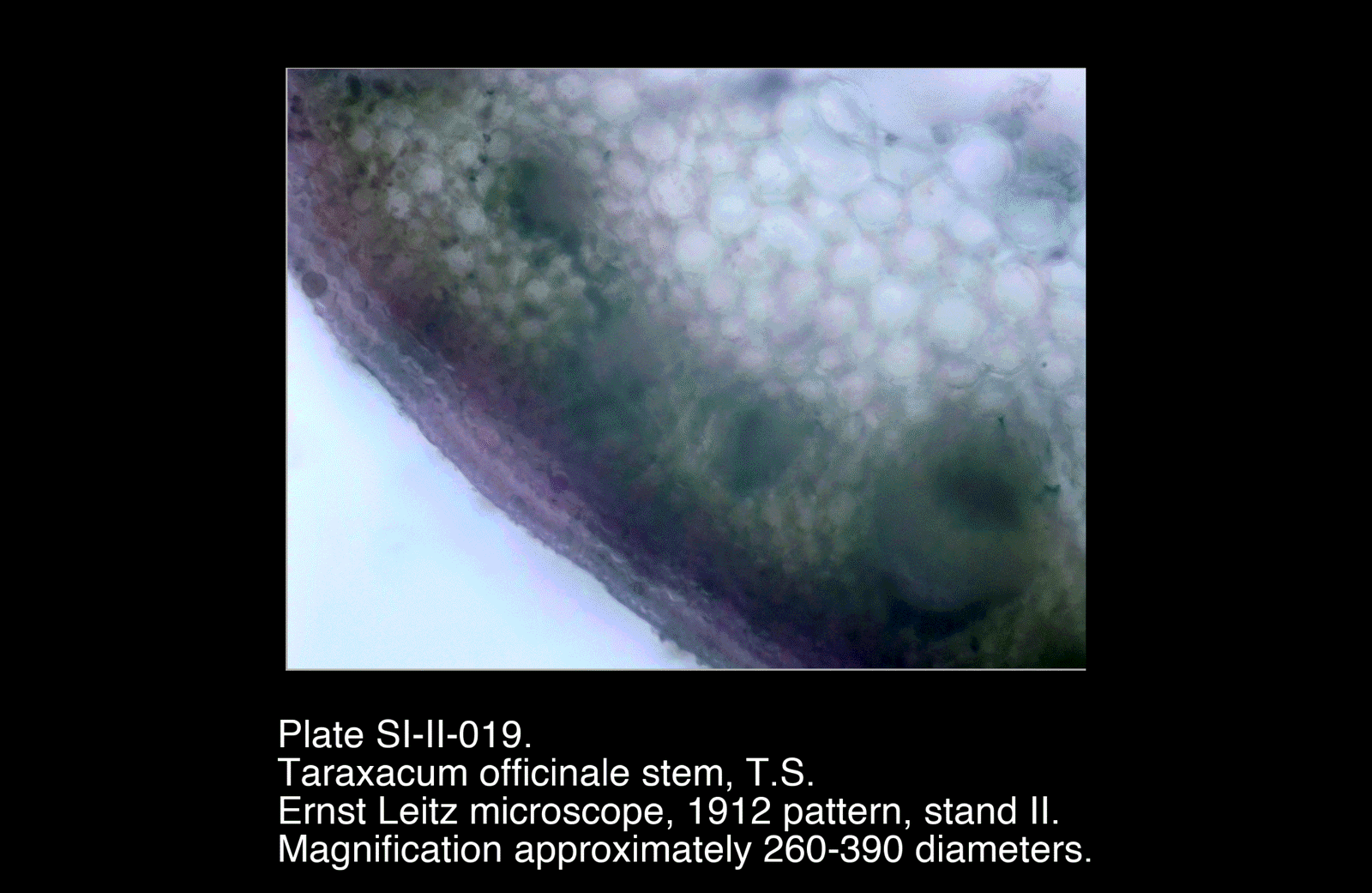
Earlier attempts show less even sectioning and reduced contrast, but establish the general organisation of the stem.
Interpretation
The stem structure of Taraxacum officinale reflects a strategy of lightweight support combined with internal economy of material.
Mechanical Strategy
Support is concentrated toward the outer region of the stem, where tissues are more compact and continuous. This arrangement provides resistance to bending while allowing the stem to remain flexible.
The largely hollow or cavity-rich interior reduces weight while maintaining overall diameter, increasing resistance to bending without significant material investment—an efficient structural solution.
Internal Structure
The interior consists primarily of parenchyma with large intercellular spaces. This loose organisation suggests:
- Limited investment in rigid support tissue
- Emphasis on rapid growth and elongation
- Storage and internal transport functions
The presence of cavities contributes to both lightness and flexibility.
Transport System
The vascular bundles, arranged near the periphery, allow for effective transport while preserving flexibility. Their positioning also supports the mechanical principle of placing strengthening elements away from the centre.
Specialised Features
The darker regions observed in several sections are consistent with laticiferous tissue (latex canals), characteristic of dandelion. These structures likely serve defensive and physiological roles rather than mechanical support.
Functional Interpretation
The stem may be understood as a lightweight tubular system:
- Structural strength concentrated externally
- Interior largely open or loosely filled
- Flexible and resilient rather than rigid
- Adapted for rapid vertical extension to elevate the flower head
This is consistent with the ecological role of the plant: quickly raising reproductive structures above surrounding vegetation with minimal structural investment.
Remarks
- Later sections (029–031) significantly improved interpretation, particularly in resolving vascular arrangement and internal cavities
- Section thickness and evenness strongly influenced visibility of finer structures
- The probable identification of laticiferous tissue warrants further investigation, potentially with staining
- This specimen provides a useful contrast to more solid or angular stems (e.g., Galium aparine) within the same investigation series