Field Notes Journal Entry
Taking to the Air
A dawn balloon flight over the Serengeti reveals the landscape from above: quiet movement, scattered wildlife, and a gentle return to earth followed by an unexpected bush breakfast
Before Dawn
The next day saw an early start from our base at Mbalageti as we needed to be at the starting point for our balloon safari over the Serengeti at an early hour.
On the plus side, this meant an early morning mini game drive in the darkness on the way and, just outside our camp, we encountered a porcupine trotting along the road ahead of the Land Cruiser. We followed it for a few minutes until it toddled off into the bush. We were very fortunate as Philip indicated that porcupines are very difficult to see.
Preparing the Balloon
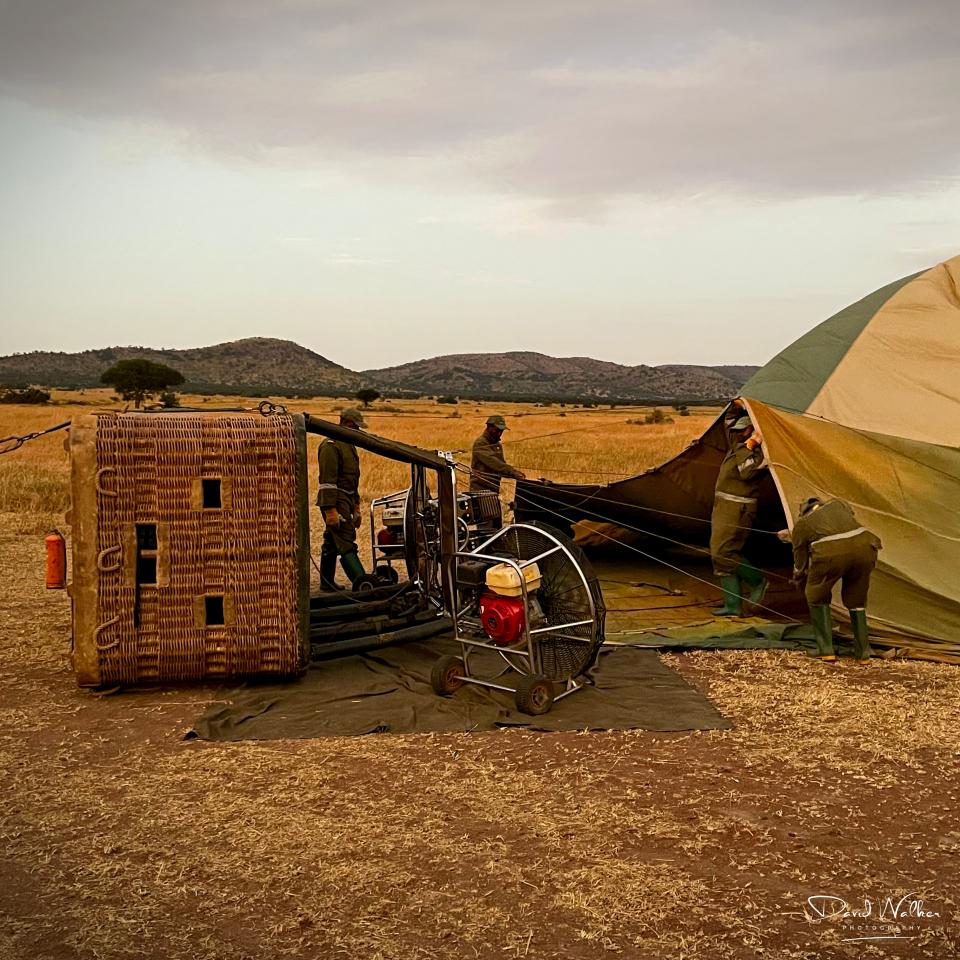
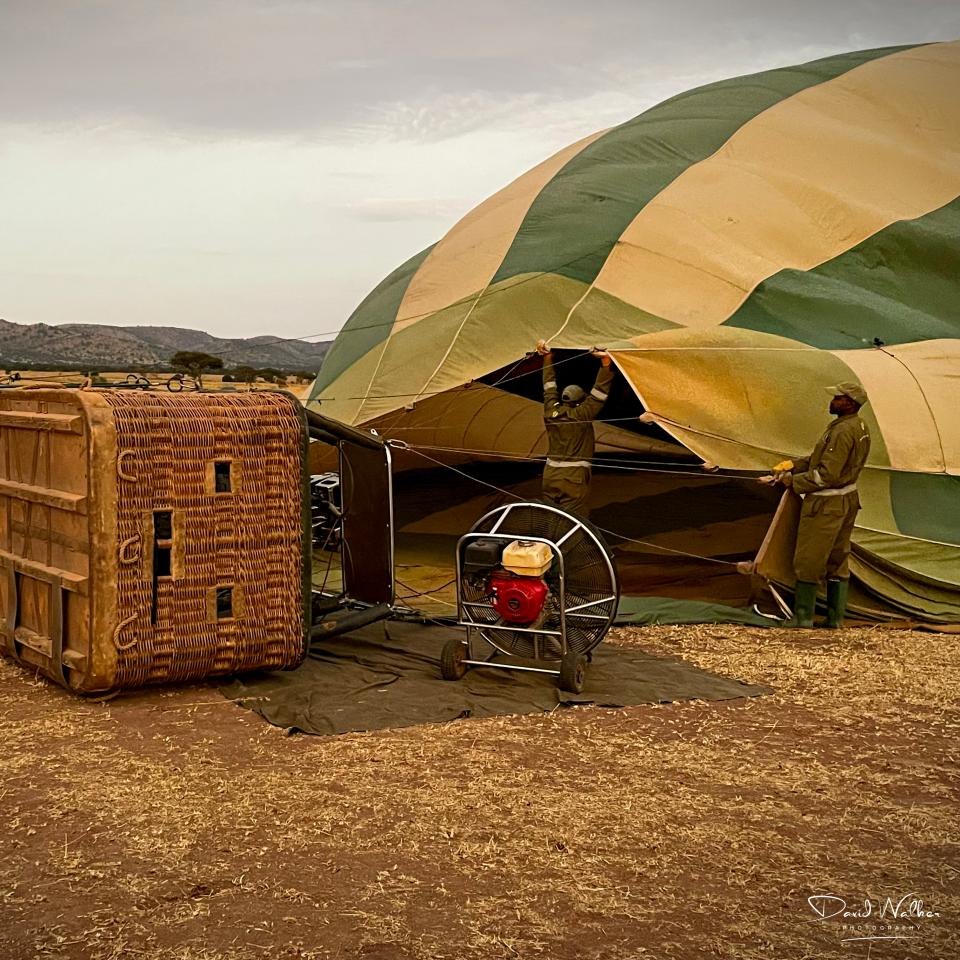
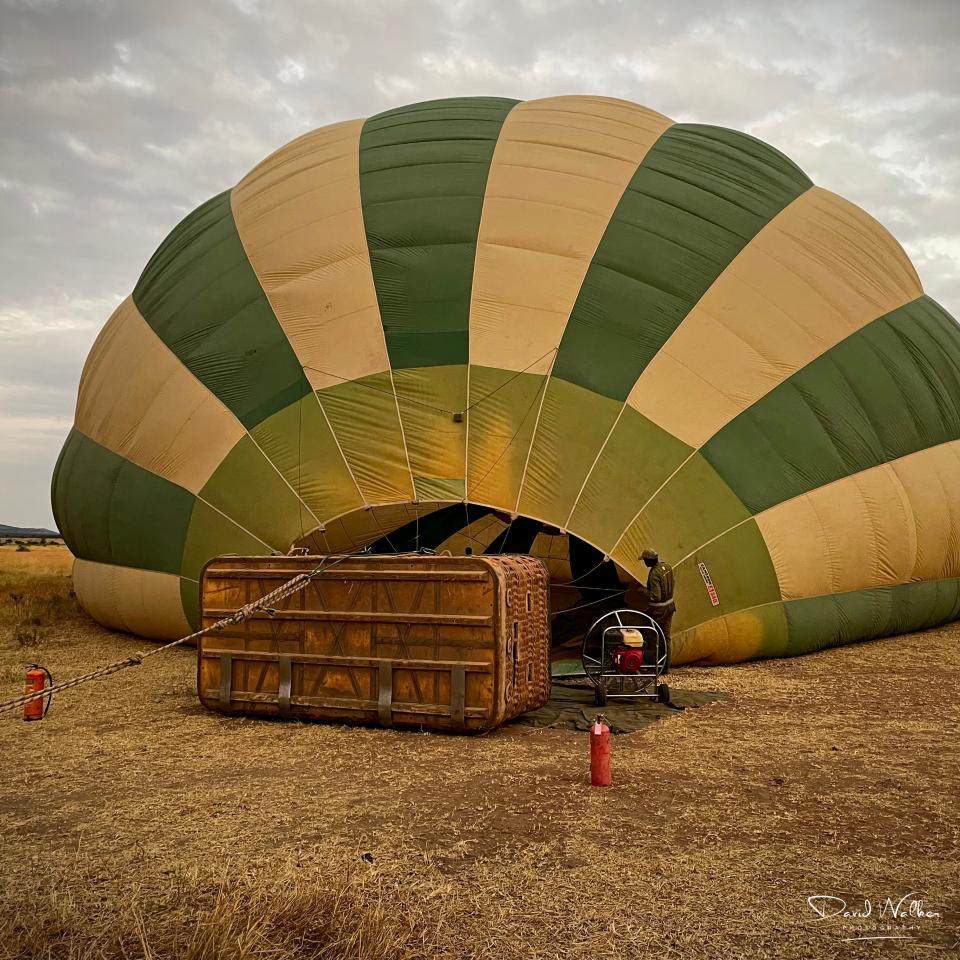
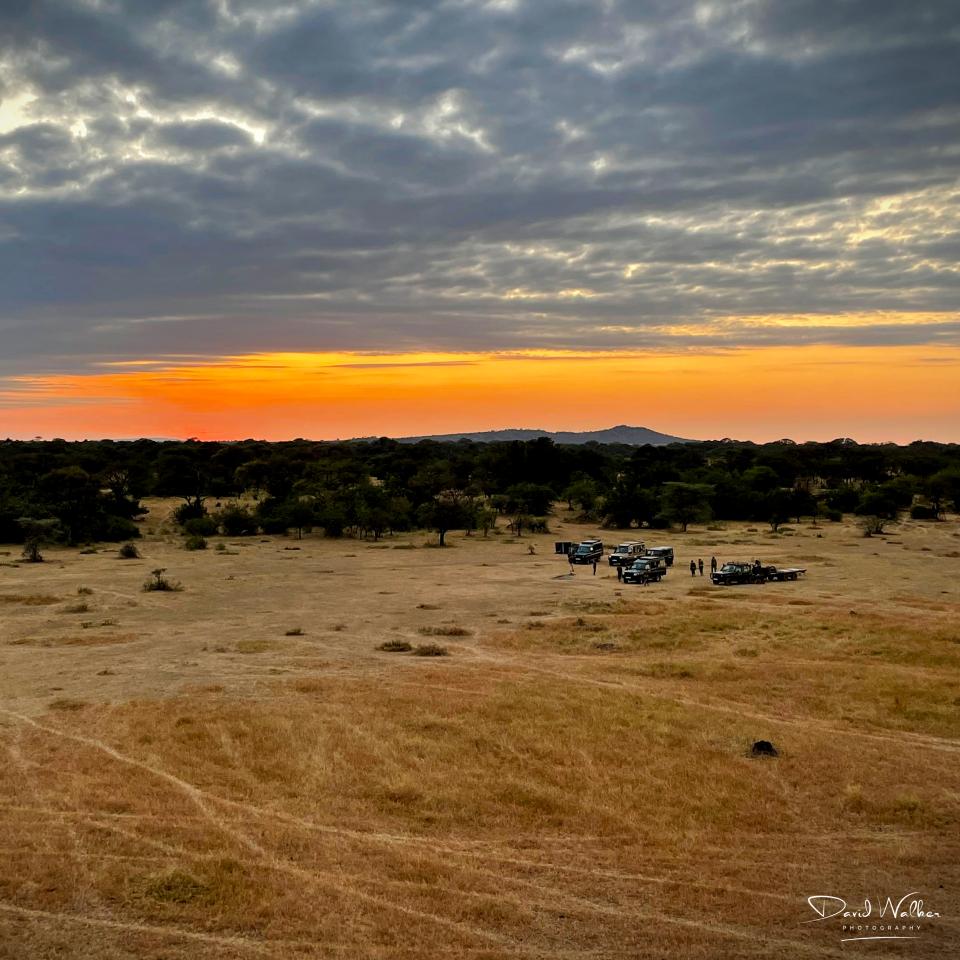
Once at the starting point, as dawn began to break and the sky lighten, we were treated to a ginger coffee, which was a damned fine wake-up and doubtless put hairs on everyone’s chests!
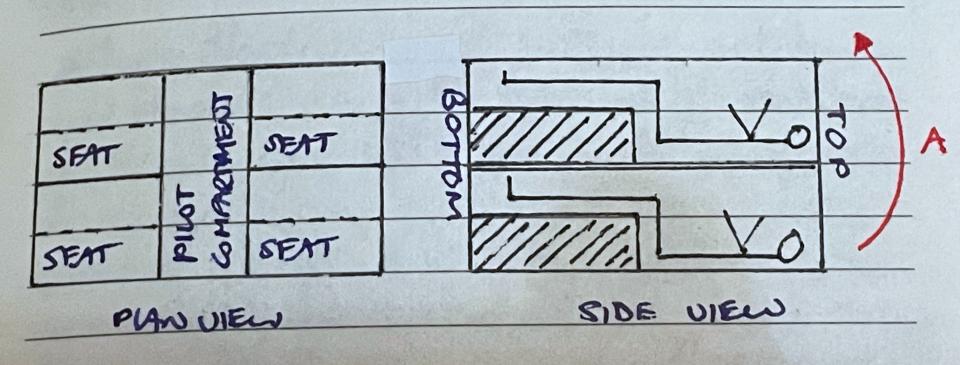
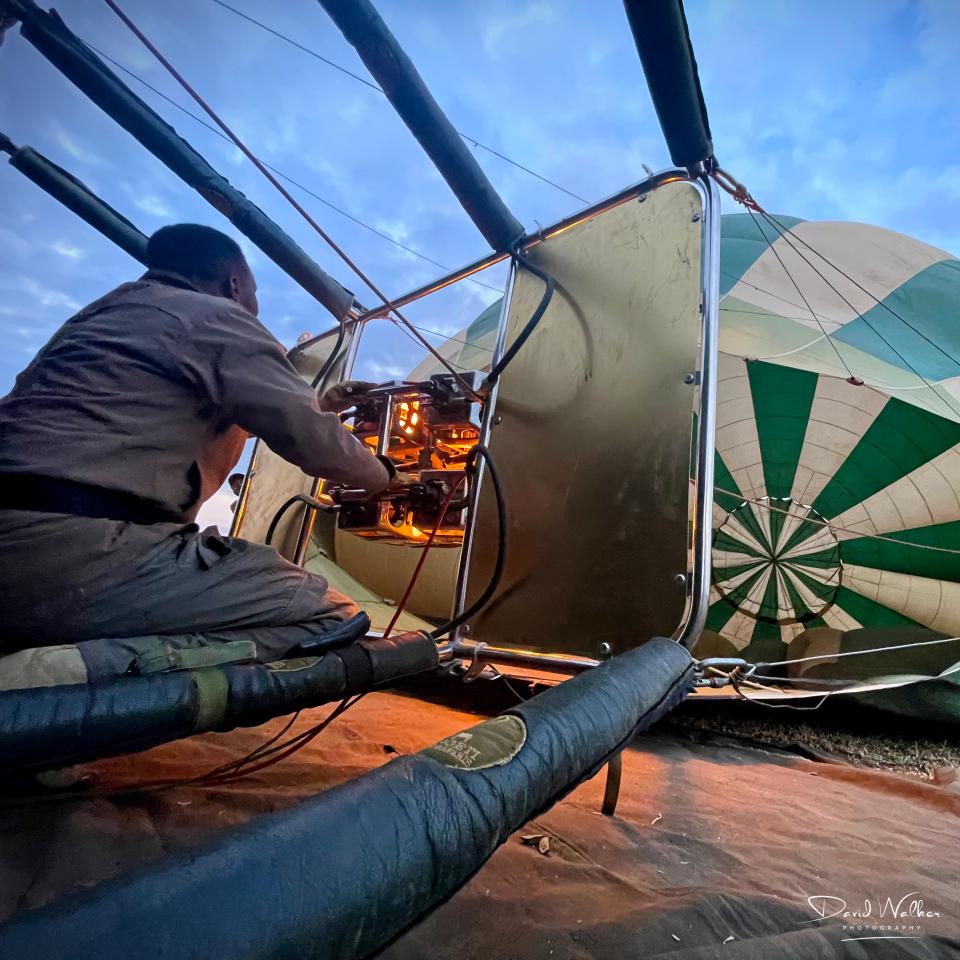
Once we were all thoroughly awake, it was time for the pre-flight briefing. As the plan view shows, the basket was divided into four passenger compartments, each with a bench seat, around a central pilot compartment giving access to the burner and the controls.
Taking Flight
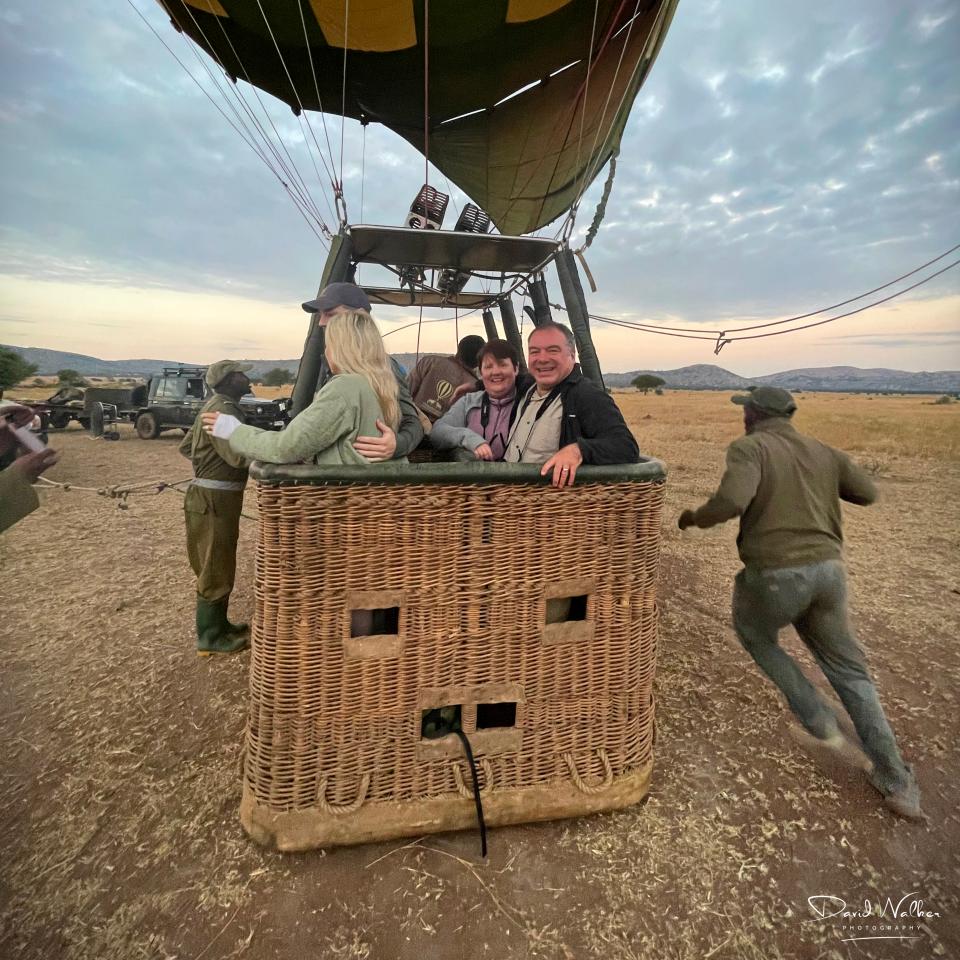
We got into the basket with it on its back or side, as per the sketch, and sat on the bench seats as shown by the stick people in the diagram. Once we were all seated, the balloon was filled with cold air using some fans and blowers and all that remained was for the pilot to use the burner to heat it up, whereupon the basket righted itself as the balloon rose, rotating as shown by the arrows in the following sketch:
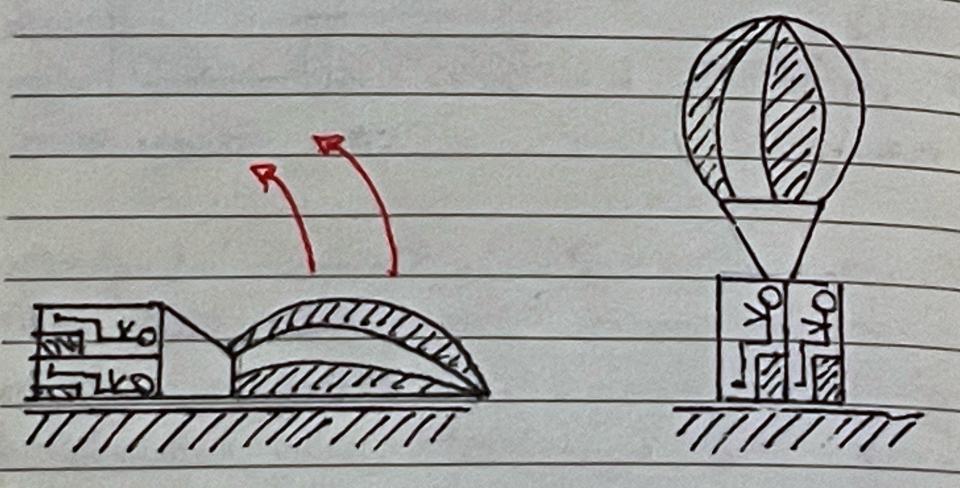
We were all attached to the balloon via a belt, much like an airline seatbelt, hooked into a carabiner on a long strap that gave plenty of room to move but ensured there were no falling-out-of-the-basket mishaps.
Over the Serengeti
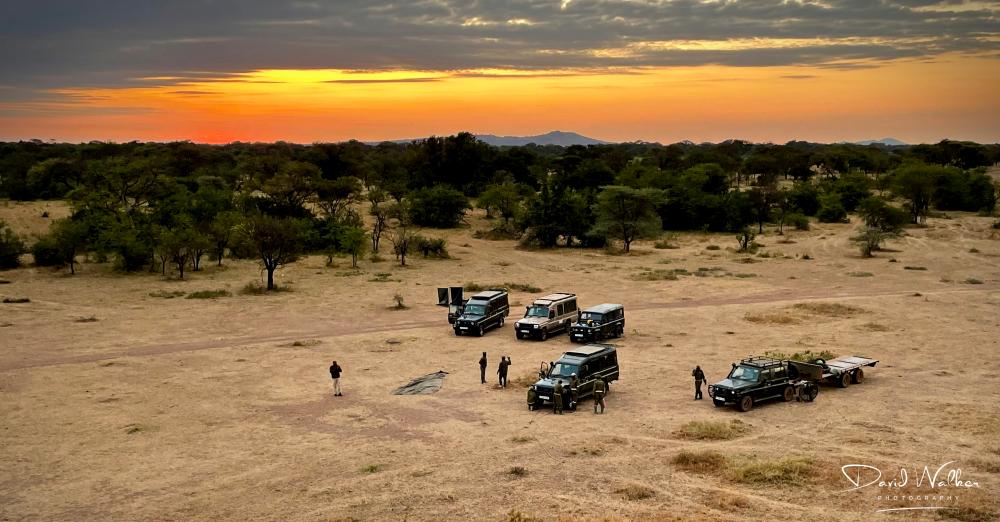
Once upright, Mohammed, our pilot, told us we could stand up immediately, as it was such a calm day, and with that the balloon was released from its moorings and we began to rise into the dawn, moving quite quickly with the wind. It was a magical experience - so smooth, calm and, above all, quiet when compared to takeoff in an airliner. The silence was only punctuated by the noise of the burners as the Mohammed occasionally fired them.
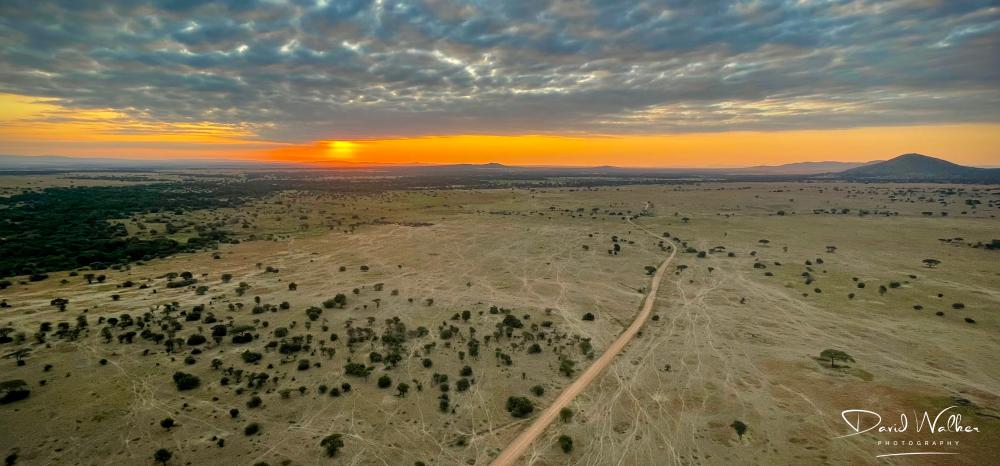
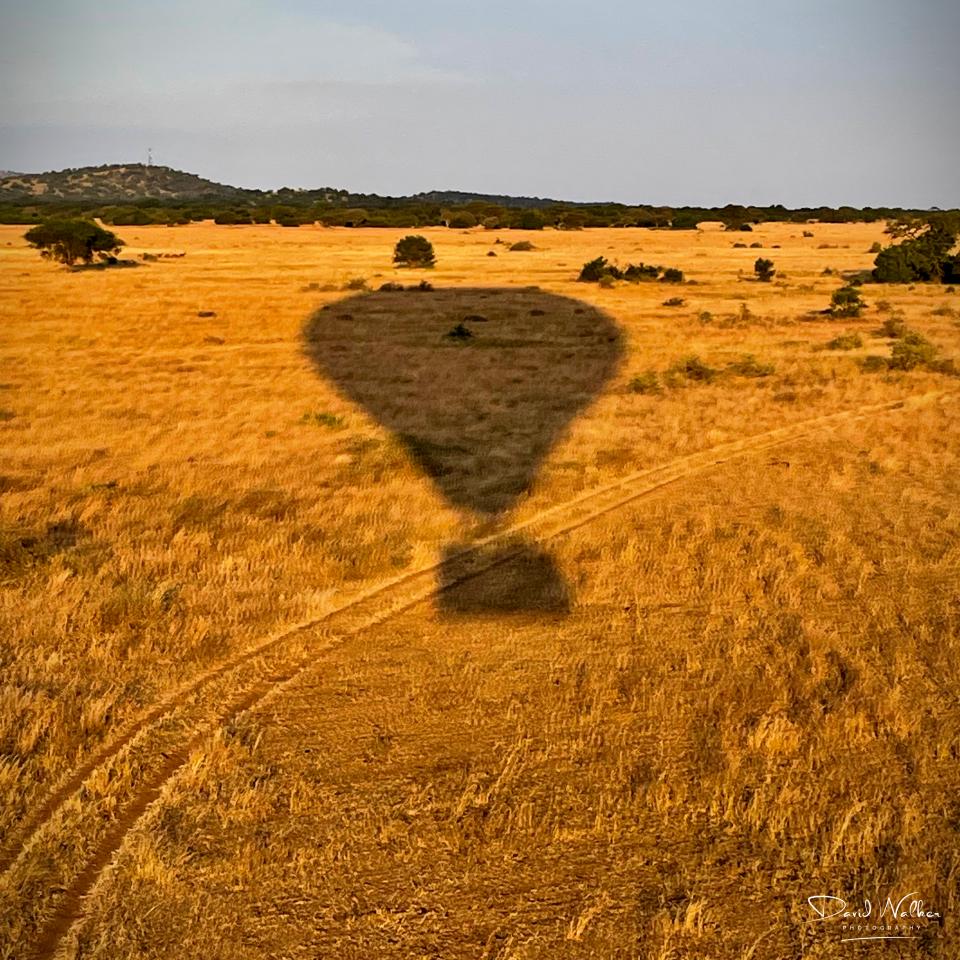
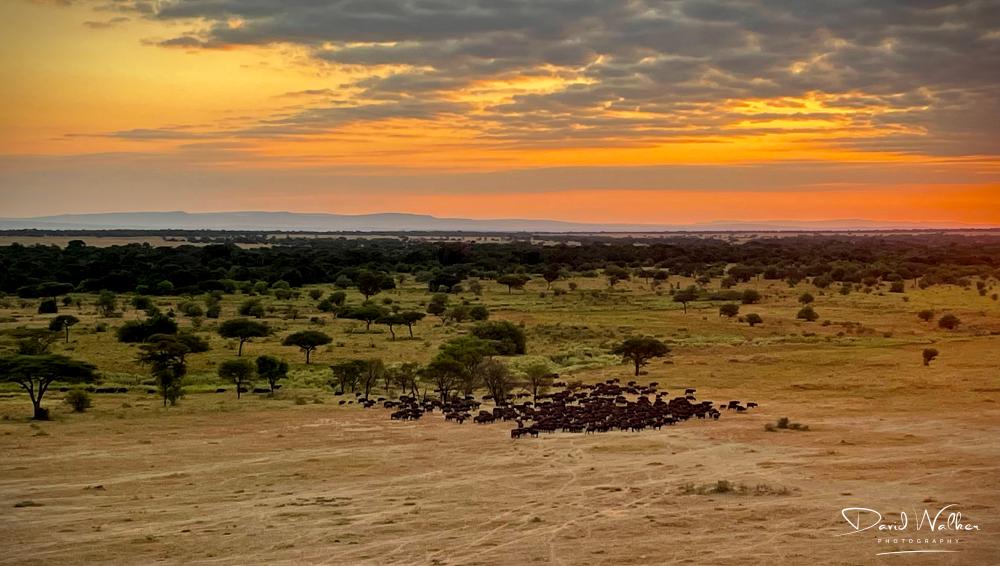
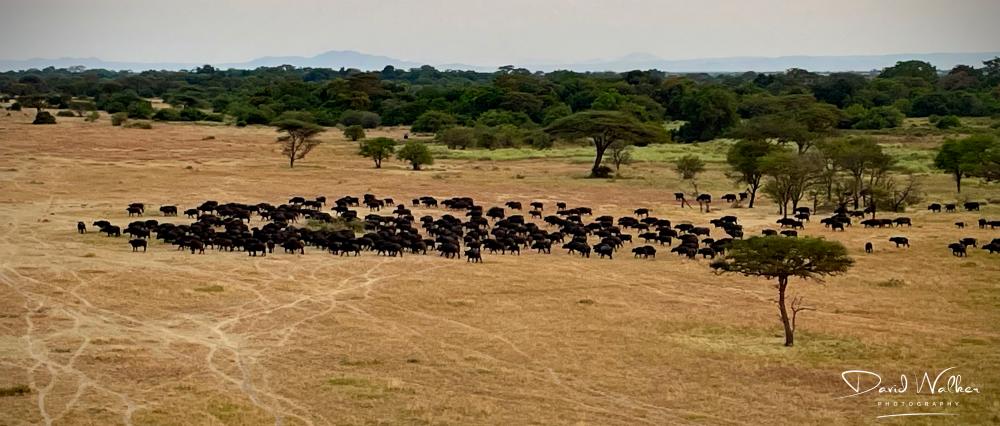
We didn’t go very high and spent much of the flight not too far above the level of the treetops, giving the best opportunity to see wildlife - buffalo, elephant, giraffe and, at one point, a column of wildebeest being harassed by four hyenas.
The Landing
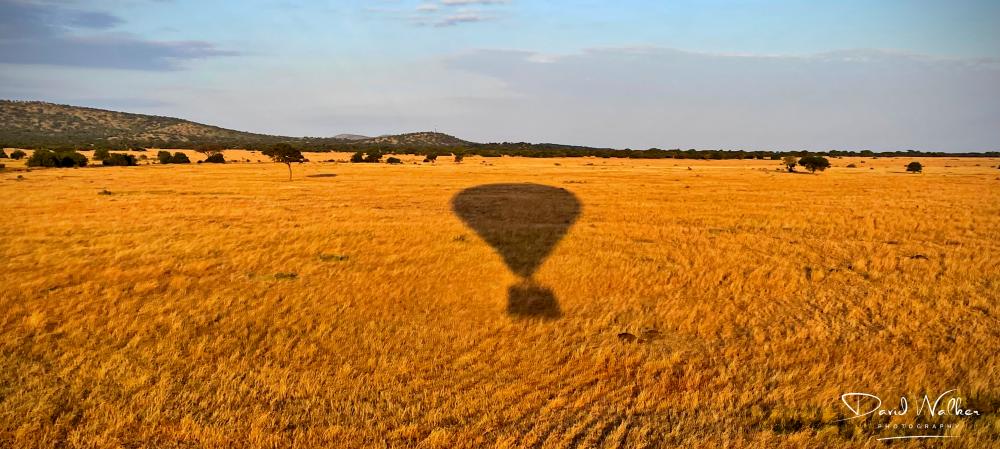
The landing was, quite genuinely, fun - we were told to take our seats and the pilot brought the balloon down until we could hear the grass tops scraping the bottom of the basket as we swept over it at a speed of about 11 knots. Eventually, the basket landed and tipped gently over into the position it was in when we first boarded, at which point we unclipped and clambered out.
While the crew, who followed us to the selected landing spot in Land Cruisers, busied themselves packing up the balloon and basket, Mohammed recounted the tale of the early beginnings of hot air ballooning and why it became associated with champagne. The champagne carried specially created labels with the mark of King Louis XVI, who approved the early flights, and it was intended as evidence - some might say a bribe! - to prevent superstitious locals from killing the occupants of the basket and destroying the balloon as a work of the devil!
Breakfast in the Bush
Mohammed’s talk was rounded off with a champagne toast before we headed off for breakfast, sat at a table laid with fine linen and silver tableware, in the middle of the African bush. As we were served by very well dressed waiting staff, I was reminded of something very like a scene from an episode of Hercule Poirot, set in the 1920s Art Deco era.
Field Notes
- Balloon Safari - hot air balloon flights conducted at dawn to take advantage of calm conditions; allow low-altitude observation of wildlife and landscape
- Flight Conditions - early morning air typically stable with minimal wind variation; enables smooth, controlled flight close to ground level
- Wildlife Observation - elevated perspective reveals movement patterns of herds and interactions less visible from ground level
- Landing Technique - controlled descent often involves ground contact followed by tipping of basket; passengers seated and secured during landing
- Ballooning Tradition - post-flight champagne custom originates from early European ballooning; used to celebrate safe landing and reassure local observers
- Bush Breakfast - meals served at landing sites are a common feature of balloon safaris; combine logistical support with staged experience