Field Notes Journal Entry
Arusha National Park
A first full day on safari in Arusha National Park brings mountain air, a ‘small Serengeti’, and close encounters with giraffe, buffalo, and birdlife, before continuing towards Tarangire
The following day, after breakfast, we re-packed and brought our cases down to reception for our briefing meeting with Ama, our “Go Vacation Africa” representative.
As he worked his way through the details our initial thoughts of “where is everyone else?” gradually turned to consternation as we realised we were the only two in our group! On one level, that’s fantastic as you pay a great deal more for a private safari! However, I was banking on a group of six, as we’d expected, so I could blend in as I’m not the most adept in social situations with strangers! Small talk isn’t my forté.
We were introduced to our driver and guide for the next 12 days, Philip. My abiding initial impression was that he had a striking resemblance to “Fuzz”, the mechanic from the National Geographic TV series “Car SOS”!
Into Arusha National Park
He drove us Eastwards, back along the road we travelled the day before, still replete with school children and motorbikes, and although there were some awkward silences, we all made an effort and I relaxed into it.
After about 20 minutes of driving, he took a side road and we began to ascend, as Arusha National Park is sited on the slopes of Mount Meru. The lowland heat gave away to cooler mountain air as we climbed, arriving eventually at the car park at the entrance to the park.
Here, our permits to enter the park had to be checked and we were delayed, awaiting confirmation of permission to enter from the “Go Vacation” office, as there had been a bit of a mixup. Ruth and I exchanged glances, hoping this wasn’t a sign of things to come for the next 12 days, and we got out of the Land Cruiser to stretch our legs.
Land Cruisers are the go-to vehicle for the Safari companies as they’re mechanically quite simple, with no sealed electronics, and so relatively easy to repair. This is in contrast to modern Land Rovers, the former favourite, that have now gone the other way and are too complex and require more specialised repair.
The cool mountain air was wonderful and the scene was still and peaceful, at least until one of the local guides tried to sell us a walking tour!
First Wildlife Encounters
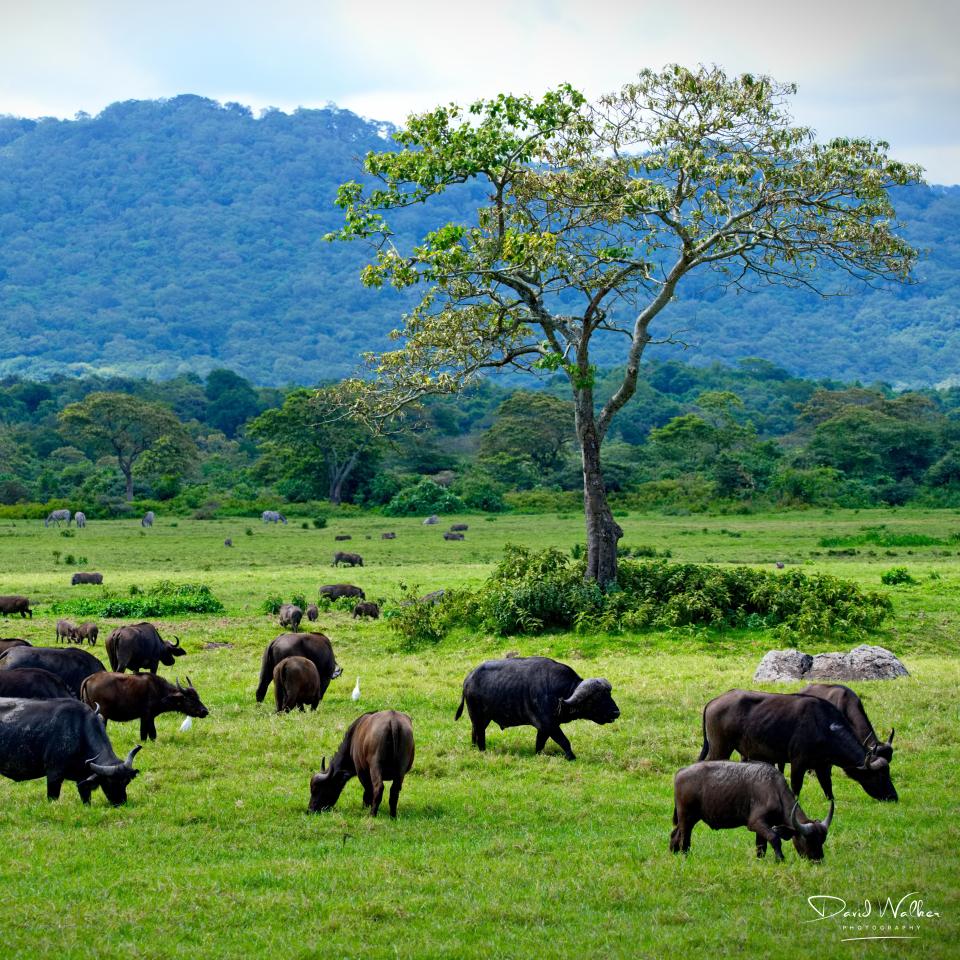
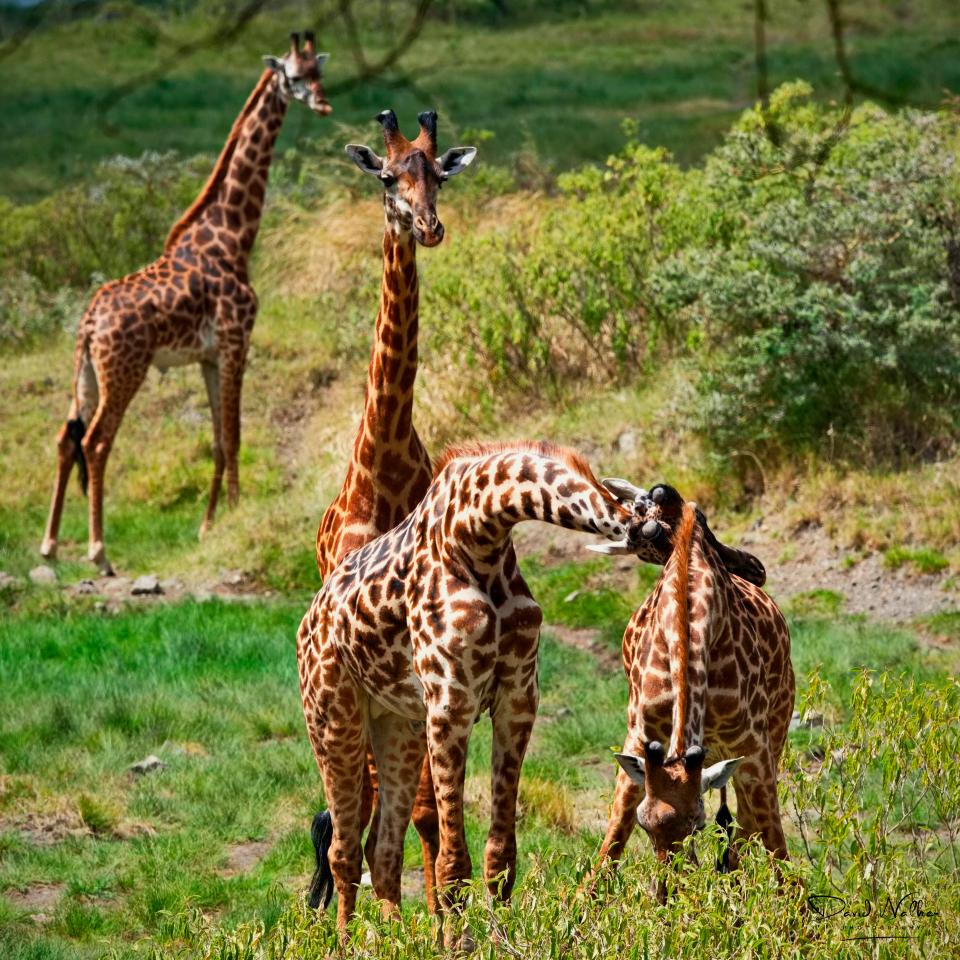
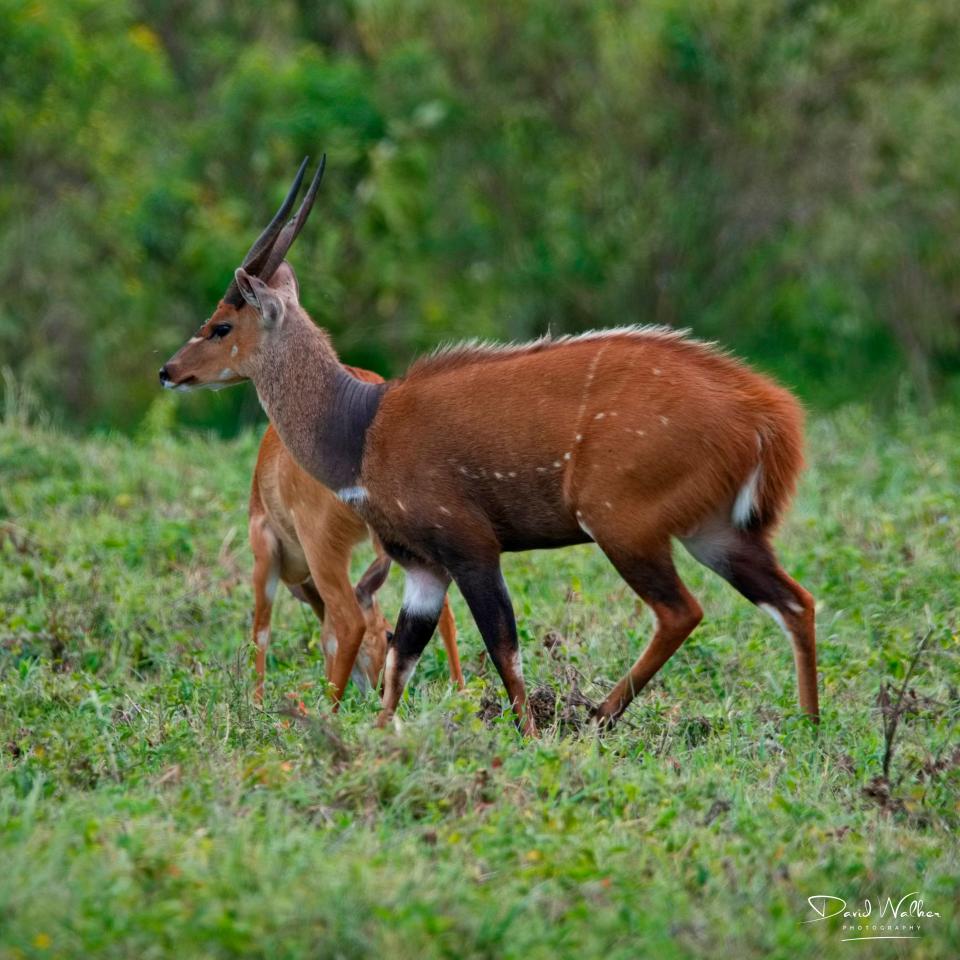
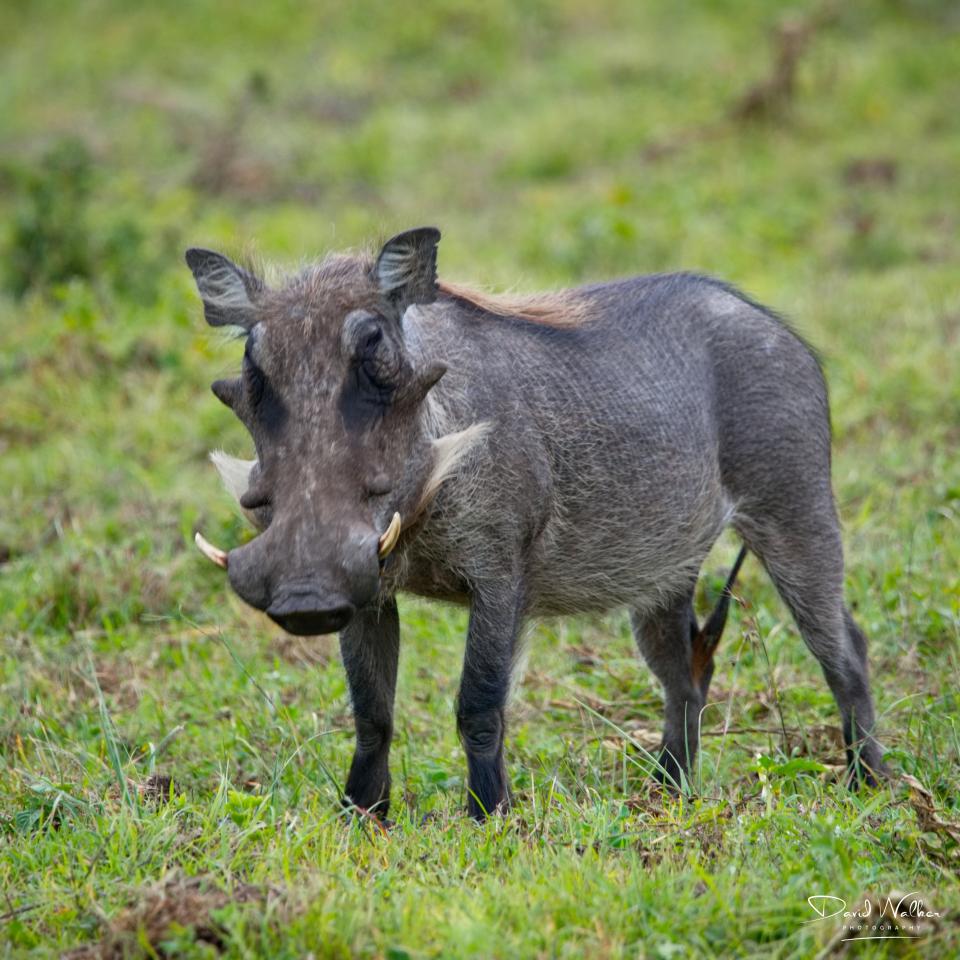
With the entry permits finally sorted, we were ready for our first Tanzanian wildlife experience and, after only five minutes or so of riding over a deeply rutted and dusty track, we arrived at what Philip described as a “small Serengeti”, a large plain, filled with lush green vegetation and home to giraffe, zebra, buffalo, warthog, bush buck, egret, baboons and a hammercop, a species of water foul with a long flattened beak and a long crest, giving it a “hammerhead” appearance.
It was breathtaking and also a little strange on account of the lushness of the landscape, which seemed at odds with the typical African Savannah landscape featured on many wildlife TV programmes.
Around Mount Meru
Arusha was to serve only as a taster of what was to come, and in comparison to the other national parks we were to visit it’s relatively small, so one morning was sufficient to complete a circuit of the park taking in many of its varied habitats.
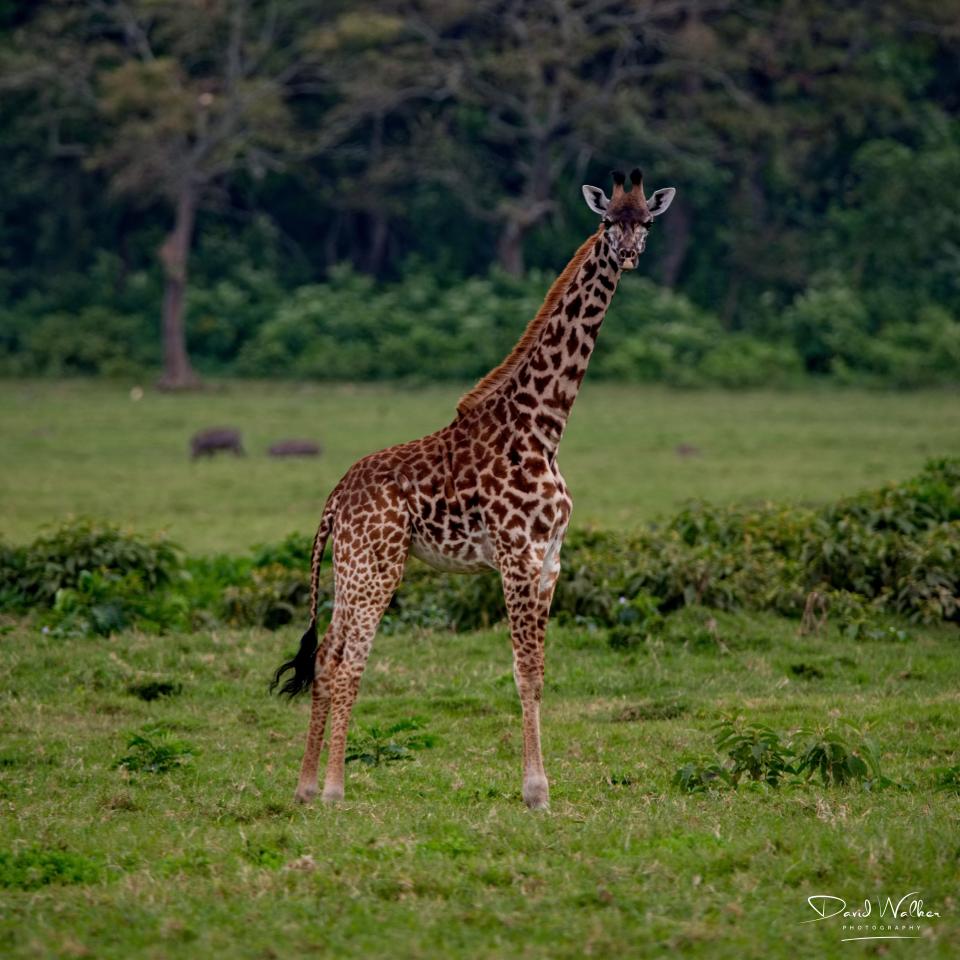
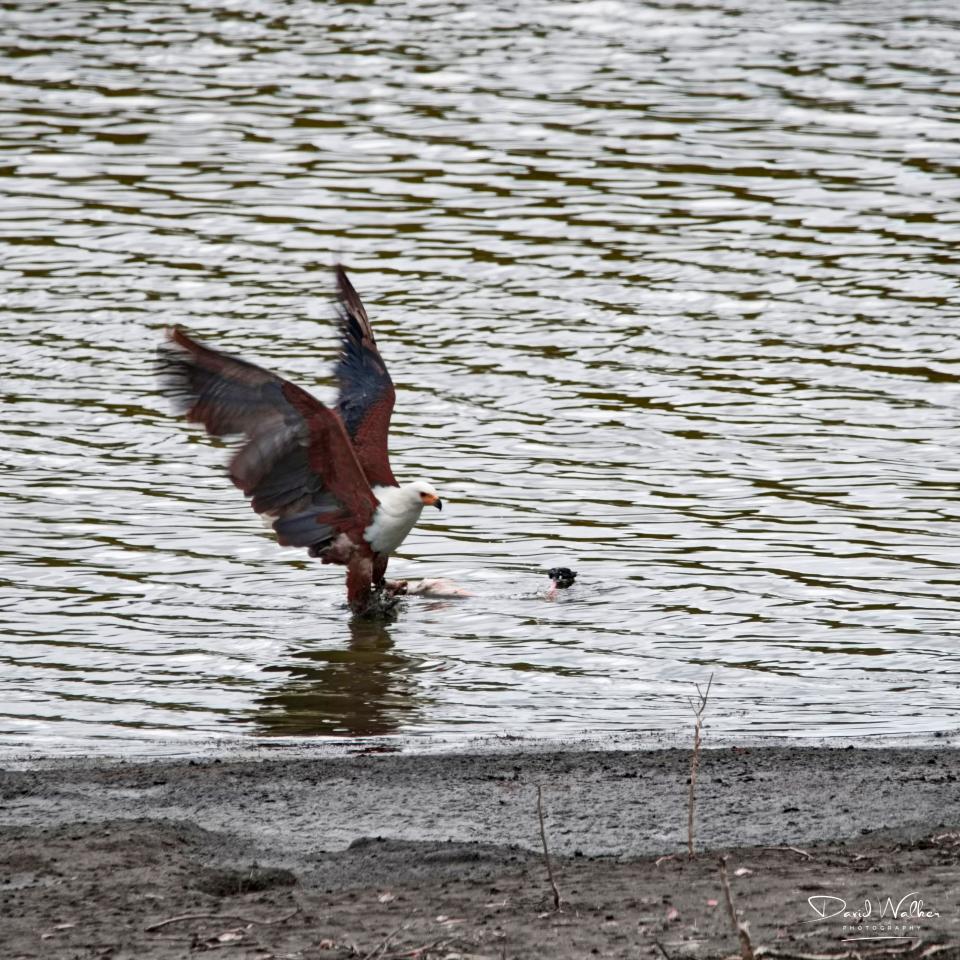
We saw mountain terrain opening up to a spectacular view of the planes below as we drove around the rim of the volcano that is Mount Meru. We took in the site of a family of giraffe grazing in the marshy ground down by the lakes and were blessed to be able to see an African fish eagle tussling with the corpse of a flamingo by the waters edge. Baboons greeted us in the tree-covered slopes surrounding the road as we climbed Mount Meru.
Small it may be, in comparison to Tarangire or the Serengeti, but it was a spectacular taster.
Onwards to Tarangire
From Arusha National Park, we headed back to the Mount Meru Hotel for lunch and then out on the two hour drive to Tarangire, across a vast plain dotted with herds of domestic cattle, zebra and a few wildebeest.
This used to be the route of the migration but the long, metalled road bisecting it and the settlement of the Maasai on other side, throughout the plain, has effectively blocked the route for the migrating herds and they no longer pass this way.
Field Notes
- Arusha National Park - Located on the slopes of Mount Meru; a compact park encompassing montane forest, crater rim, marsh, and open plain habitats
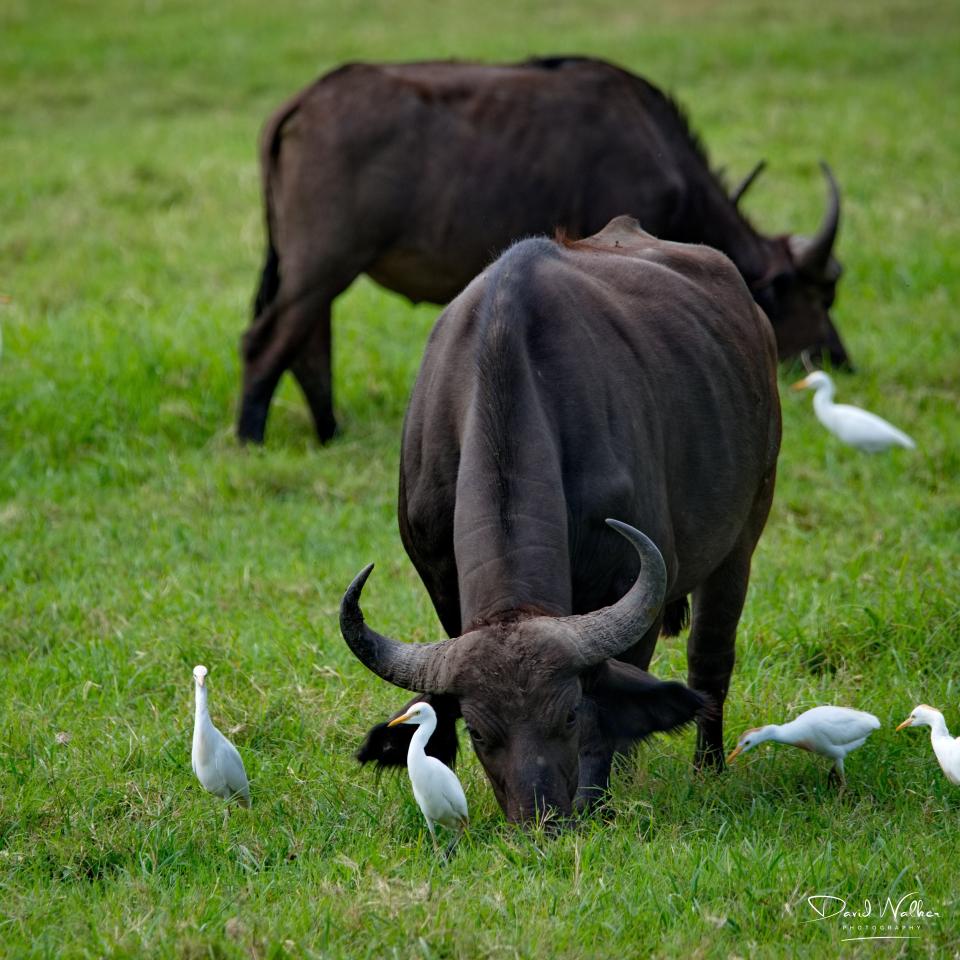
- African Buffalo (Syncerus caffer) - seen grazing in open grassland; large groups present on the ‘small Serengeti’ plain
- Giraffe (Giraffa camelopardalis) - family group observed feeding in marshy ground near lakes
- African Fish Eagle (Icthyophaga vocifer) - observed at waterside feeding on flamingo carcass; characteristic presence around lakes
- Common Warthog (Phacochoerus africanus) - encountered in open areas; typical alert posture and rapid movement when disturbed
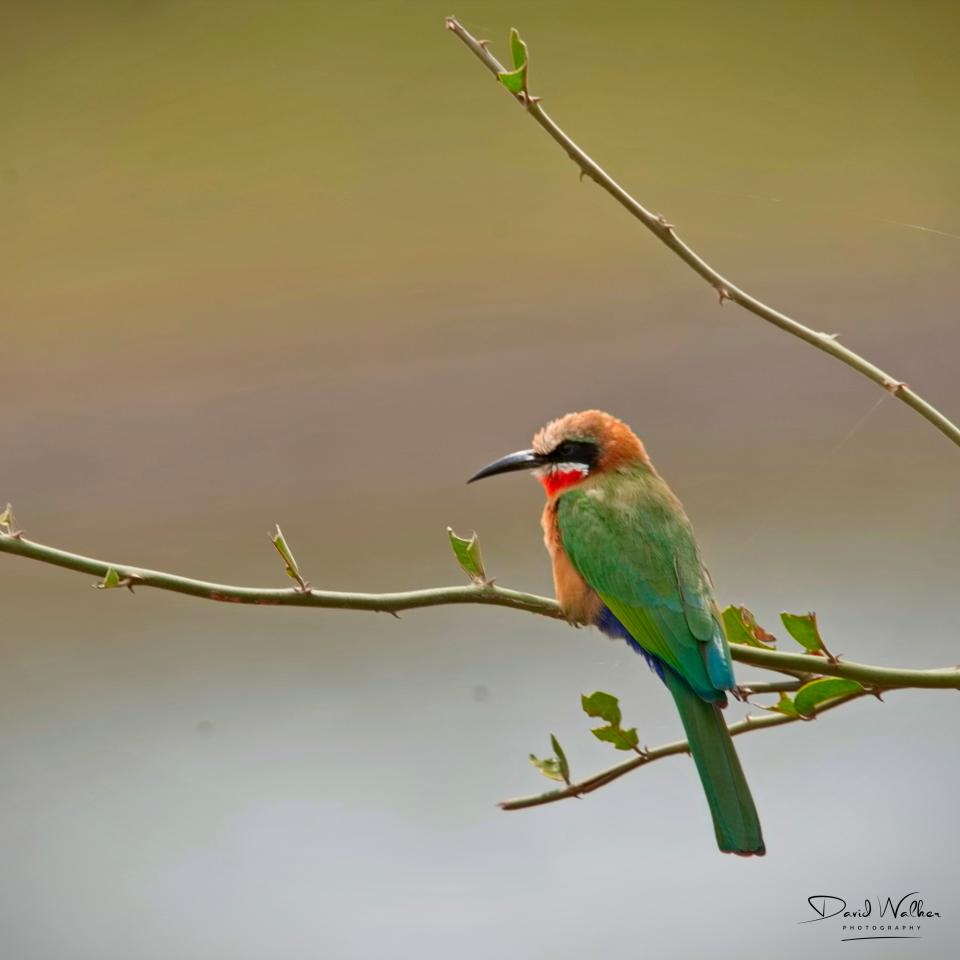
- White-fronted Bee-eater (Merops bullockoides) - active in open habitat; aerial feeding behaviour
- Hamerkop (Scopus umbretta) - seen near wetland; distinctive hammer-shaped head profile
- Migration Route (Tarangire region) - former wildebeest migration path now disrupted by road infrastructure and settlement, limiting seasonal movement