
Speckled Wood Butterfly
Flight period type: Bimodal (separated broods)
The Speckled Wood Butterfly is a characteristic species of shaded habitats in Abingdon, often encountered along woodland edges, rides, and hedgerows where dappled sunlight breaks through.
This page summarises how the species appears in the records: the structure of its flight period across the year.
Flight Period
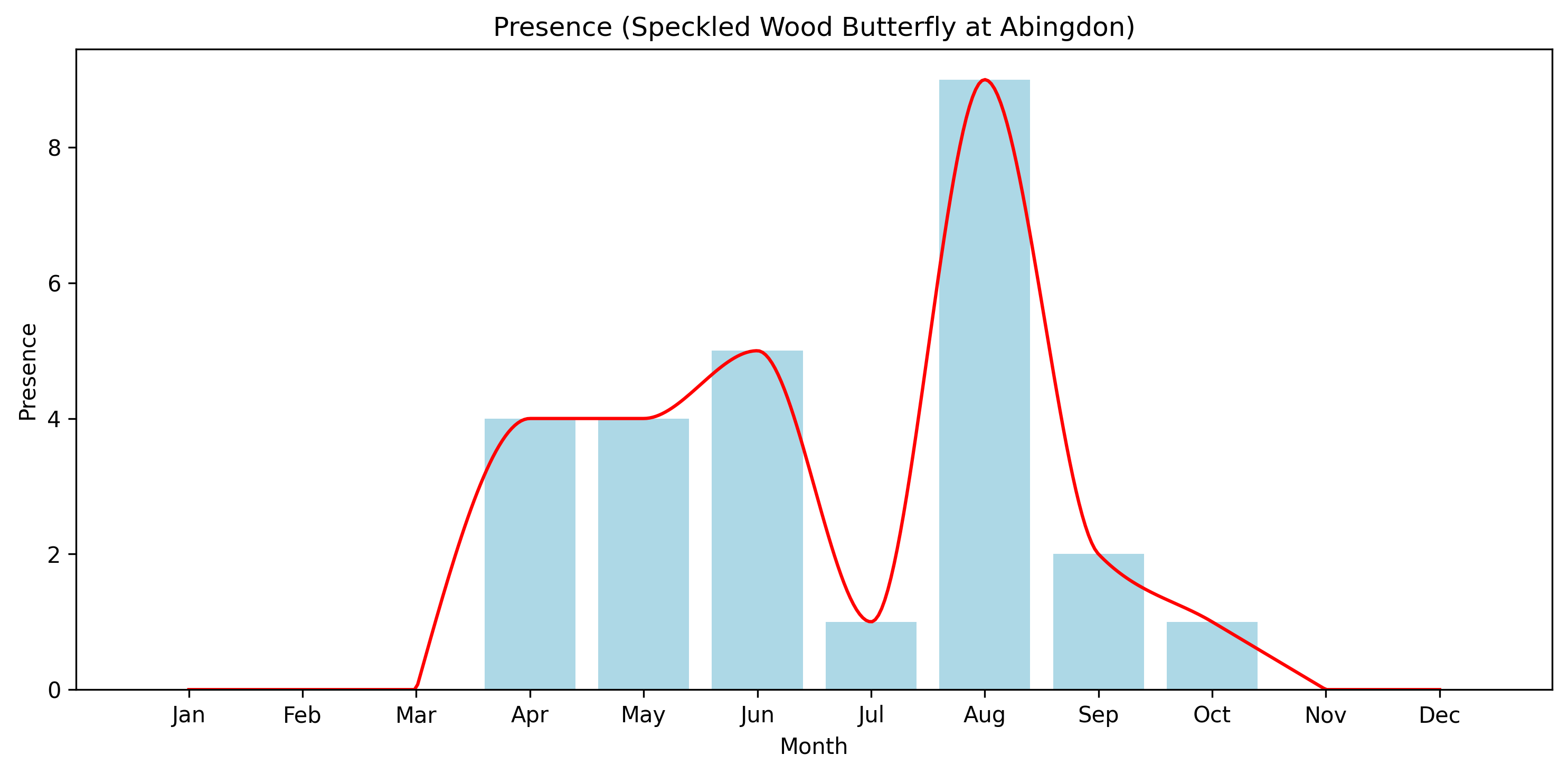
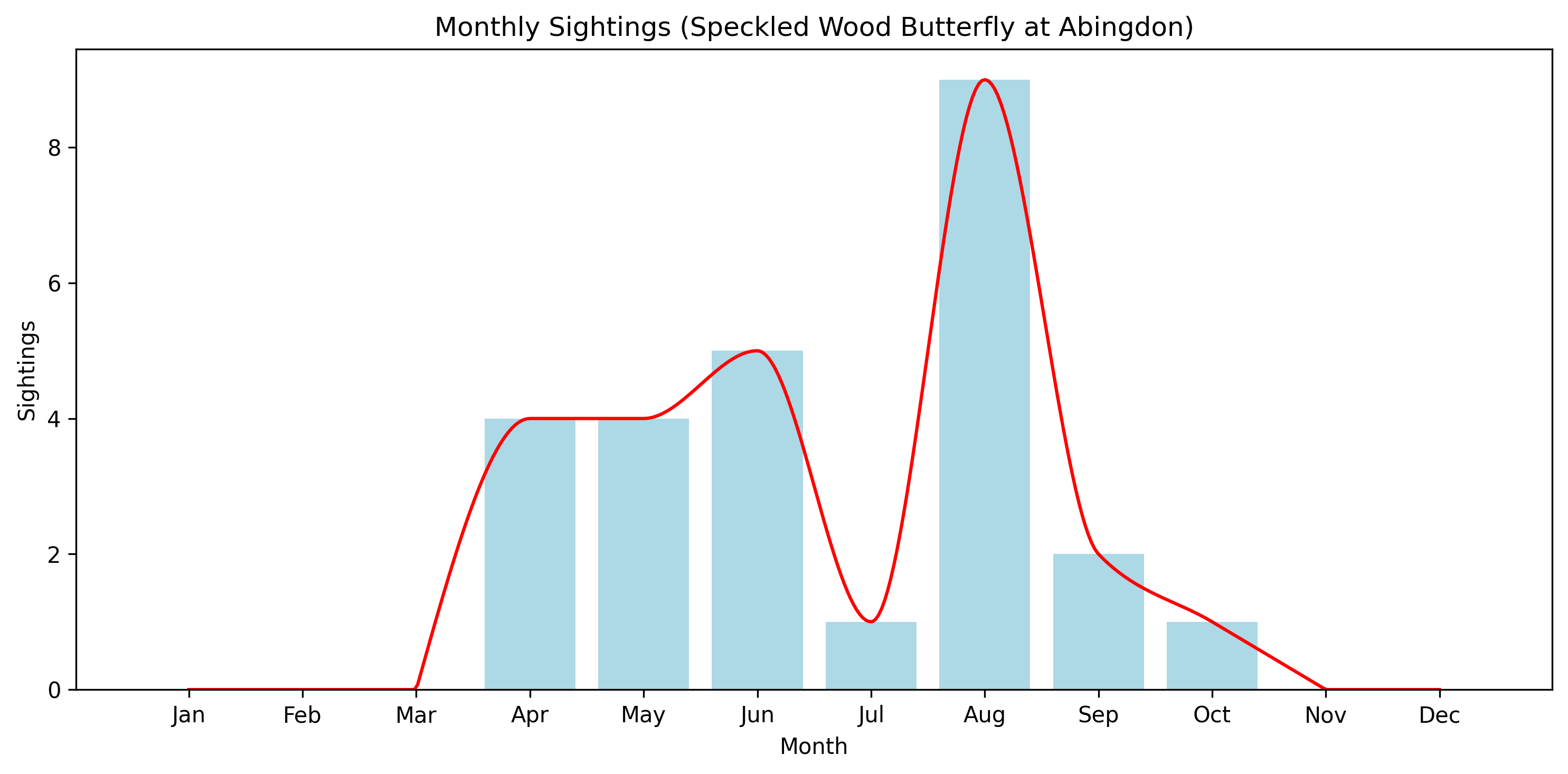
Speckled Wood shows a bimodal flight pattern, with two distinct peaks separated by a clear dip.
The first peak occurs in late spring to early summer, with activity building from April through May to a maximum in June.
A marked dip follows in July, after which a second, stronger peak appears in late summer, centred on August.
Activity then declines through September and into early autumn.
The overall pattern is that of two clearly separated periods of activity within the year.
Interpretation
The bimodal pattern reflects the presence of two distinct broods within a single season.
The first peak represents the emergence of the spring generation, with activity increasing through April and May and reaching a maximum in June.
The subsequent dip in July marks the transition between broods, when relatively few adults are present.
The second peak in August corresponds to the emergence of a later generation, producing a renewed period of activity in late summer.
Unlike overwintering species such as Peacock, the two peaks here represent separate generations rather than different phases of the same individuals.
This results in a pattern that is:
- Structurally similar to other bimodal species
- Biologically distinct in its underlying mechanism
Overall, the pattern reflects a multi-brooded species with discrete generations producing separate peaks in activity across the season.
Summary
| Aspect | Classification |
|---|---|
| Flight period | Bimodal (separated broods) |
Notes
These patterns are derived from long-term personal field records and should be read as descriptions of observed activity rather than complete biological accounts.
For species such as Speckled Wood, bimodal patterns reflect multiple generations within a single year. The dip between peaks represents a genuine gap between broods rather than reduced detectability or behavioural change.