Snowdrop
Flowering period type: Single flowering period (late winter–early spring)
Snowdrop is one of the earliest flowering plants in Abingdon, often appearing while winter conditions still persist. Its nodding white flowers are widely recognised as the first clear sign of the year turning.
This page summarises how the species appears in the records: the structure of its flowering period across the year.
Flowering Period
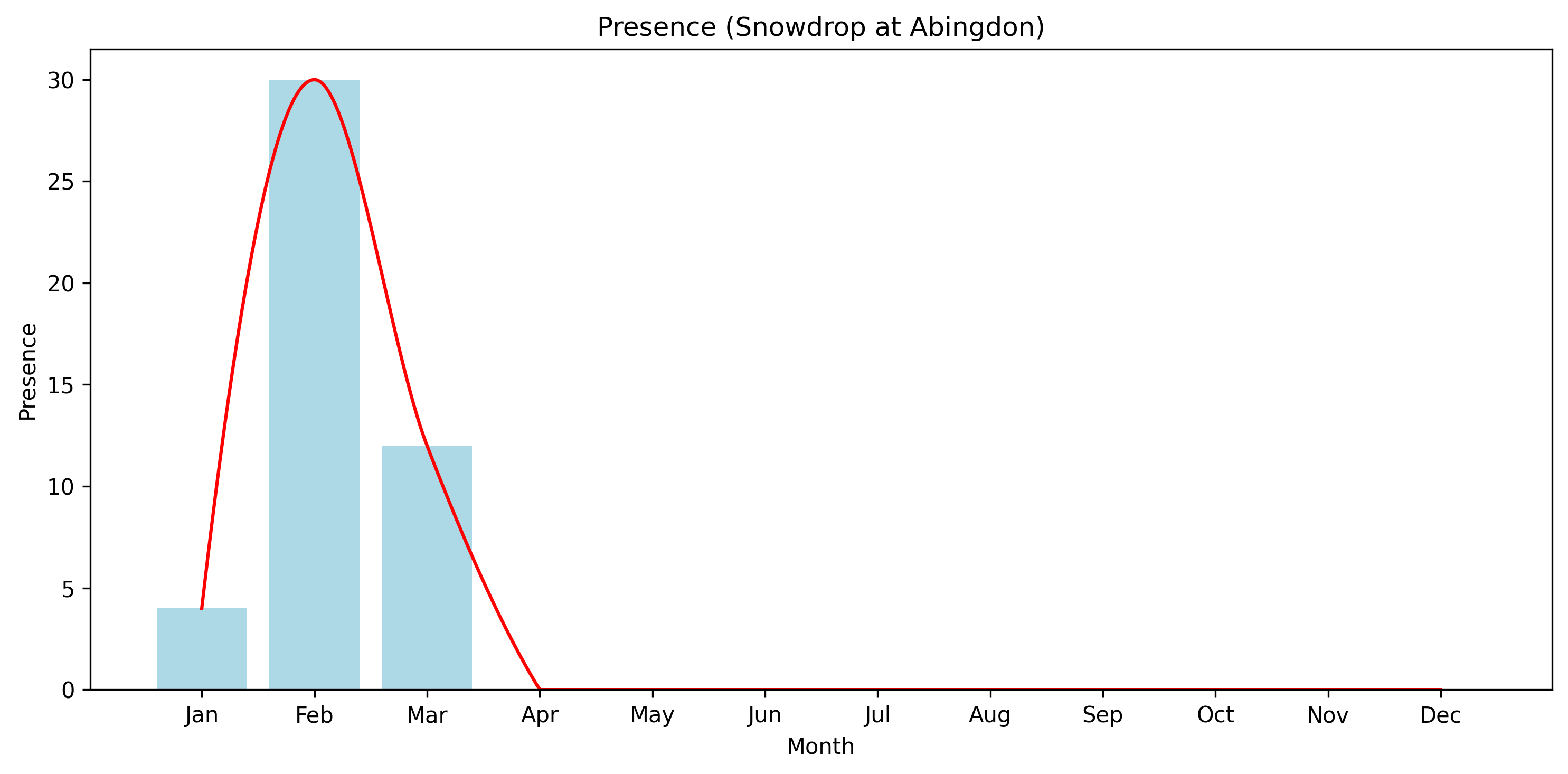
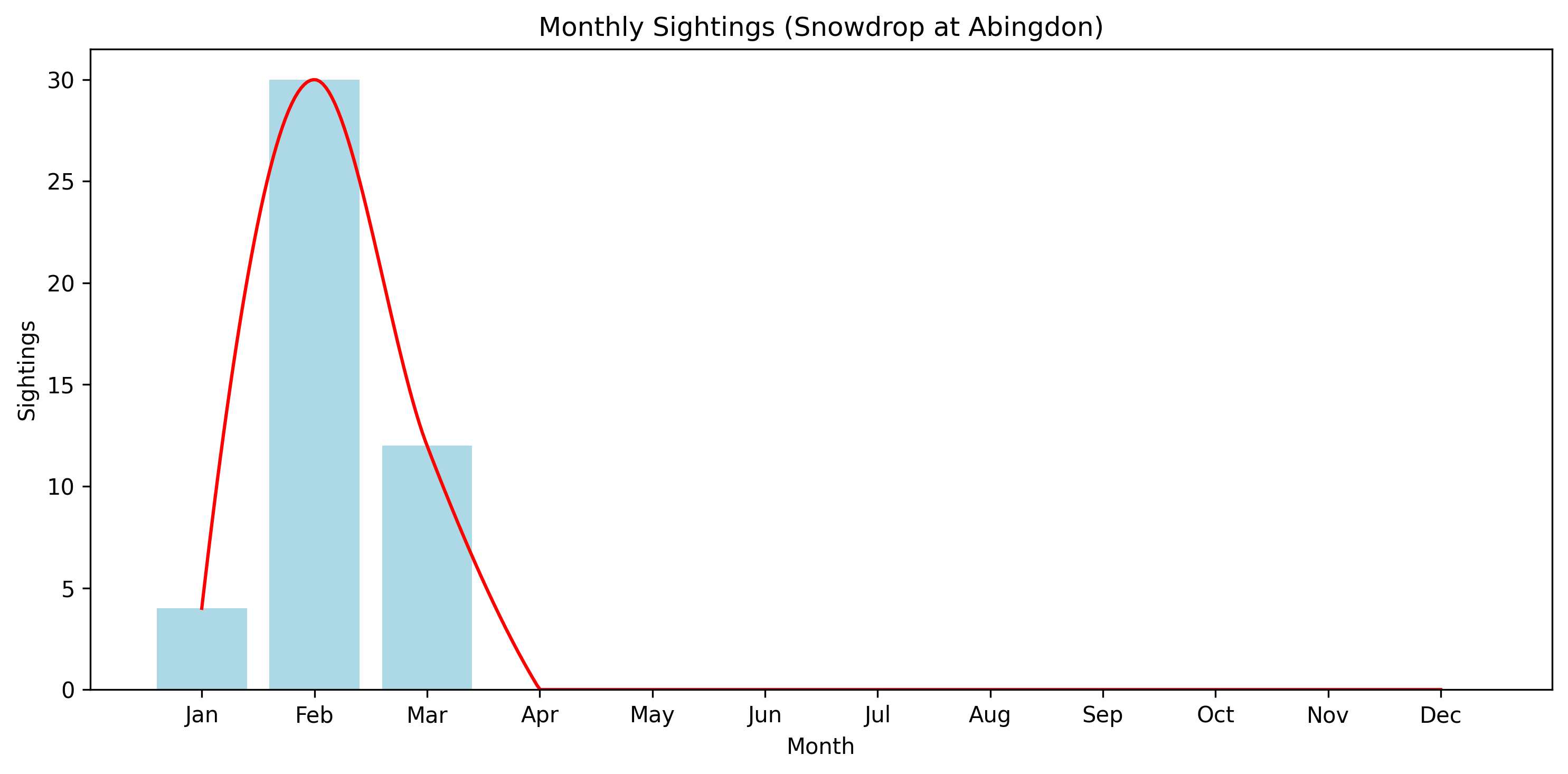
Snowdrop shows a highly concentrated flowering period at the transition from winter to spring.
Records appear early in the year, rising quickly to a peak before declining just as rapidly. Flowering is largely complete by early spring, with no activity beyond this narrow window.
The overall pattern is that of a single, tightly defined flowering period occurring earlier than any other species in the set.
Interpretation
The flowering pattern of Snowdrop reflects a strongly seasonal and early-emerging strategy.
The species is adapted to:
- Flower under low temperatures and limited daylight
- Take advantage of the period before canopy development
- Complete its flowering before the main spring flush
This results in:
- A short and sharply defined flowering window
- A clear early-season peak
- Minimal overlap with later-flowering species
Unlike extended or diffuse species, Snowdrop is:
- Temporally precise
- Highly seasonal
- Closely tied to the transition out of winter
Its early appearance gives it a disproportionate significance in the seasonal cycle, marking the beginning of visible change in the landscape.
Overall, the pattern reflects a brief, early flowering event that signals the onset of the growing season.
Summary
| Aspect | Classification |
|---|---|
| Flowering period | Single flowering period (late winter–early spring) |
Notes
These patterns are derived from long-term personal field records and should be read as descriptions of observed flowering rather than complete biological accounts.
For species such as Snowdrop, flowering occurs within a very narrow seasonal window at the start of the year. The absence of records outside this period reflects the absence of flowers rather than absence of the plant.