Rosebay Willowherb
Flowering period type: Single flowering period (summer, strong peak)
Rosebay Willowherb is a tall and striking plant of disturbed ground, railway edges, and open habitats in Abingdon. Its vivid pink spikes are one of the defining visual features of high summer.
This page summarises how the species appears in the records: the structure of its flowering period across the year.
Flowering Period
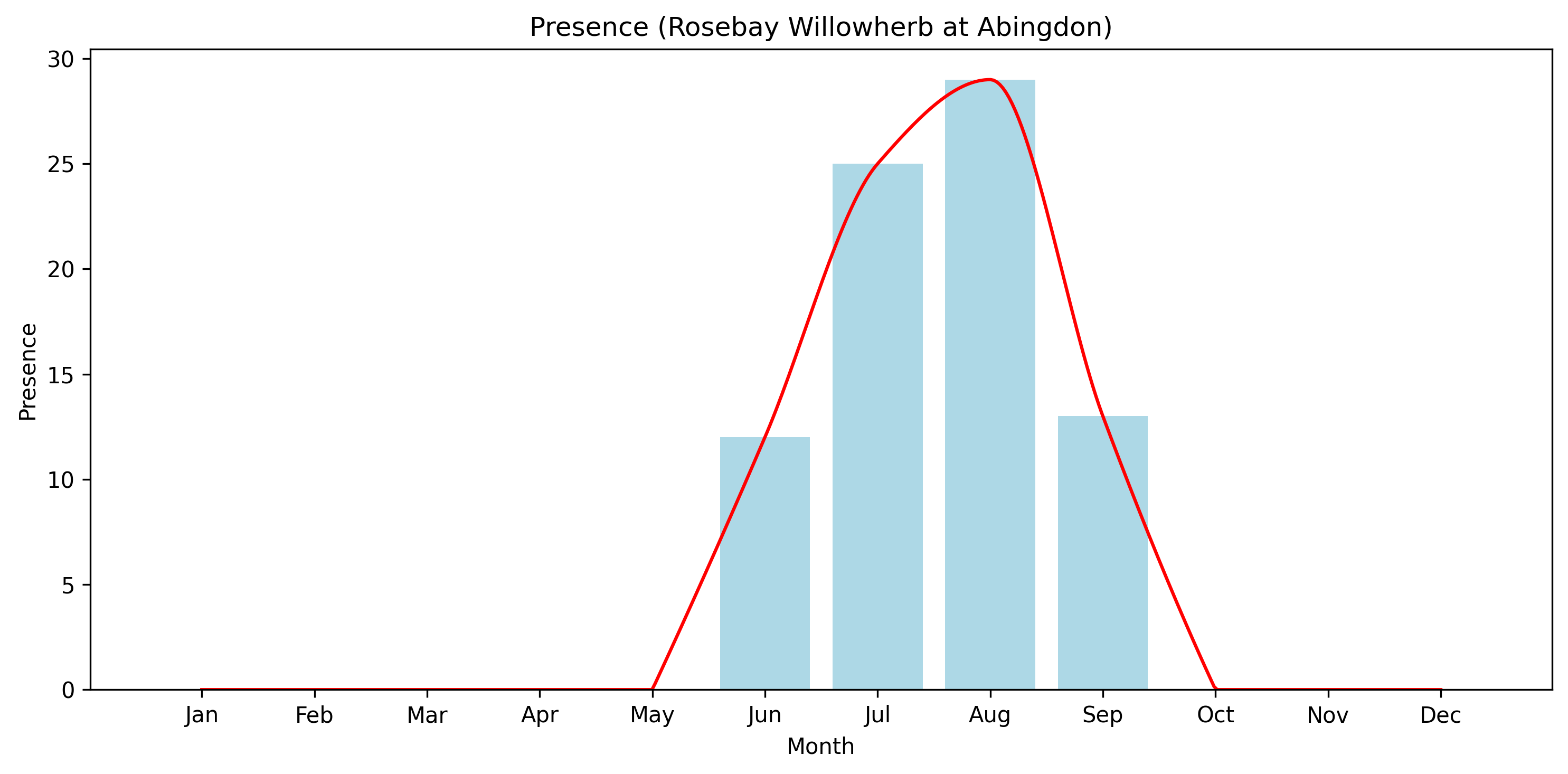
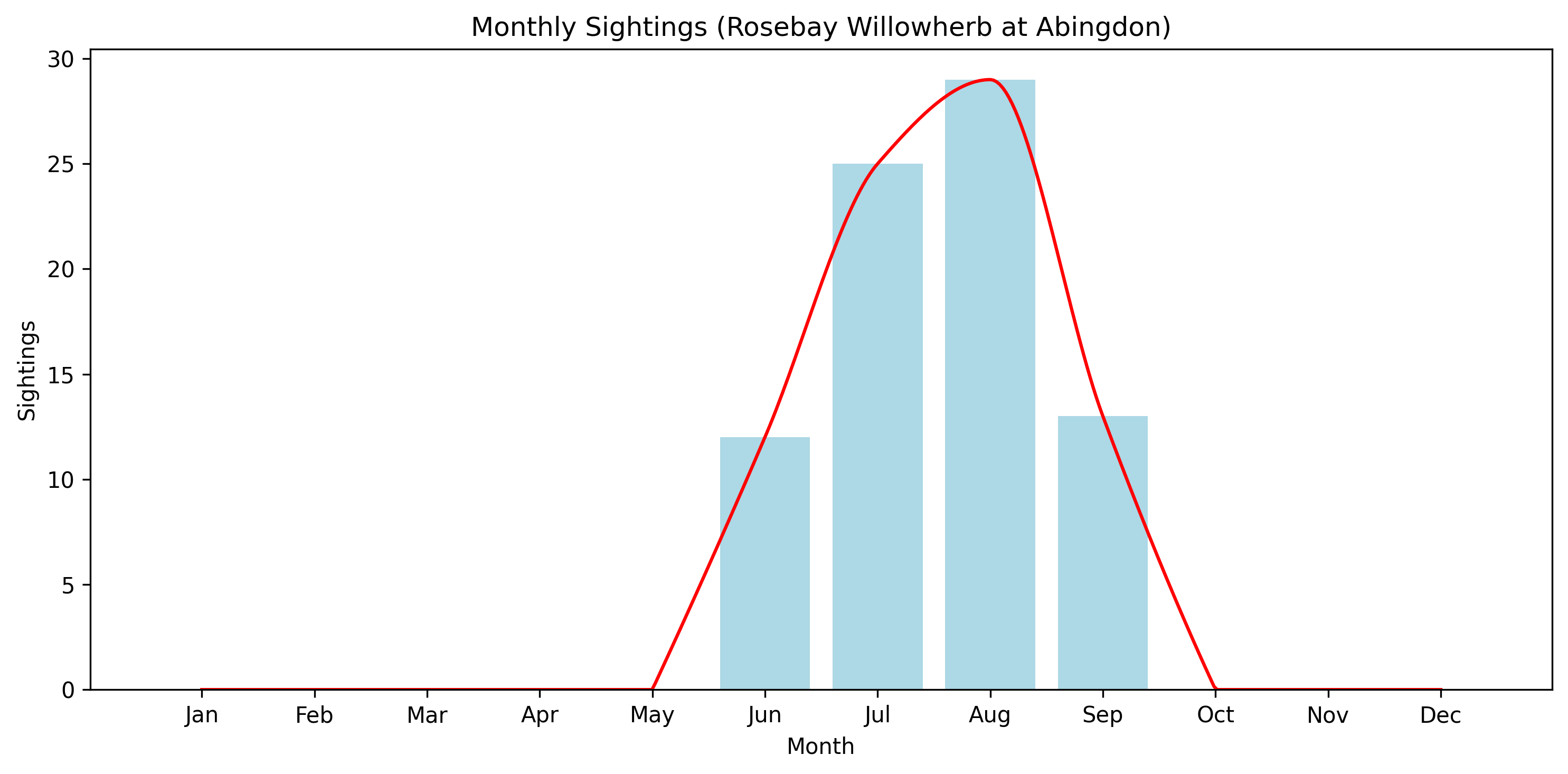
Rosebay Willowherb shows a clearly defined summer flowering period with a strong central peak.
Records begin in early summer, rising rapidly to a maximum in mid-summer. High levels are maintained for a relatively short period before declining into late summer.
Outside this window, there are no records of flowering.
The overall pattern is that of a single, strongly seasonal flowering period centred on summer.
Interpretation
The flowering pattern of Rosebay Willowherb reflects a highly visible and seasonally focused flowering strategy.
Unlike early or extended flowering species, Rosebay Willowherb:
- Emerges later in the year
- Builds quickly to a pronounced peak
- Concentrates its flowering into a relatively short summer window
This results in:
- A strong and unmistakable mid-summer signal
- A clear rise and fall in activity
- A visually dominant presence during its peak
The species’ association with open and often disturbed habitats allows it to form dense stands, further amplifying its seasonal impact.
In contrast to diffuse or background species, Rosebay Willowherb represents a distinct seasonal event, marking the height of summer.
Overall, the pattern reflects a single, concentrated flowering period that defines the mid- to late-summer landscape.
Summary
| Aspect | Classification |
|---|---|
| Flowering period | Single flowering period (summer, strong peak) |
Notes
These patterns are derived from long-term personal field records and should be read as descriptions of observed flowering rather than complete biological accounts.
For species such as Rosebay Willowherb, flowering is concentrated into a distinct seasonal window. The absence of records outside this period reflects the absence of flowers rather than absence of the plant.