
Redwing
Role in the year: Winter visitor (strongly seasonal)
The Redwing is a classic winter visitor to Abingdon, arriving from northern breeding grounds and appearing in the records only during the colder months.
This page summarises how the species appears in the records: how it occupies the year.
Seasonal Pattern
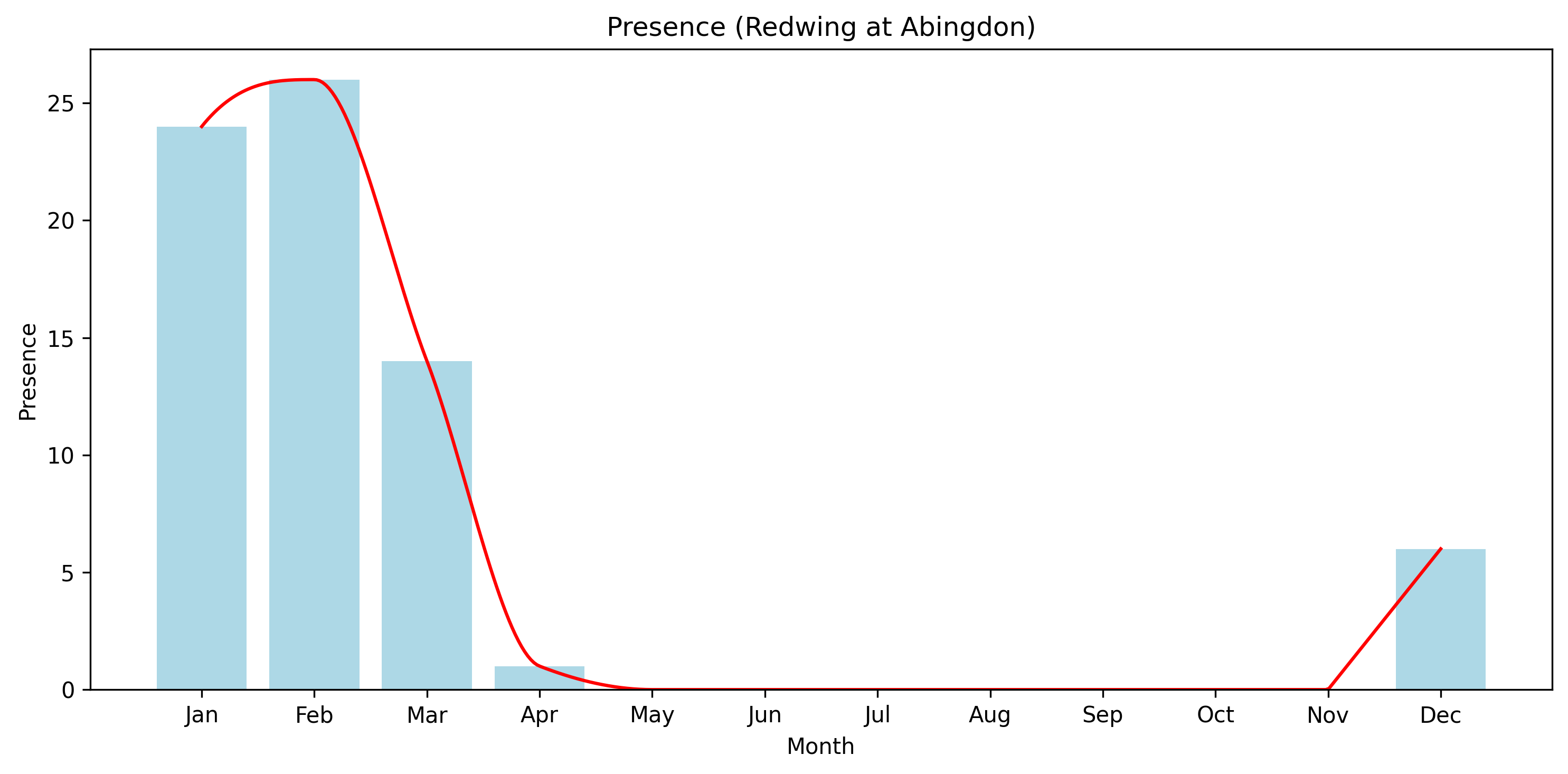
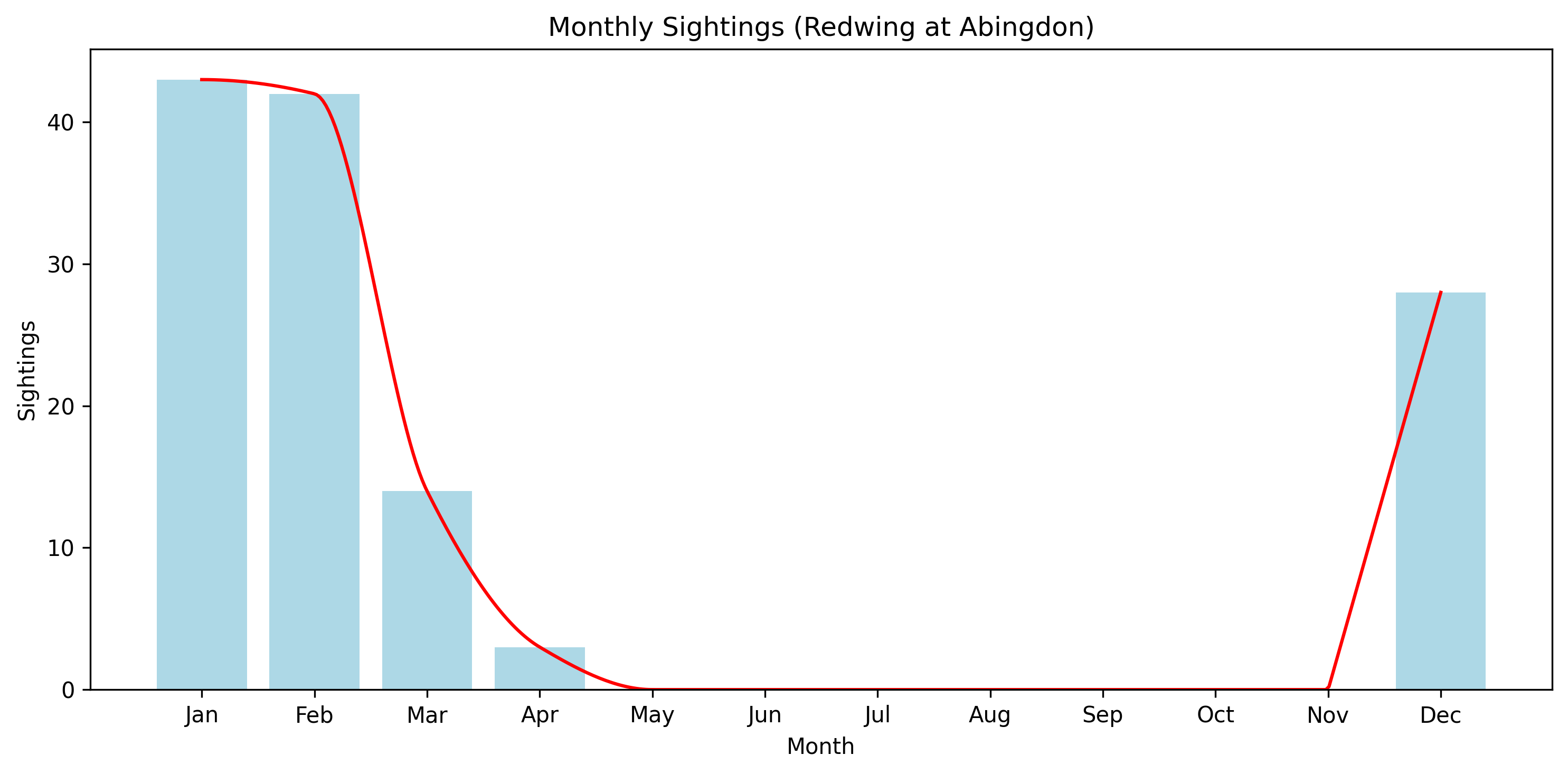
Redwing is recorded almost exclusively in winter.
Presence rises rapidly from December, reaching a peak in January and February. Through March, records decline sharply, and by April the species has effectively disappeared from the dataset.
From late spring through autumn, Redwing is absent, with no records during the summer months.
The overall pattern is that of a strongly seasonal winter visitor, with a narrow and well-defined period of occurrence.
Interpretation
This pattern reflects the migratory behaviour of Redwing.
The species breeds in northern Europe and moves south in autumn to spend the winter in the UK. Arrival is typically in late autumn, often noticeable as flocks moving overhead or feeding in open areas and hedgerows.
The peak in mid-winter reflects both abundance and detectability, as birds gather in flocks and make use of available food resources such as berries and fallen fruit.
Departure occurs rapidly in early spring. By April, most birds have left, returning north to breed, resulting in the sharp drop to absence in the records.
The absence of any summer records confirms that Redwing is not a resident species in this landscape, but a true winter migrant.
Summary
| Aspect | Classification |
|---|---|
| Seasonal pattern | Winter visitor (strongly seasonal) |
Notes
These patterns are derived from long-term personal field records and should be read as descriptions of observed behaviour rather than complete biological accounts.
For migratory species such as Redwing, presence strongly reflects seasonal movement rather than changes in detectability.