
Red Dead-nettle
Flowering period type: Extended flowering period (early start, diffuse)
Red Dead-nettle is a common and often overlooked plant in Abingdon, found in gardens, disturbed ground, and field edges. Its small purple flowers and low-growing habit make it easy to miss, despite its widespread presence.
This page summarises how the species appears in the records: the structure of its flowering period across the year.
Flowering Period
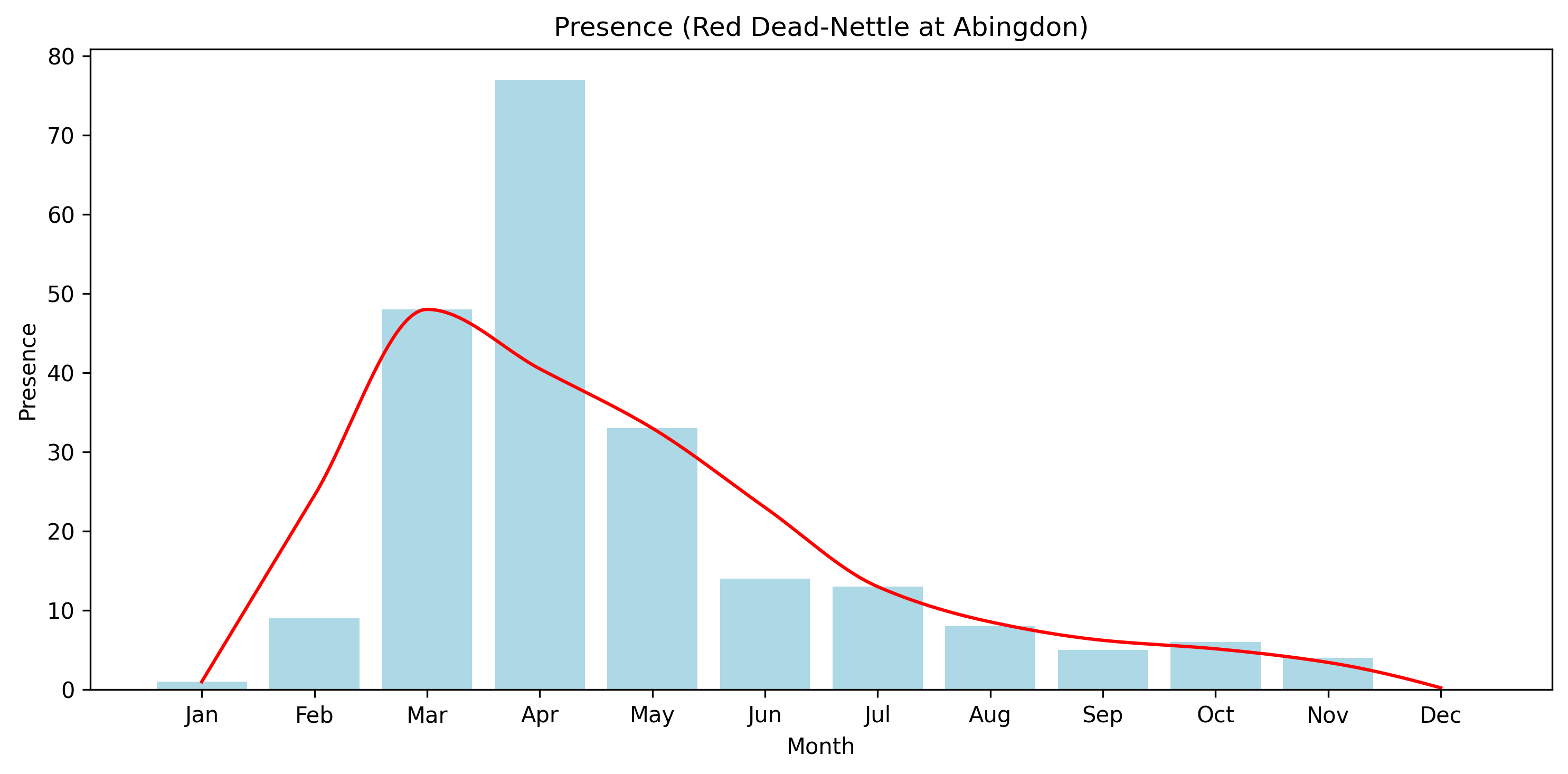
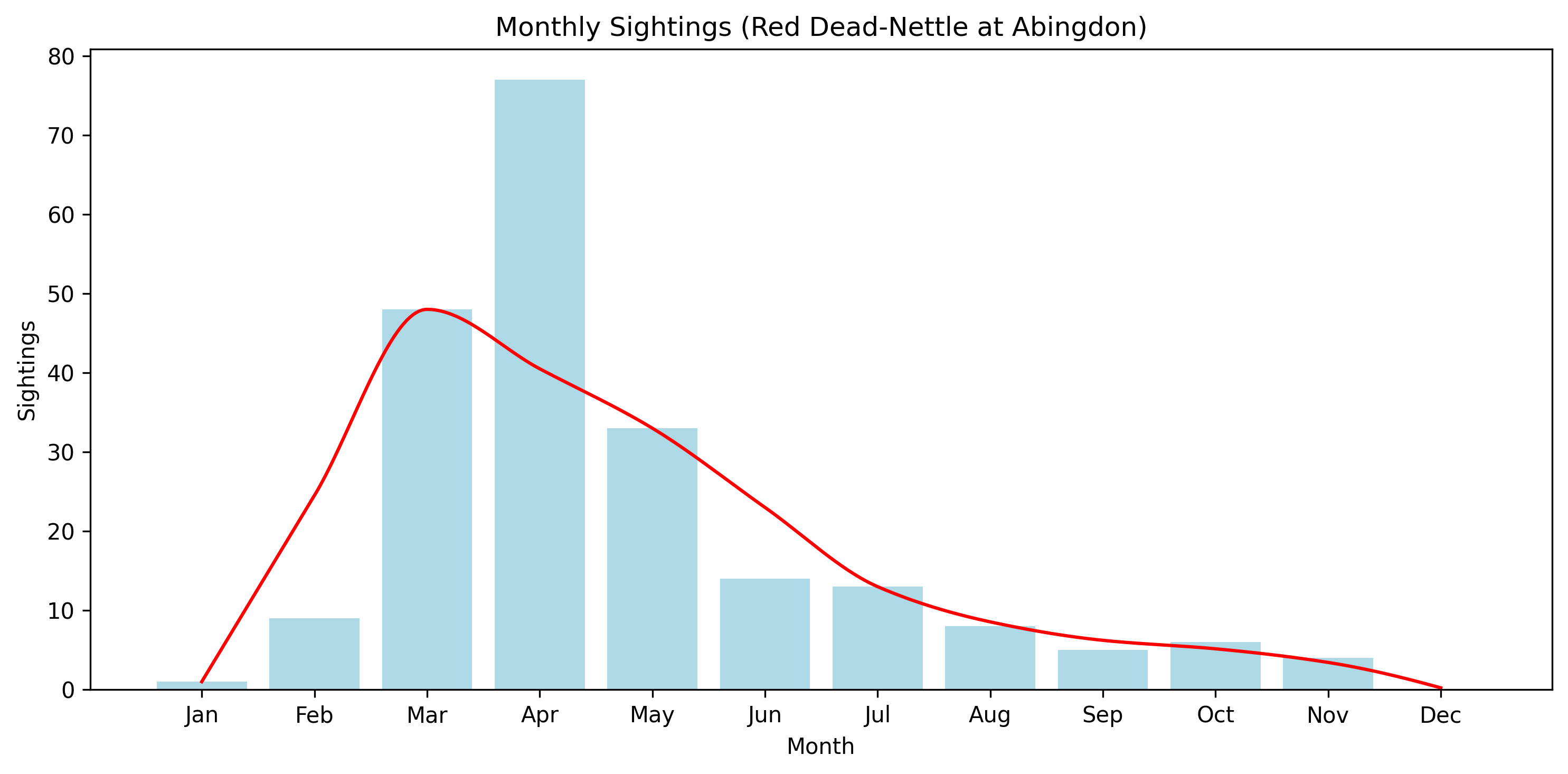
Red Dead-nettle shows a broad and extended flowering period, beginning early in the year.
Records appear from early spring and continue through much of the growing season, with no sharply defined peak. Activity is spread across multiple months, with gradual changes rather than abrupt rises or falls.
The overall pattern is that of an extended, diffuse flowering period with an early seasonal start.
Interpretation
The flowering pattern of Red Dead-nettle reflects a flexible and opportunistic flowering strategy.
Compared to more strongly seasonal species, Red Dead-nettle:
- Begins flowering early in the year
- Maintains activity across a wide seasonal window
- Does not produce a strongly concentrated peak
This results in:
- A relatively even spread of records across months
- A low to moderate level of flowering sustained over time
- A “background” presence rather than a dominant seasonal signal
Its ability to exploit disturbed ground and favourable microhabitats allows it to flower whenever conditions permit, contributing to its extended and diffuse pattern.
Unlike near-continuous species such as Daisy, it may not be present in all months, but it still spans a large portion of the year.
Overall, the pattern reflects a species that provides early and sustained flowering, contributing continuity at the quieter end of the seasonal spectrum.
Summary
| Aspect | Classification |
|---|---|
| Flowering period | Extended flowering period (early start, diffuse) |
Notes
These patterns are derived from long-term personal field records and should be read as descriptions of observed flowering rather than complete biological accounts.
For species such as Red Dead-nettle, flowering may occur opportunistically across a wide seasonal window. The observed pattern reflects both biological flexibility and the likelihood of recording a low-growing, inconspicuous plant.