
Red Admiral Butterfly
Flight period type: Single brood (extended)
The Red Admiral is a familiar and mobile butterfly in Abingdon, often encountered in gardens, woodland edges, and along hedgerows. Its appearance spans a large part of the year, with activity shifting through the seasons.
This page summarises how the species appears in the records: the structure of its flight period across the year.
Flight Period
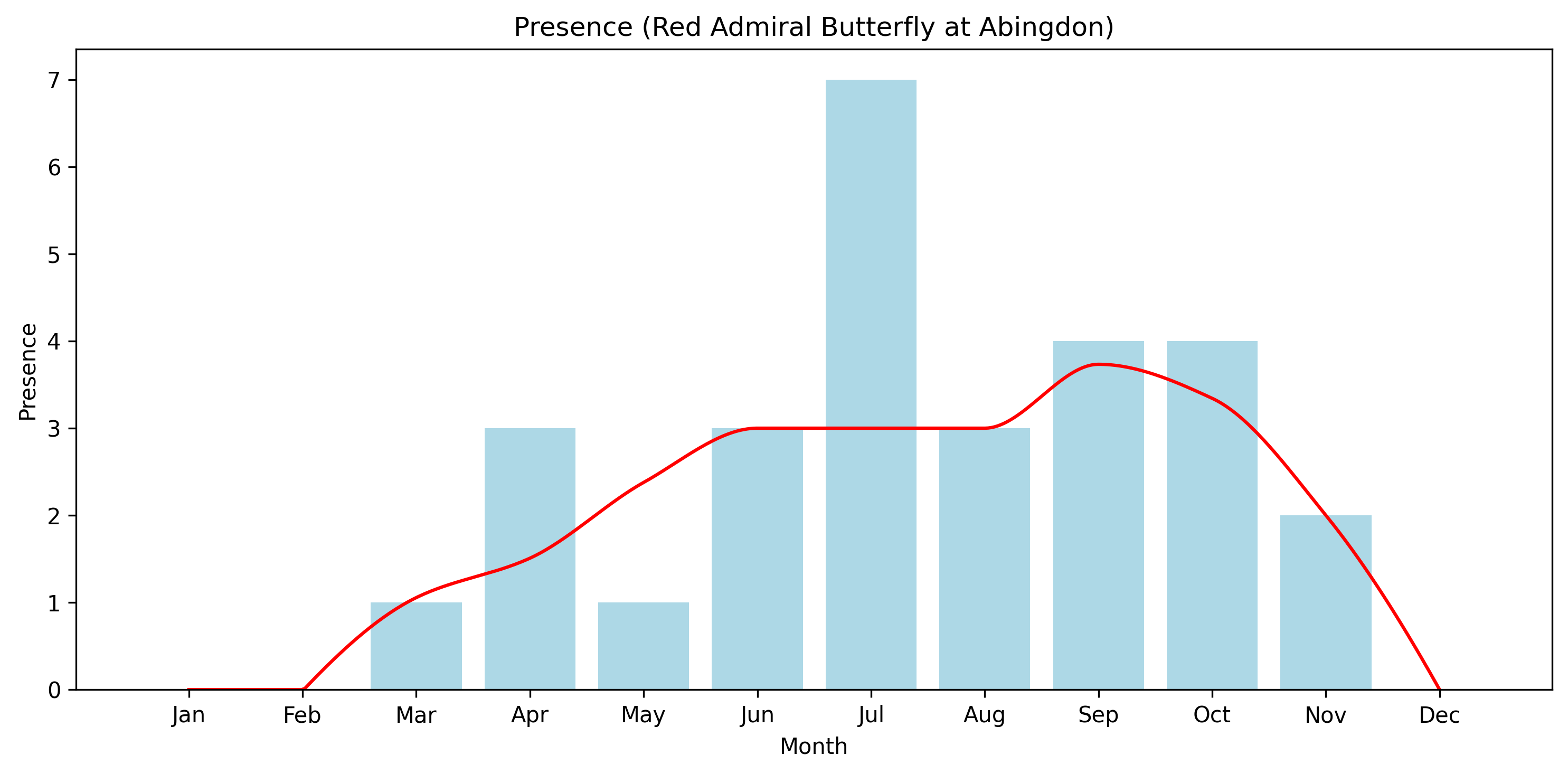
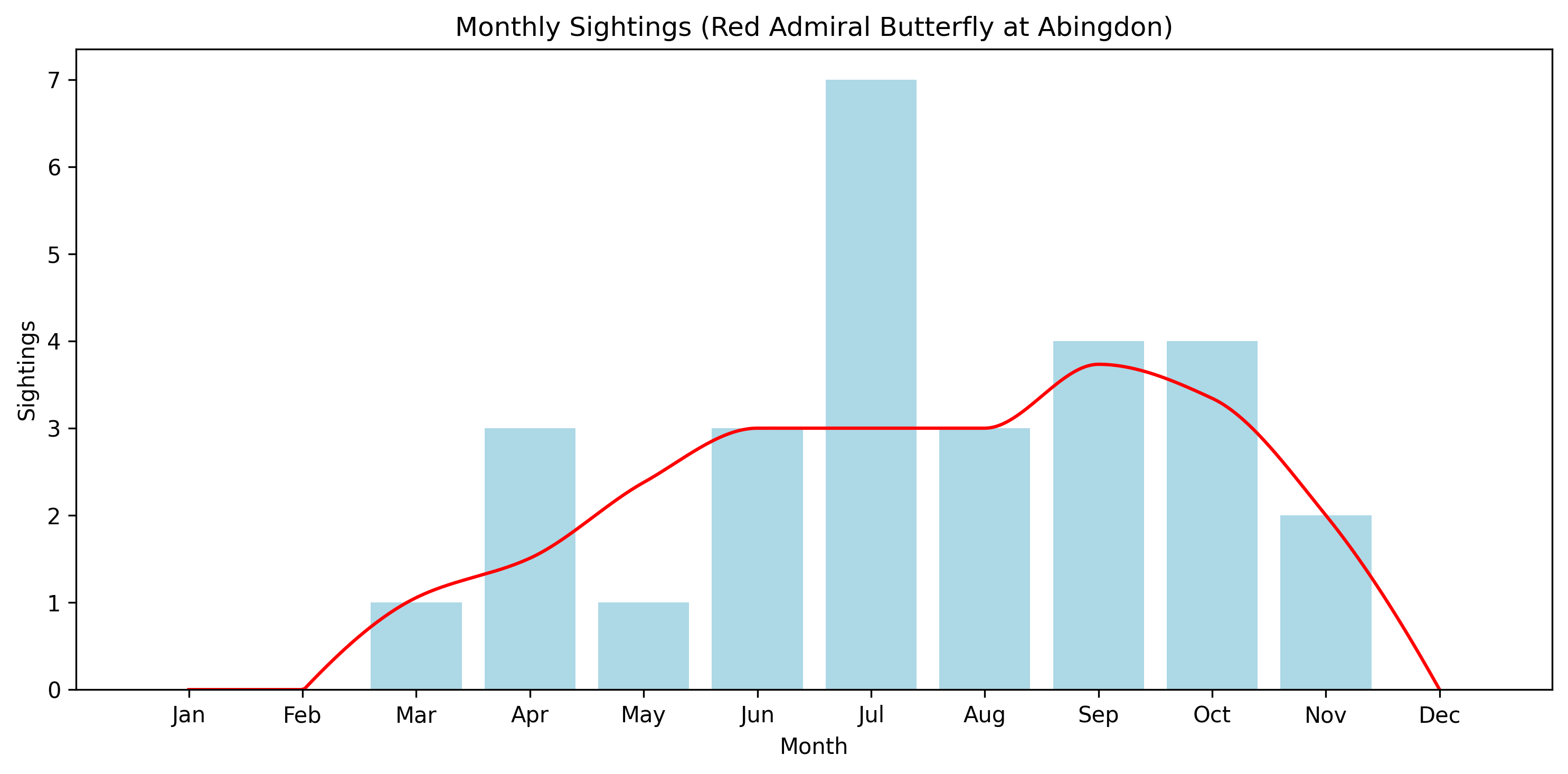
Red Admiral shows a broad, extended flight period centred on mid to late summer.
Records begin to appear in early spring, with low levels through March and April. Activity increases gradually through late spring and early summer, reaching a peak in July.
Moderate levels continue through August, September, and into October, before declining into late autumn.
The overall pattern is that of a single, extended flight period with a long tail into autumn.
Interpretation
The Red Admiral’s extended flight period reflects a combination of mobility, seasonal turnover, and prolonged activity.
The early records in spring likely represent individuals arriving or reappearing after winter, though at relatively low levels.
The gradual build toward a peak in July suggests increasing activity as the season progresses, with higher numbers of individuals present and visible during mid-summer.
The sustained activity from late summer into autumn is a defining feature of the species:
- Individuals remain active well beyond the main summer peak
- Sightings continue into October and even November
- The flight period extends later than many other butterflies in the set
Unlike tightly constrained spring species, Red Admiral does not show a sharp emergence or rapid decline. Instead, it maintains a broad seasonal presence with a single dominant peak.
Overall, the pattern reflects a flexible and extended period of adult activity, centred on summer but stretching across much of the warmer part of the year.
Summary
| Aspect | Classification |
|---|---|
| Flight period | Single brood (extended) |
Notes
These patterns are derived from long-term personal field records and should be read as descriptions of observed activity rather than complete biological accounts.
For butterfly species such as Red Admiral, extended flight periods may reflect a combination of prolonged emergence, movement, and seasonal turnover. As such, the observed pattern represents sustained activity rather than a sharply defined generation.