
Orange-tip Butterfly
Flight period type: Single brood (spring)
The Orange-tip Butterfly is one of the defining species of spring in Abingdon, closely associated with damp meadows, hedgerows, and roadside verges where its foodplants grow. Its appearance is brief but often conspicuous during its peak.
This page summarises how the species appears in the records: the structure of its flight period across the year.
Flight Period
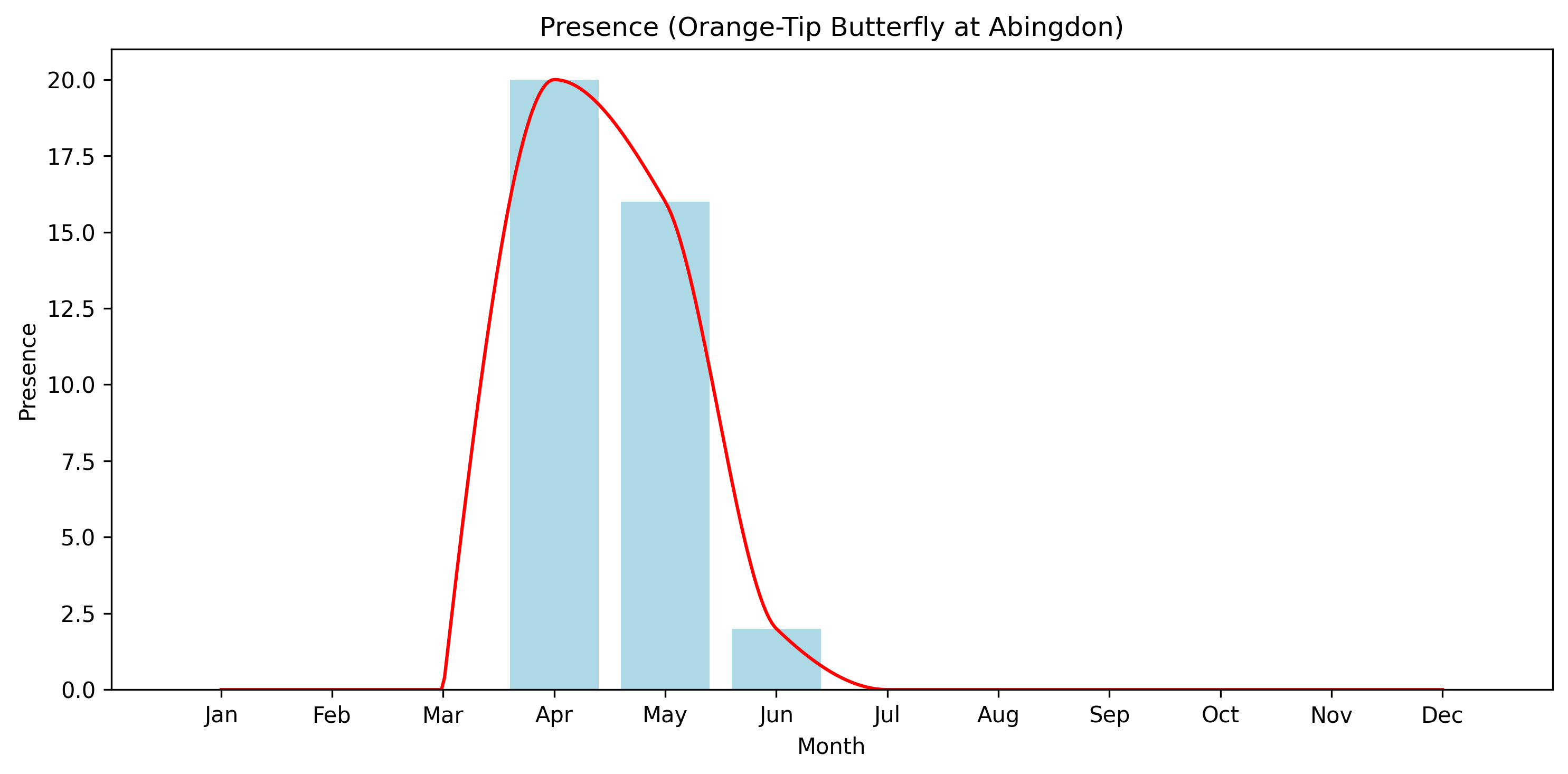
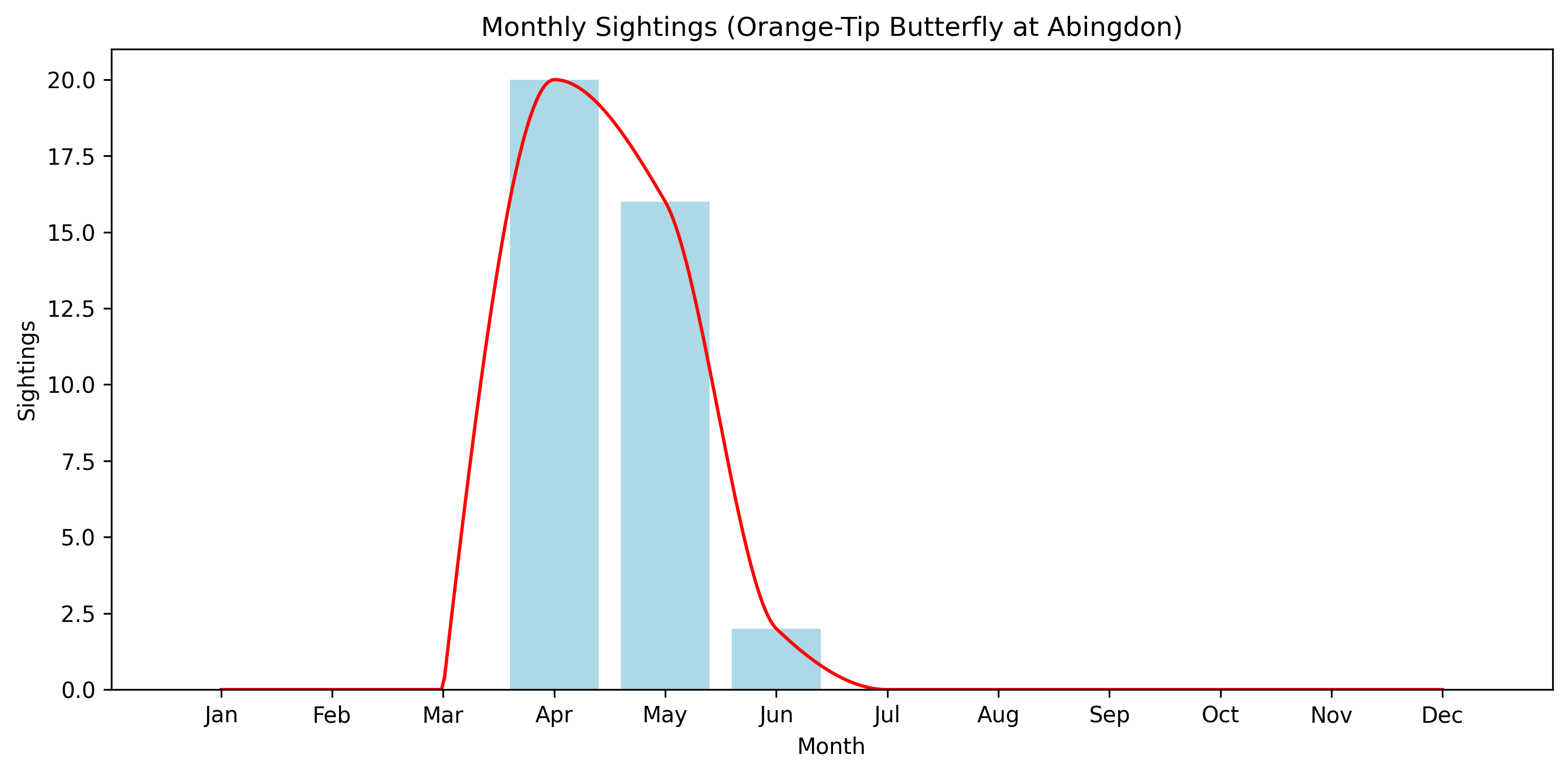
Orange-tip shows a highly concentrated spring flight period.
Records are confined to a short window from April through early June, with a strong peak in April and high levels continuing into May. By June, activity drops sharply, and the species is absent for the remainder of the year.
The overall pattern is that of a single brood species with a tightly defined spring flight window.
Interpretation
The Orange-tip’s flight period is a clear example of a short, well-defined seasonal emergence.
The abrupt appearance in April reflects the synchronous emergence of adults, with numbers rising quickly to a peak within a narrow time frame.
High activity through April and May corresponds to the main breeding period, when males patrol actively and are frequently encountered.
The rapid decline into June reflects the end of the adult flight period:
- Individuals are short-lived
- There is no overlapping second brood
- Activity drops away quickly once reproduction is complete
Unlike species with extended or bimodal patterns, there is little evidence of:
- Prolonged emergence
- Secondary peaks
- Late-season activity
Overall, the pattern reflects a single, tightly constrained brood with a brief and highly seasonal period of adult activity.
Summary
| Aspect | Classification |
|---|---|
| Flight period | Single brood (spring) |
Notes
These patterns are derived from long-term personal field records and should be read as descriptions of observed activity rather than complete biological accounts.
For butterfly species such as Orange-tip, the flight period reflects a single, discrete generation. The absence of records outside the spring window represents true absence of adults rather than reduced detectability.