Mallard (Breeding)
Role in the year: Breeding evidence (insufficient signal)
The Mallard is a familiar and widespread species in Abingdon, commonly recorded throughout the year on rivers, ponds, and other wetland habitats.
This page focuses specifically on records of birds with dependent young, providing a view of breeding evidence within the dataset rather than general seasonal presence.
Seasonal Pattern
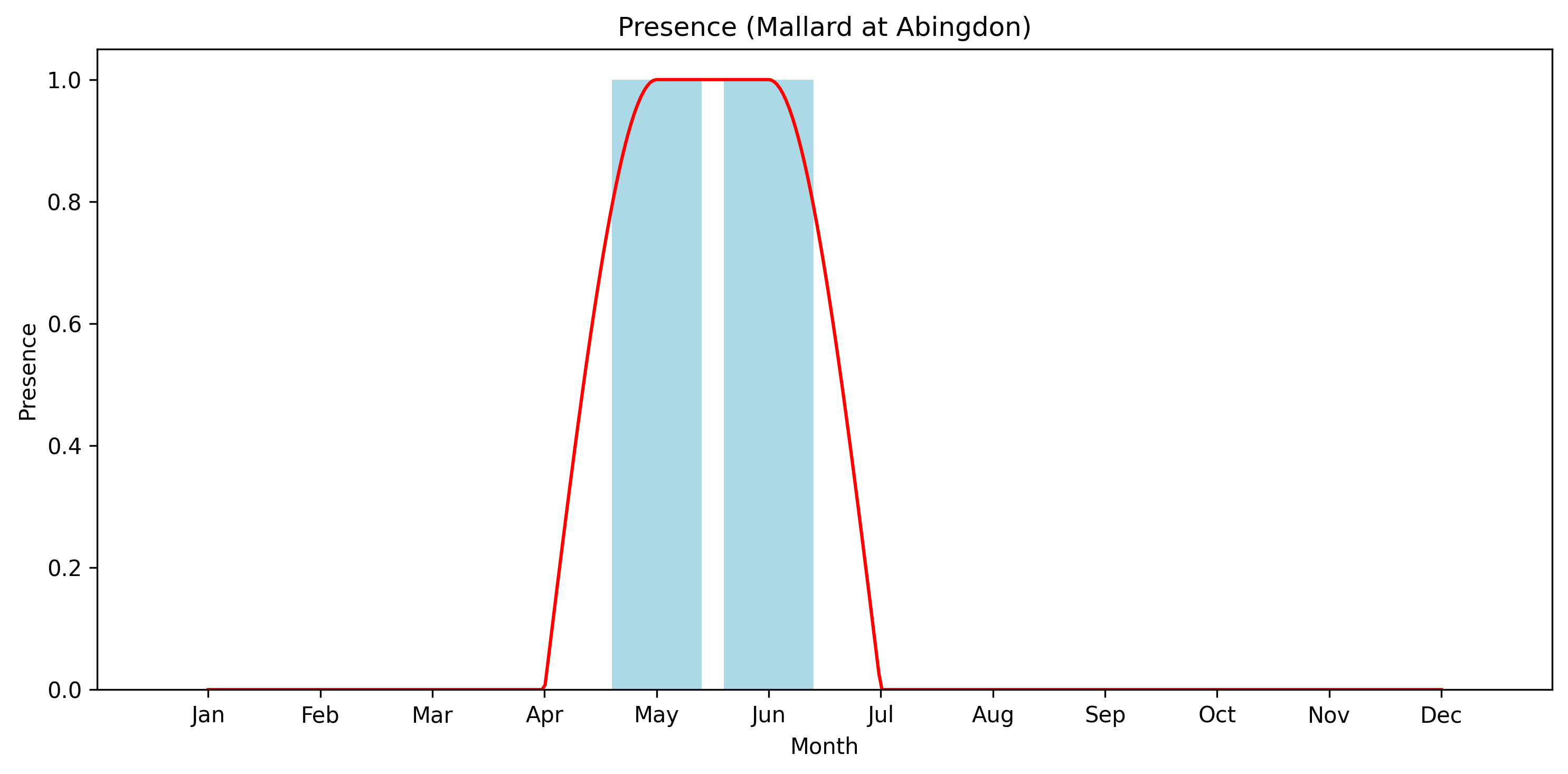
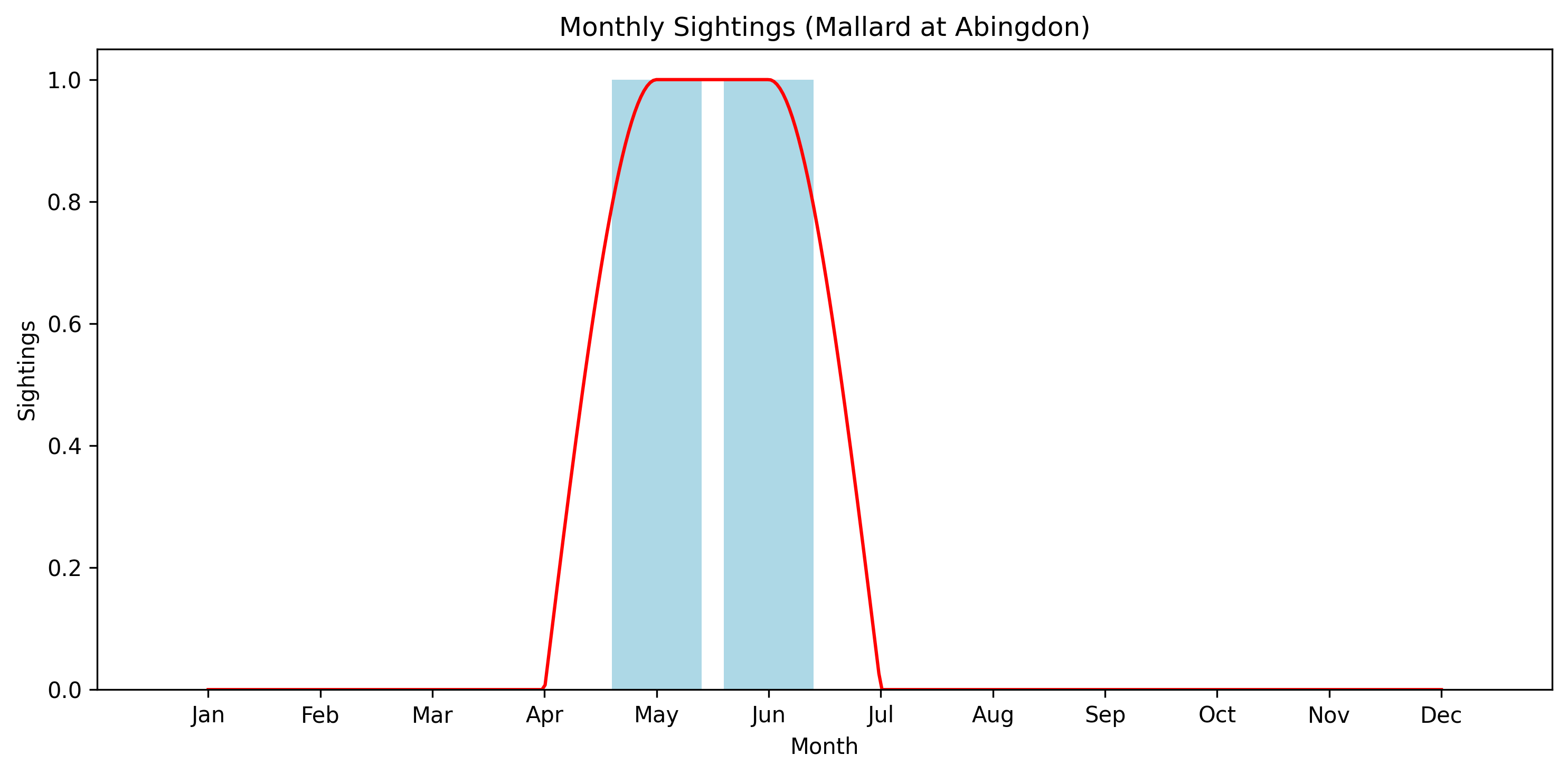
Records of Mallard with dependent young are extremely sparse, occurring only in late spring and early summer.
A small number of observations are recorded in May and June, with no records in the remainder of the year.
The overall pattern suggests a brief breeding window, but the number of observations is too low to define a robust seasonal structure.
Interpretation
The limited number of records means that this dataset captures only isolated instances of breeding evidence, rather than a complete picture of breeding activity.
Mallard is known to breed widely and regularly in suitable habitat, and the absence of records outside May and June should not be interpreted as an absence of breeding.
Instead, the pattern likely reflects:
- The opportunistic nature of recording birds with dependent young
- The difficulty of consistently observing and documenting broods
- The fact that breeding behaviour is only recorded when explicitly noted
With only two records across the entire dataset, it is not possible to:
- Define a clear peak in breeding activity
- Assess variation between years
- Compare early vs late broods
The available data is therefore best understood as evidence of breeding occurrence, rather than a reliable indicator of its timing or intensity.
Summary
| Aspect | Classification |
|---|---|
| Breeding pattern | Insufficient signal (isolated observations) |
Notes
These patterns are derived from long-term personal field records and should be read as partial observations rather than complete biological accounts.
For breeding analyses, absence of records does not imply absence of breeding. Species such as Mallard may breed regularly even when only a small number of observations of dependent young are recorded.
As such, this page should be interpreted as documenting recorded breeding events, not the full extent of breeding activity in the landscape.