Dandelion
Flowering period type: Extended flowering period (near year-round, spring peak)
Dandelion is one of the most widespread and recognisable plants in Abingdon, occurring in lawns, verges, and disturbed ground. Its bright yellow flowers are especially prominent in spring, forming a familiar seasonal signal.
This page summarises how the species appears in the records: the structure of its flowering period across the year.
Flowering Period
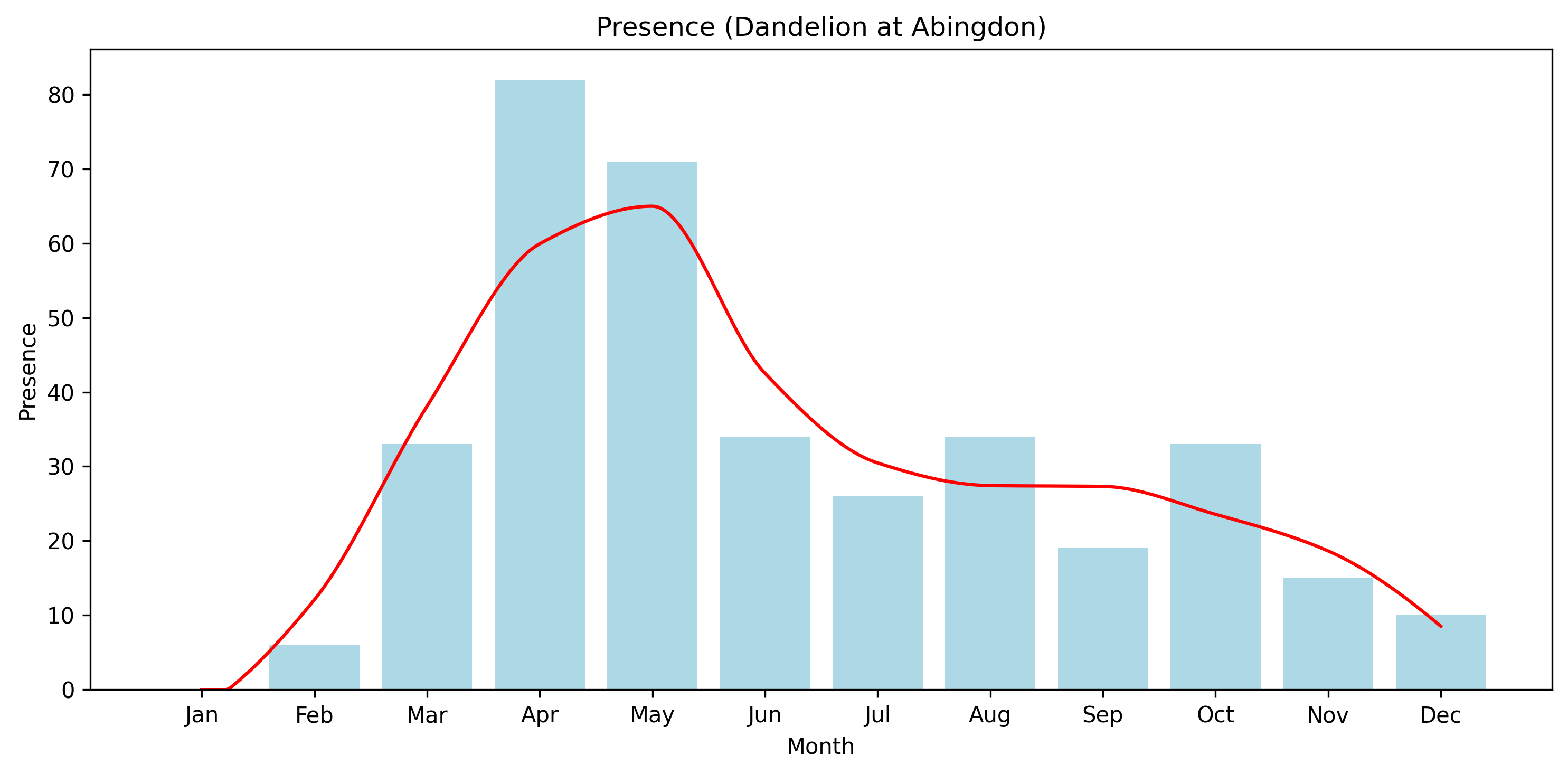
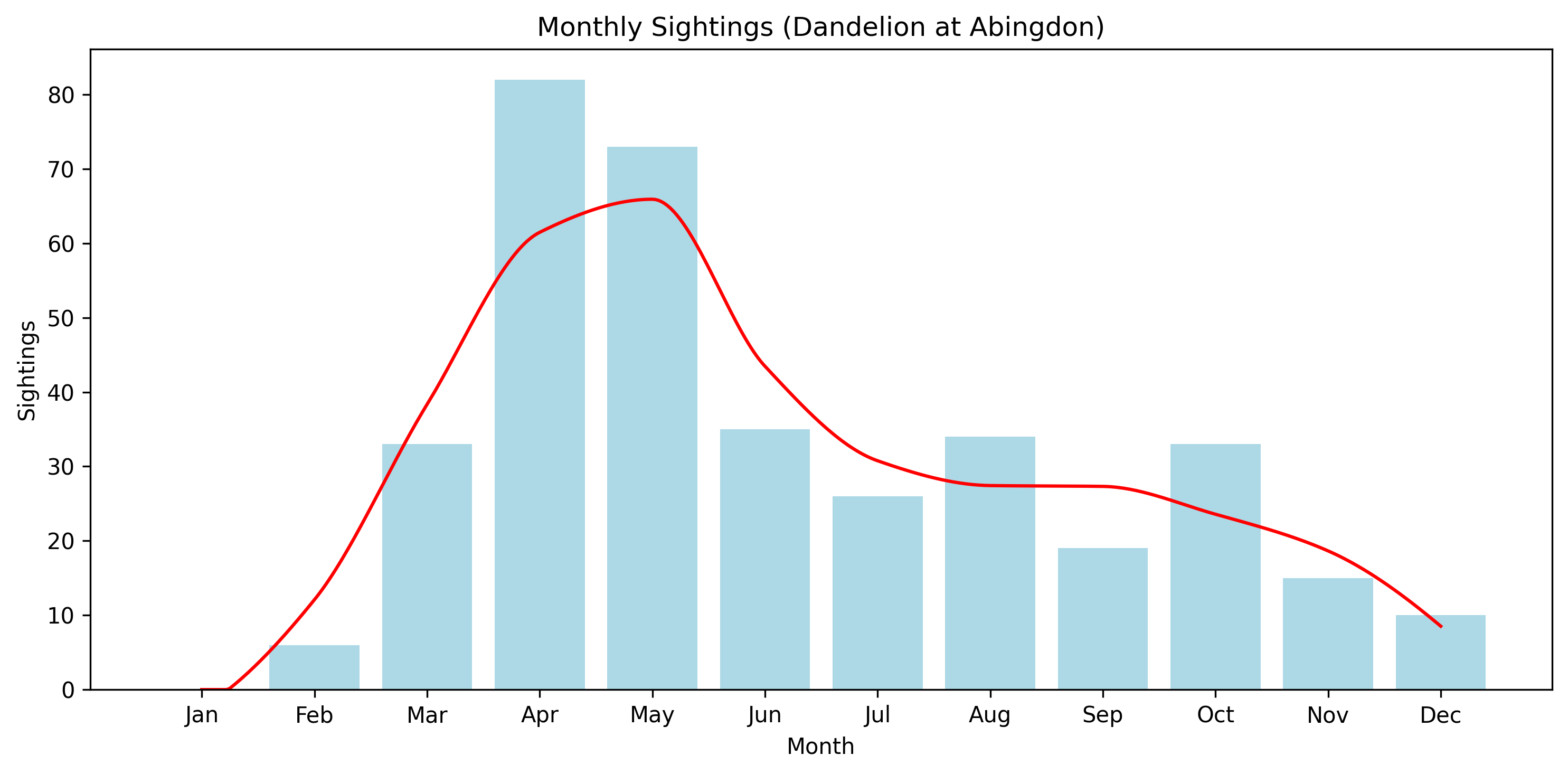
Dandelion shows a very broad flowering period extending across much of the year, with a strong seasonal peak.
Records occur in many months, rising sharply through spring to a pronounced peak in late spring or early summer. Flowering continues through summer and into autumn, with lower levels outside the main peak.
The overall pattern is that of a near-continuous flowering presence with a strong spring maximum.
Interpretation
The Dandelion’s flowering pattern reflects a persistent and opportunistic flowering strategy.
Like Daisy, Dandelion:
- Flowers across a wide seasonal window
- Maintains a presence beyond the main peak
- Is capable of flowering whenever conditions allow
However, unlike Daisy, it shows a more pronounced seasonal structure:
- A strong surge in spring when conditions are optimal
- High visibility during this period due to mass flowering
- Continued but reduced activity outside the peak
This results in:
- A clear central peak
- Extended tails into summer and autumn
- Occasional flowering even outside the main season
The species’ ability to exploit a wide range of habitats contributes to its sustained presence across the year.
Overall, the pattern reflects a species that combines near-continuous flowering with a strong seasonal pulse, making it both persistent and highly visible at key times of year.
Summary
| Aspect | Classification |
|---|---|
| Flowering period | Extended flowering period (near year-round, spring peak) |
Notes
These patterns are derived from long-term personal field records and should be read as descriptions of observed flowering rather than complete biological accounts.
For plant groups such as Dandelion, records may include multiple closely related species with overlapping flowering times. As such, the observed pattern represents a combined seasonal signal rather than a single tightly defined flowering event.