Daisy
Flowering period type: Extended flowering period (near year-round)
The Daisy is one of the most familiar and widespread flowers in Abingdon, appearing in lawns, verges, and grassland throughout much of the year. Its small, bright flowers form a constant but often overlooked presence.
This page summarises how the species appears in the records: the structure of its flowering period across the year.
Flowering Period
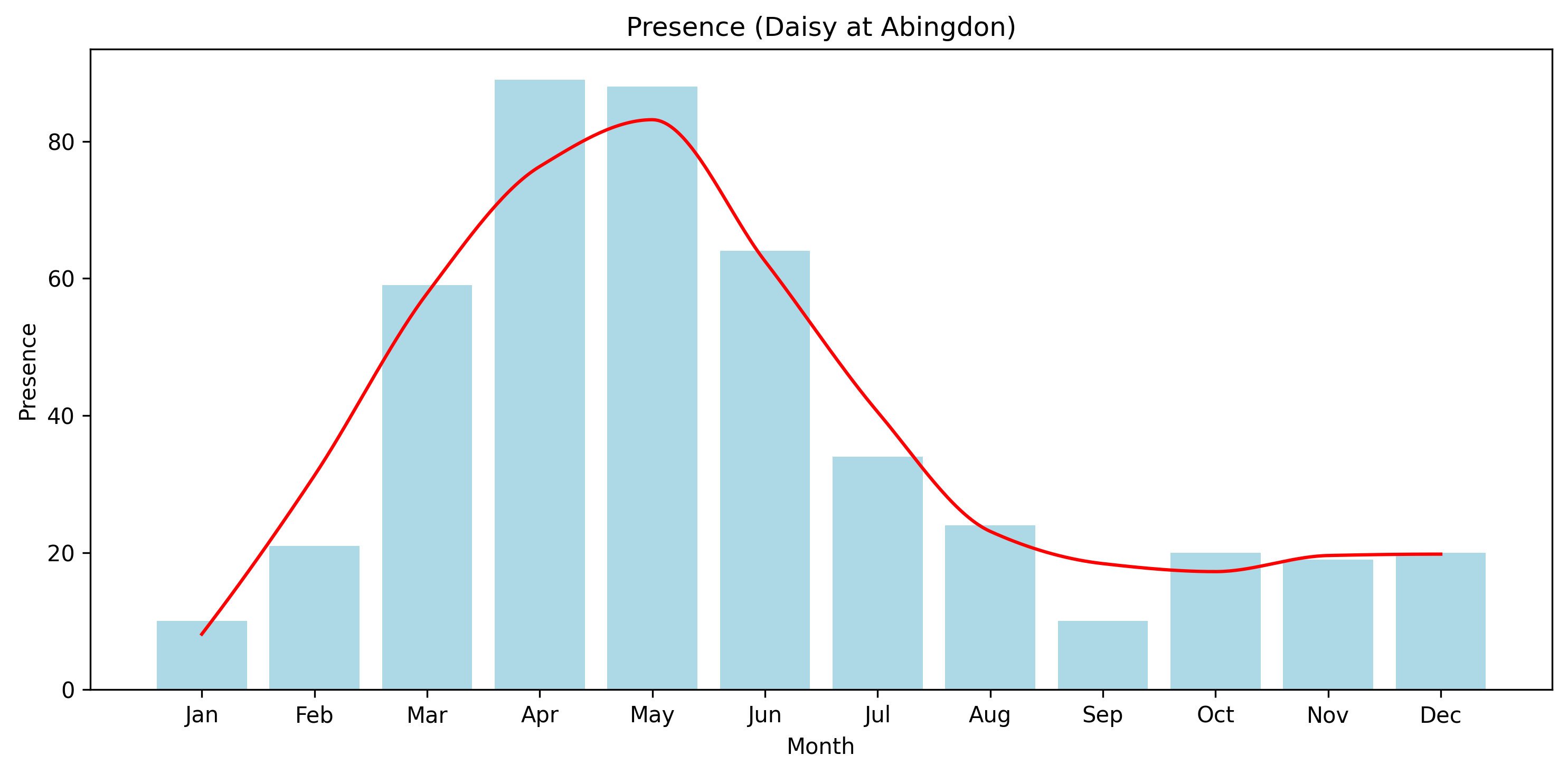
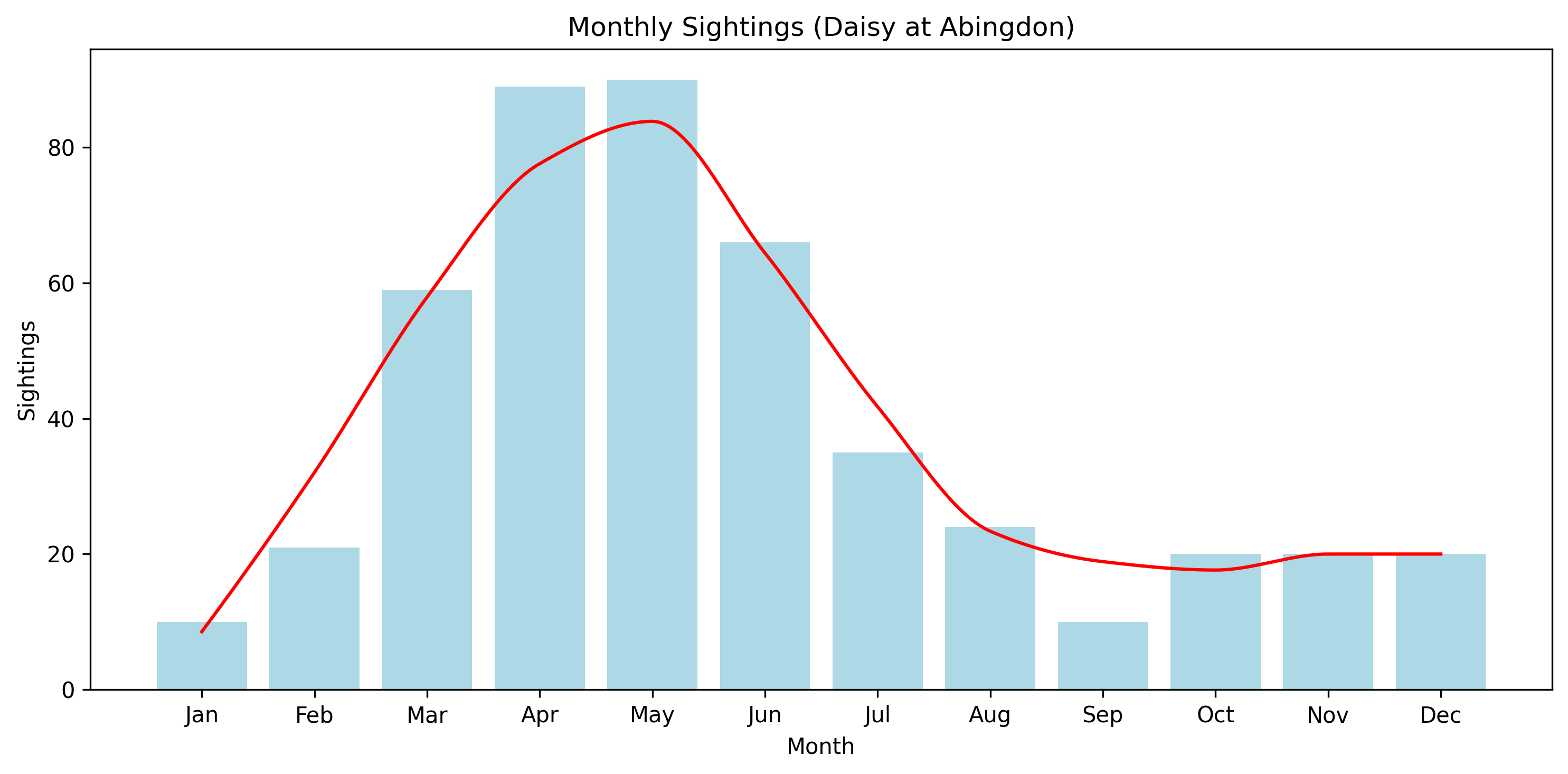
Daisy shows a very broad flowering period extending across most of the year.
Records occur in many months, with activity increasing through spring to a peak in late spring or early summer. Flowering continues through summer and into autumn, with reduced but persistent levels outside the main peak.
The overall pattern is that of a near-continuous flowering presence with a seasonal rise and fall in intensity.
Interpretation
The Daisy’s flowering pattern reflects a highly flexible and persistent flowering strategy.
Unlike species with tightly constrained flowering windows, Daisy:
- Flowers over a very long period
- Maintains a continuous presence across seasons
- Responds readily to favourable conditions
This results in:
- A broad seasonal curve rather than a sharp peak
- Ongoing flowering even outside the main season
- A strong presence in everyday environments
The spring and early summer peak reflects optimal growing conditions, when flowering is most abundant and conspicuous.
Outside this peak, flowering continues at lower levels, creating a background continuity across the year.
Overall, the pattern reflects a species that is almost always in flower somewhere, with seasonal variation expressed as changes in intensity rather than presence.
Summary
| Aspect | Classification |
|---|---|
| Flowering period | Extended flowering period (near year-round) |
Notes
These patterns are derived from long-term personal field records and should be read as descriptions of observed flowering rather than complete biological accounts.
For species such as Daisy, flowering is not confined to a narrow seasonal window. Instead, the species maintains a near-continuous presence, with peaks reflecting favourable conditions rather than discrete flowering events.