Year In The Life
Common Poppy
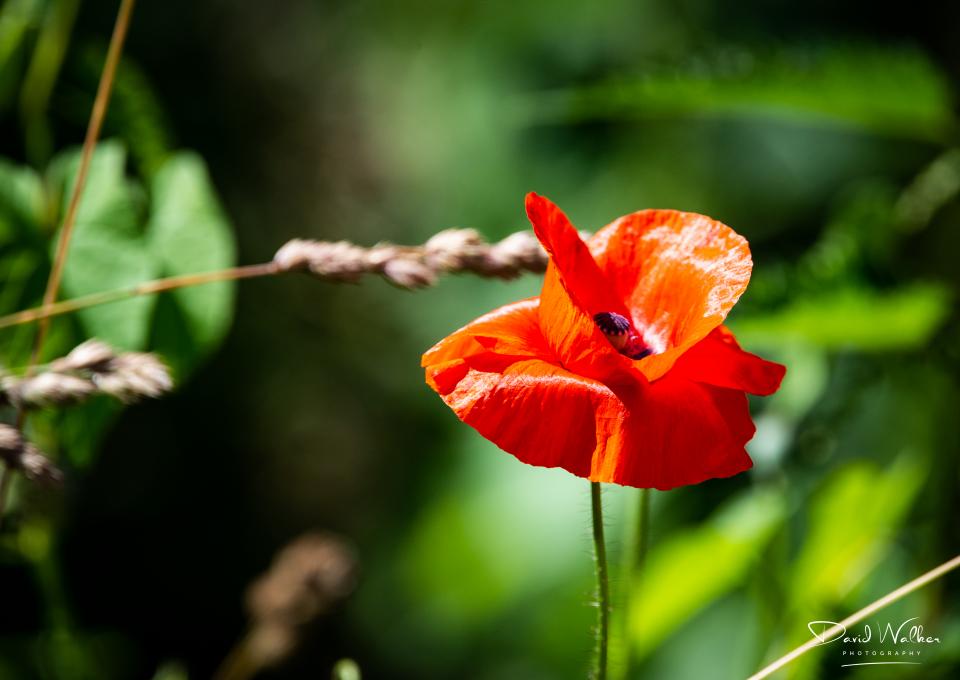
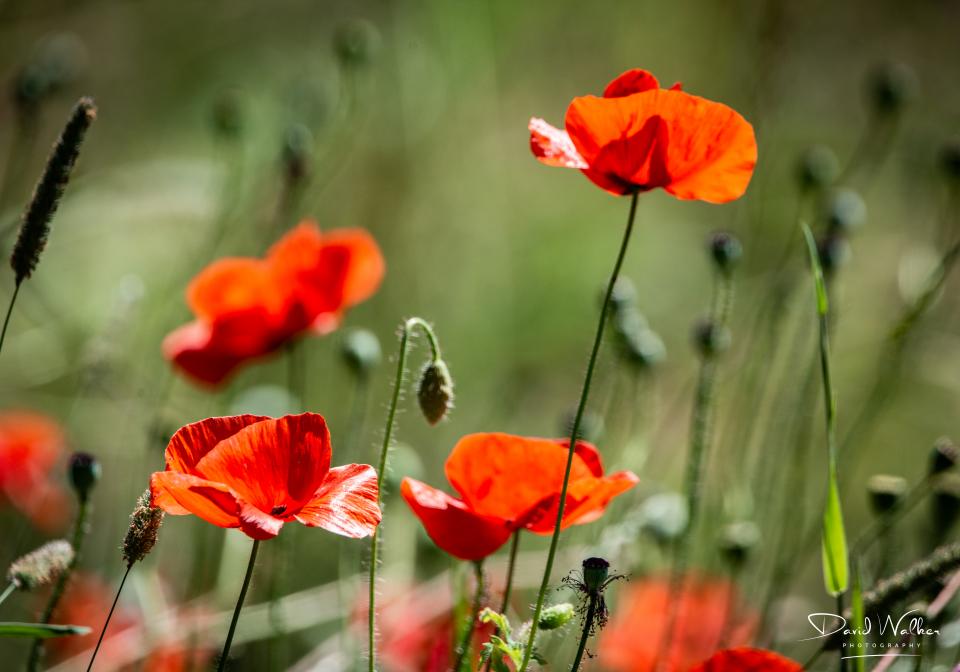
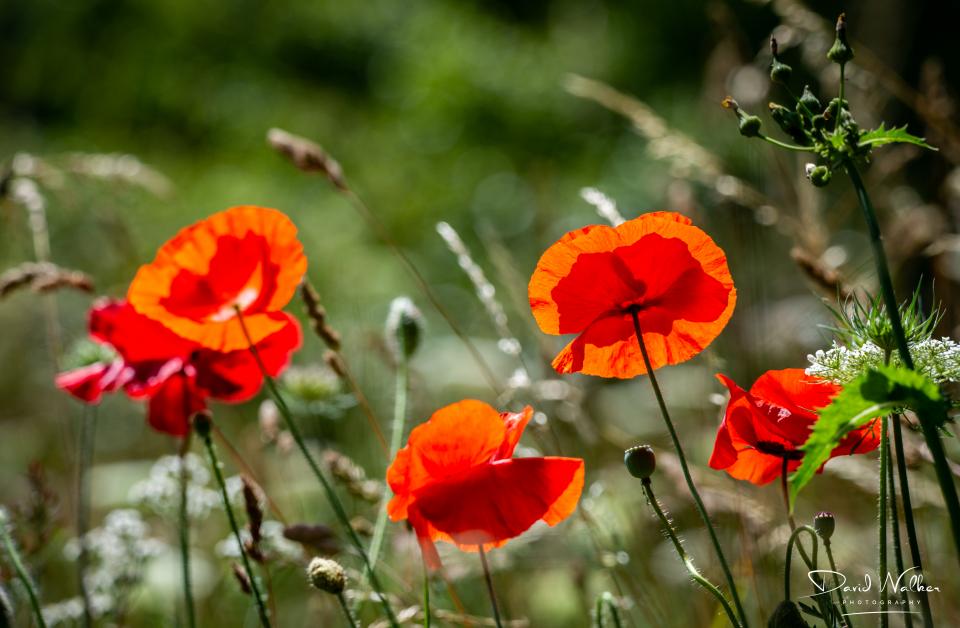
Common poppy is one of the most familiar and widespread flowers in Abingdon, appearing across disturbed ground, field margins, verges, and cultivated areas, often in vivid and sometimes short-lived displays.
This page summarises how the species appears in the records: the structure of its flowering period across the year.
Flowering Period
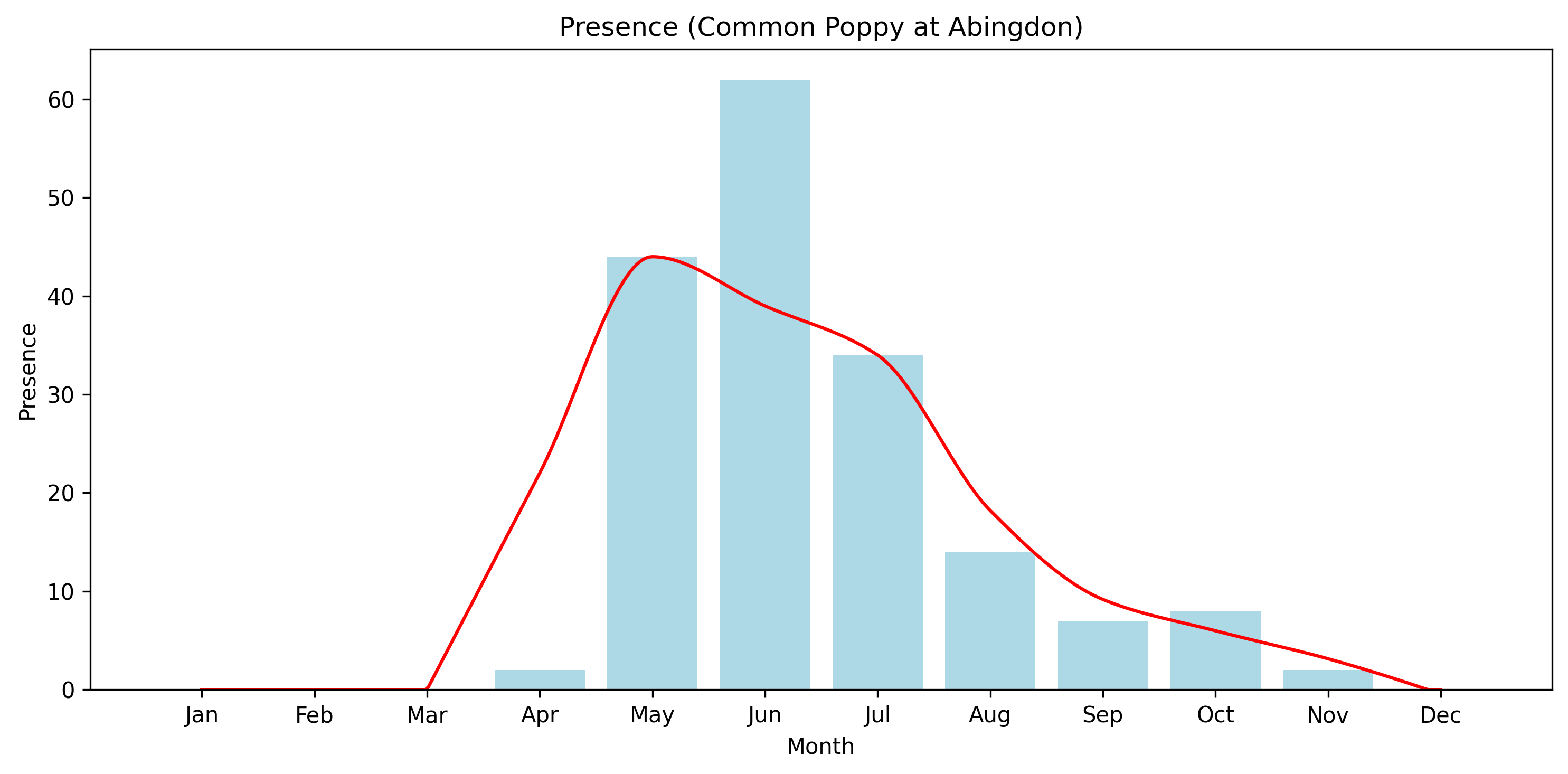
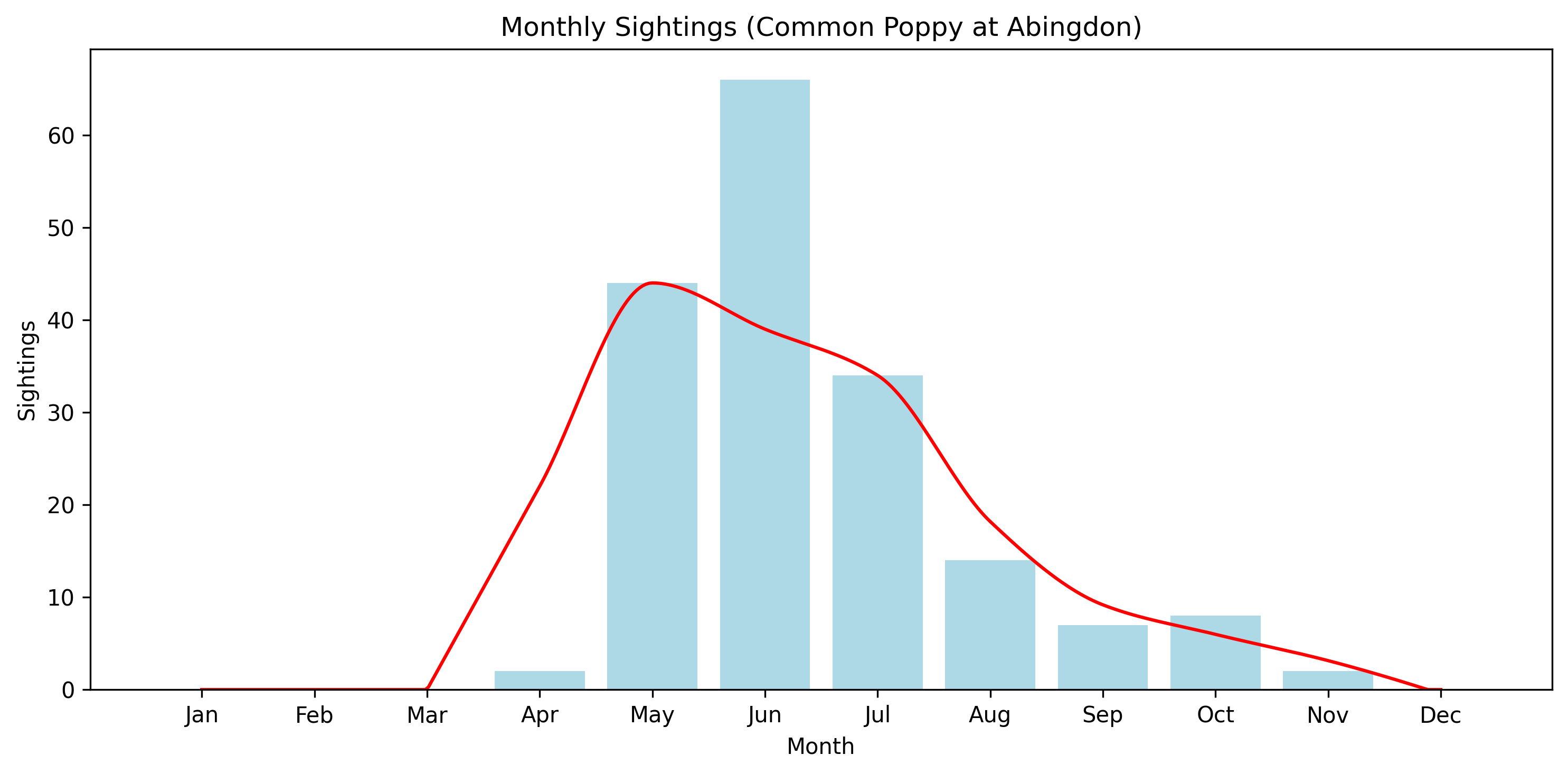
Common poppy shows a broad and extended flowering period spanning late spring through summer and into early autumn.
Flowering begins in April, rises rapidly through May, and reaches a clear peak in June. From this peak, records decline gradually but remain present through July, August, and into September and October, with occasional late records extending into November.
The overall pattern is that of an extended spring–summer flowering period, centred on early summer but with a long trailing edge.
Interpretation
The flowering pattern of Common poppy is defined by a clear seasonal centre combined with a wide seasonal spread.
From the derived metrics:
- Circular mean ≈ 6.44 (June) → a strong early-summer centre
- Seasonal width ≈ 3 months → a broad flowering window
- Occupancy ≈ 0.37 → presence across a substantial portion of the year
- Coefficient of variation ≈ 1.38–1.40 → moderate variability, indicating a defined peak rather than uniform distribution
Together, these describe a pattern that is:
- Clearly seasonal (not year-round)
- Broad rather than tightly concentrated
- Peak-led, but with sustained activity beyond the peak
This produces a characteristic structure:
- A rapid build-up into early summer
- A distinct but not sharply bounded peak
- A long declining tail extending into late summer and autumn
Ecologically, this aligns well with the behaviour of Common poppy:
- Repeated germination and flowering events across disturbed ground
- Continued emergence following soil disturbance
- Opportunistic use of transient habitats throughout the growing season
Compared to tightly bounded spring species such as cowslip, Common poppy is less constrained to a single seasonal window and instead expresses a rolling flowering presence across much of the warmer months.
Summary
| Aspect | Classification |
|---|---|
| Flowering period | Extended spring–summer flowering |
| Seasonal centre | Early summer (June) |
| Seasonal shape | Broad peak with extended trailing edge |
Notes
These patterns are derived from long-term personal field records and should be read as descriptions of observed flowering rather than complete biological accounts.
For species such as Common poppy, the extended flowering period reflects repeated emergence and flowering across the season. The absence of records outside this period reflects the absence of flowers rather than absence of the plant itself.