Buttercup
Flowering period type: Extended flowering period (spring–summer)
Buttercups are among the most familiar wildflowers in Abingdon, brightening meadows, verges, and grassland through much of the warmer months. Their glossy yellow flowers form a persistent and widespread feature of the landscape.
This page summarises how the species appears in the records: the structure of its flowering period across the year.
Flowering Period
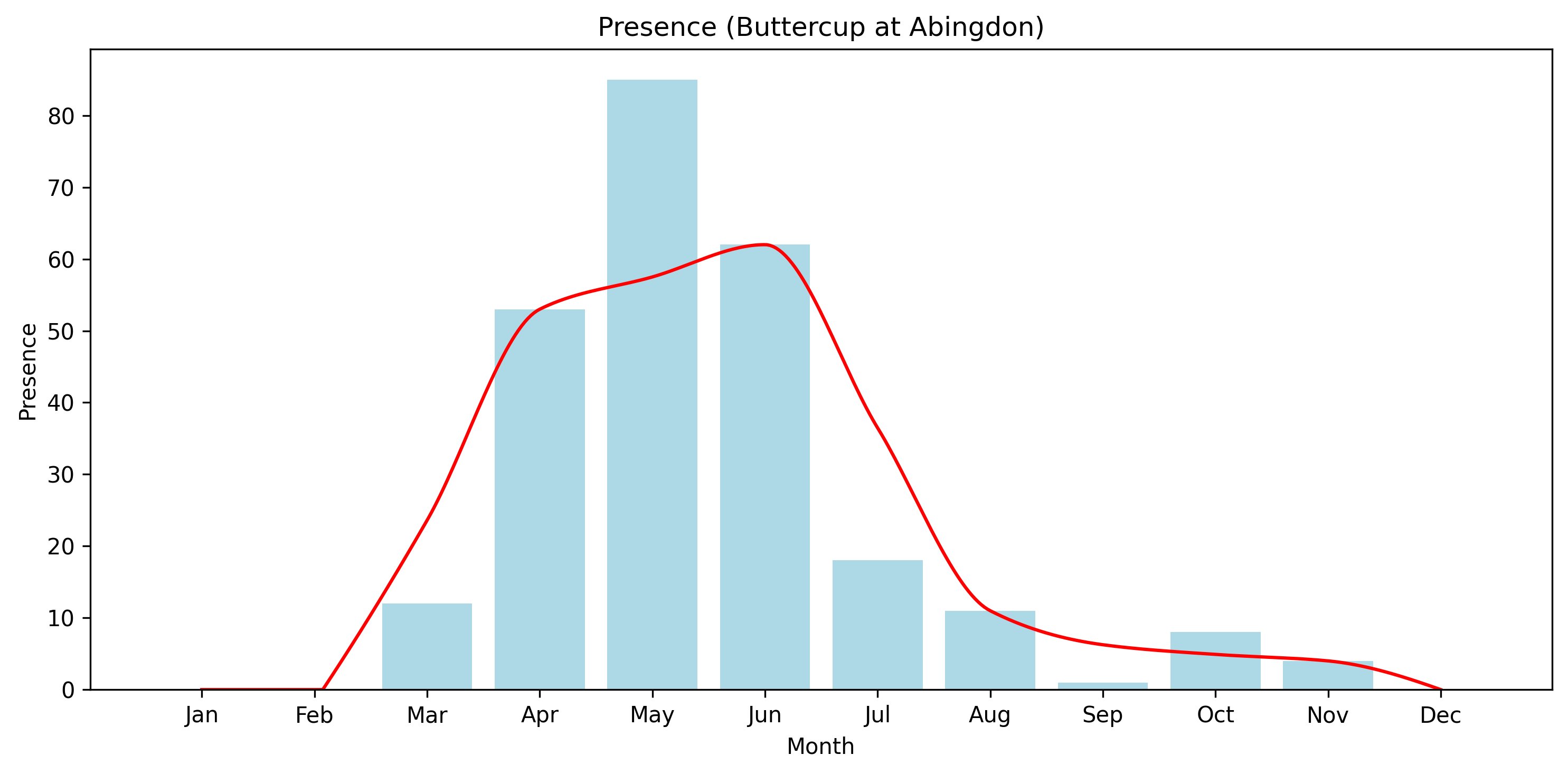
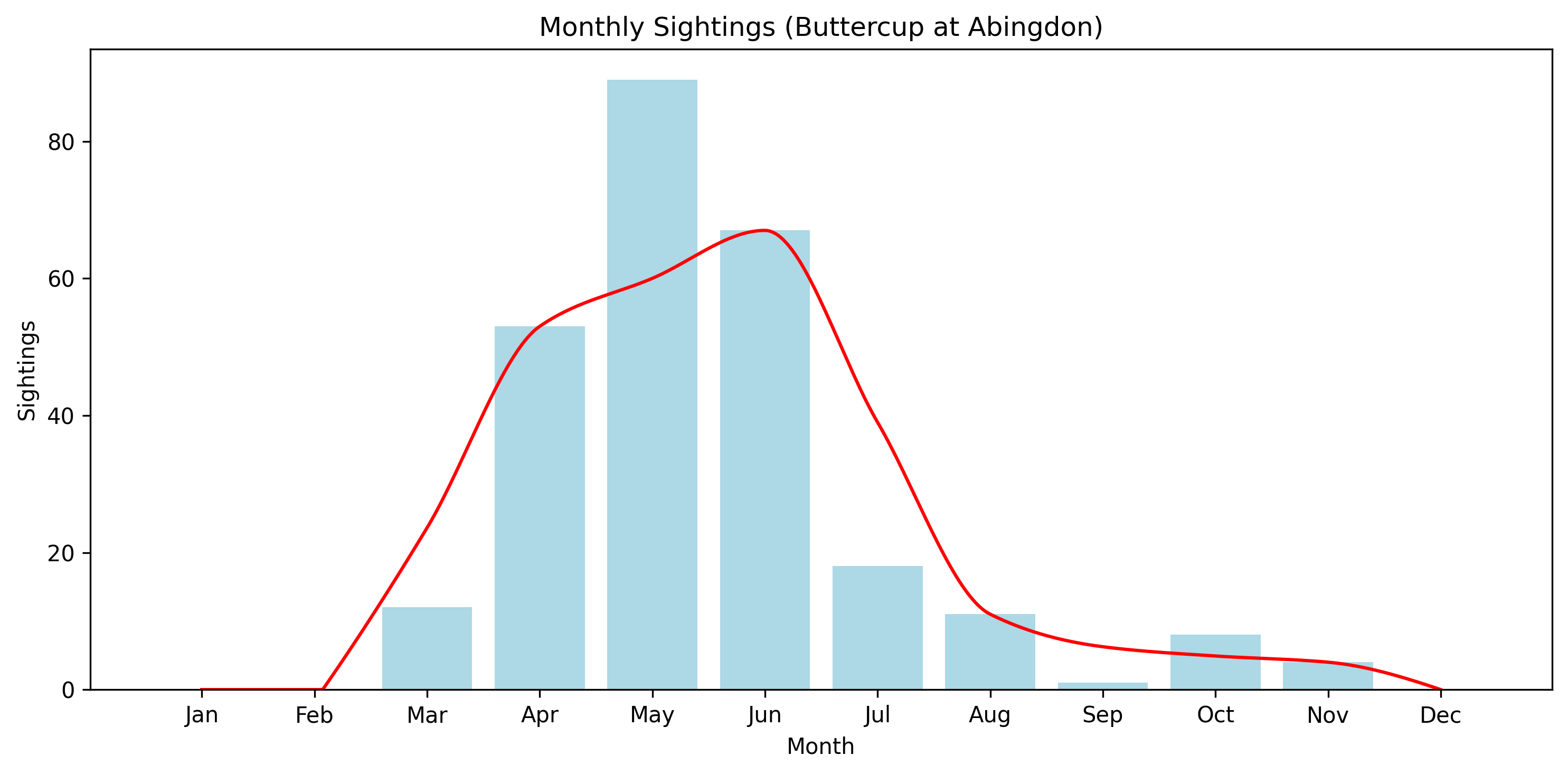
Buttercup shows a broad and extended flowering period spanning spring into summer.
Records begin in spring, rising steadily to a peak in late spring or early summer. High levels of activity are maintained through much of the summer months before gradually declining into late summer and early autumn.
The overall pattern is that of a long, sustained flowering period with a single dominant peak.
Interpretation
The Buttercup’s flowering pattern reflects a prolonged and flexible flowering strategy.
Unlike tightly constrained spring species, Buttercup maintains flowering over an extended period:
- Flowering begins in spring as conditions become favourable
- Peak flowering occurs across late spring and early summer
- Individuals continue to flower across a wide seasonal window
This extended presence results in:
- A broad peak rather than a sharp spike
- Sustained visibility in the landscape
- Gradual rather than abrupt seasonal transitions
Variation within the season may reflect:
- Differences between species within the Buttercup group
- Variation in habitat conditions
- Staggered flowering times across locations
Overall, the pattern reflects a species group that provides continuity in flowering across the season, rather than a brief, synchronised display.
Summary
| Aspect | Classification |
|---|---|
| Flowering period | Extended flowering period (spring–summer) |
Notes
These patterns are derived from long-term personal field records and should be read as descriptions of observed flowering rather than complete biological accounts.
For plant groups such as Buttercup, records may include multiple closely related species with overlapping flowering times. As such, the observed pattern represents a combined seasonal signal rather than a single tightly defined flowering event.